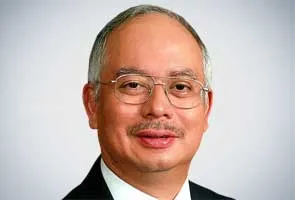
There must be a balance between individual freedom and public interests for Malaysia to be regarded as a mature democratic nation, with the people's fundamental rights respected and the police carrying out their duties and responsibilities in a professional manner, said Prime Minister Datuk Seri Najib Tun Razak.
"This is very challenging as it is not easy. If we choose the easy way, we will not be carrying out transformation. But if we don't do transformation while the people demand it, there will be conflict between the people and government, which is not healthy."
Najib said this at a gathering at Sri Perdana, here, today with about 300 retired Royal Malaysian Police senior officers including former inspectors-general of police Tun Hanif Omar, Tan Sri Abdul Rahim Noor and Tan Sri Norian Mai.
Najib said when a government could bring about transformation, in line with the people's needs and demands, then they would appreciate the government more, and also the police.
He said that was why the government had stressed on the need to have a people-friendly police force, with their presence not to cause fear or worry to the public but to be seen as ensuring peace and security.
The prime minister said the people today demanded a bigger latitude; their fundamental rights be given consideration so that they could enjoy full freedom, and that was why the government had amended certain laws.
"When we abolished the ISA (Internal Security Act), it does not mean that we have no more power. We still have the power to fight crime and elements which threaten the country's peace.
"The 'rakyat' (people) want us to raise further our professionalism so that their fundmental rights are respected, but not to the extent of the police losing power to carry out their duties and responsibilities. I believe this is the balance needed between individual freedom and public interests."
Najib said permanent and meaningful change and transformation could only take place if they were based on the people's wants as a whole.
He said this was because historical factors and various incidents happening outside the country currently showed that a sudden change through street demonstrations or a coup would not bring the benefits expected.
According to Najib, development could only come from a government which could effect change and transformation, while history had proven that transformation that occurred from the top to down based on the people's wants would be a permanent and meaningful one.
"Some countries in the Middle East and Africa are classic examples of how these countries today are experiencing uncertainties as a result of a sudden change. Contrastingly, our country is peaceful as we are able to do systematic and organised transformation," he said.
The prime minister said what were being implemented like the Government Transformation Programme and Economic Transformation Programme, as well as the introduction of the report card concept and so on reflected the transformation taking place.
He said this was not based on the leaders's wants only but also on the people's.
Najib said what everyone wanted was a nation that was safe, and that was why the government had made fighting crime a top priority and a continuous one, with efforts that included increasing police patrol units and improving the service schemes of the security forces.
Meanwhile, Najib said he would be visiting Lahad Datu, Sabah, this April 13 to see for himself the conditions of the newly and speedily built police stations there in the interest of the local residents.
He also noted that there were one or two former senior police officers who no longer supported the government, but the loyalty (to the government) of far many more could not be questioned by anyone.
Also present at the function were Home Minister Datuk Seri Hishammuddin Hussein, Inspector-General of Police Tan Sri Ismail Omar and his deputy Tan Sri Khalid Abu Bakar.
"This is very challenging as it is not easy. If we choose the easy way, we will not be carrying out transformation. But if we don't do transformation while the people demand it, there will be conflict between the people and government, which is not healthy."
Najib said this at a gathering at Sri Perdana, here, today with about 300 retired Royal Malaysian Police senior officers including former inspectors-general of police Tun Hanif Omar, Tan Sri Abdul Rahim Noor and Tan Sri Norian Mai.
Najib said when a government could bring about transformation, in line with the people's needs and demands, then they would appreciate the government more, and also the police.
He said that was why the government had stressed on the need to have a people-friendly police force, with their presence not to cause fear or worry to the public but to be seen as ensuring peace and security.
The prime minister said the people today demanded a bigger latitude; their fundamental rights be given consideration so that they could enjoy full freedom, and that was why the government had amended certain laws.
"When we abolished the ISA (Internal Security Act), it does not mean that we have no more power. We still have the power to fight crime and elements which threaten the country's peace.
"The 'rakyat' (people) want us to raise further our professionalism so that their fundmental rights are respected, but not to the extent of the police losing power to carry out their duties and responsibilities. I believe this is the balance needed between individual freedom and public interests."
Najib said permanent and meaningful change and transformation could only take place if they were based on the people's wants as a whole.
He said this was because historical factors and various incidents happening outside the country currently showed that a sudden change through street demonstrations or a coup would not bring the benefits expected.
According to Najib, development could only come from a government which could effect change and transformation, while history had proven that transformation that occurred from the top to down based on the people's wants would be a permanent and meaningful one.
"Some countries in the Middle East and Africa are classic examples of how these countries today are experiencing uncertainties as a result of a sudden change. Contrastingly, our country is peaceful as we are able to do systematic and organised transformation," he said.
The prime minister said what were being implemented like the Government Transformation Programme and Economic Transformation Programme, as well as the introduction of the report card concept and so on reflected the transformation taking place.
He said this was not based on the leaders's wants only but also on the people's.
Najib said what everyone wanted was a nation that was safe, and that was why the government had made fighting crime a top priority and a continuous one, with efforts that included increasing police patrol units and improving the service schemes of the security forces.
Meanwhile, Najib said he would be visiting Lahad Datu, Sabah, this April 13 to see for himself the conditions of the newly and speedily built police stations there in the interest of the local residents.
He also noted that there were one or two former senior police officers who no longer supported the government, but the loyalty (to the government) of far many more could not be questioned by anyone.
Also present at the function were Home Minister Datuk Seri Hishammuddin Hussein, Inspector-General of Police Tan Sri Ismail Omar and his deputy Tan Sri Khalid Abu Bakar.