
FEATURES
"I want to be able to study, I want to be an engineer"
Rohingya children want to go to school like other children but they can't.
SOYUT Hussein has dreams quite normal for a boy his age. The 13-year-old with a shy smile wants to study hard, one day become an engineer, and earn lots of money.
But there is one problem: Soyut is a Rohingya refugee living in Malaysia.
“I want to go to school. But I can’t go to school. I want to study, I want to be good at speaking and writing English,” says Soyut with a gleam in his eyes. But the tone in his voice betrays the dark, solemn fact that his hope is quite far fetched.
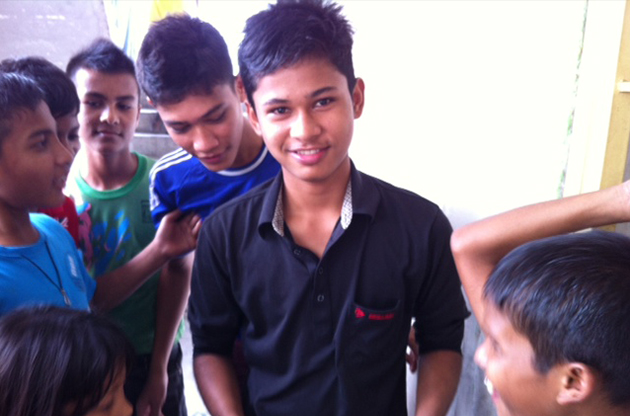
Like his fellow Rohigya family and friends who live with him at the low cost apartment, Cheras Ria, here in Kuala Lumpur, being a refugee or asylum seeker means you hardly have any rights.
You don't just walk around, because you might be arrested. You don't work, because you are not allowed to. You don't study like other ordinary children, because being a 'stateless' refugee means living in limbo.
Father killed, village burnt
Together with hundreds like him, Soyut had fled from his village in Myanmar about a year ago “when the soldiers with guns came”.
“My father was shot. I was running, looked back and I saw a man getting shot in the chest. He fell down. It was only the next day I found out that the man who died was my father,” he tells Astro AWANI, matter-of-factly. There was no trace of sadness in his voice.
Soyut – together with his friends (Ayu Khan, Sufia Khatom, Mohamad Rufit, Mohd Sharif, Ummi Roma, Shabudin, Mutafar, Surifar, Saleem) – was forced to leave their home town when “the Buddhist soldiers” raided and set fire to their villages.
They endured a perilous 10-day journey across the seas in a boat packed to the brim, shoulder-to-shoulder, with people. “We just sat there in the boat, not really moving, the scorching sun shining on us and the heavy rain pouring on us. So tired. So hungry. Food ran out by the fourth day and some began to drink the sea water," he says.
Reaching Malaysia, Soyut, like others before him, was sent to a detention camp in Malacca for a few months before being let free. “It was not too bad. They fed us and treated us well," he says in comparison.
Soyut's story is similar to the thousand of other young Rohingya children and teenagers who have fled the strife-torn Rakhine state in Myanmar with their family, or sometimes alone.
Running away is the only choice the Rohingya, regarded by the United Nations as 'one of the most persecuted' religious ethnic minorities in the world.
In Malaysia, the registered Rohingya population make up the second largest refugee group at 36,290 out of a total of some 144,300 refugees and asylum-seekers.
Soyut is just one of at least 10,000 Rohingya who are of studying age. They do not have the right to study without a birth certificate, or going through tedious red tape, and paying higher than normal fees. There are a hand full of voluntary tuition centres, but those too, are operating under the radar for fear of being closed down by authorities.
At least Soyut has not been forced on to the streets to be beggars, like others his age.
Learning Bahasa in prison
Nodding timidly when it was pointed out that his Bahasa Malaysia seems better than his peers and friends, Soyut explained: “Every night, I didn’t really sleep and I read the notes to learn the language. There were people who taught me, and I learned.”
As he speaks, Soyut looks at his friends, mostly young Rohingya children, who play about the apartment unit, running and screaming, seemingly without a care in the world. Soyut smiles a pleasant smile during the chat with this reporter.
He was among the older ones in the group, and says his family and these friends are all he has.
"No no. We don’t have Malaysian friends. It’s not that I don’t want to speak with the Malay boys. But they won’t look or talk to me, I am a poor person,” he says, sharing how his older brother was the only one who works for the family of four, earning about RM40 a day. Soyut sometimes helps him.
'We want to study, go to school'
An adult Rohingya man stops by, gestures to the loitering children and says: “What do they do? Every day they play lah. Just like there. Eat and sleep. No school”.
The children later come up to whisper to me they want to go to school.
Some want to learn, some just want to be part of a community. But others, just want to play football.
For Soyut, his hopes are simple but it seems hard for him to talk about it as he knew they were but dreams: “I want to go back but I can’t go back. I don’t know...I think I want to be an engineer. Yes, an engineer."
"I also want a bicycle!” he adds.
Soyut's dreams are quite normal for a boy his age, but the life he lives now is one only his fellow Rohingya can understand.
But there is one problem: Soyut is a Rohingya refugee living in Malaysia.
“I want to go to school. But I can’t go to school. I want to study, I want to be good at speaking and writing English,” says Soyut with a gleam in his eyes. But the tone in his voice betrays the dark, solemn fact that his hope is quite far fetched.
Soyut Hussein and other Rohingya children
Like his fellow Rohigya family and friends who live with him at the low cost apartment, Cheras Ria, here in Kuala Lumpur, being a refugee or asylum seeker means you hardly have any rights.
You don't just walk around, because you might be arrested. You don't work, because you are not allowed to. You don't study like other ordinary children, because being a 'stateless' refugee means living in limbo.
Father killed, village burnt
Together with hundreds like him, Soyut had fled from his village in Myanmar about a year ago “when the soldiers with guns came”.
“My father was shot. I was running, looked back and I saw a man getting shot in the chest. He fell down. It was only the next day I found out that the man who died was my father,” he tells Astro AWANI, matter-of-factly. There was no trace of sadness in his voice.
Soyut – together with his friends (Ayu Khan, Sufia Khatom, Mohamad Rufit, Mohd Sharif, Ummi Roma, Shabudin, Mutafar, Surifar, Saleem) – was forced to leave their home town when “the Buddhist soldiers” raided and set fire to their villages.
They endured a perilous 10-day journey across the seas in a boat packed to the brim, shoulder-to-shoulder, with people. “We just sat there in the boat, not really moving, the scorching sun shining on us and the heavy rain pouring on us. So tired. So hungry. Food ran out by the fourth day and some began to drink the sea water," he says.
Reaching Malaysia, Soyut, like others before him, was sent to a detention camp in Malacca for a few months before being let free. “It was not too bad. They fed us and treated us well," he says in comparison.
Soyut's story is similar to the thousand of other young Rohingya children and teenagers who have fled the strife-torn Rakhine state in Myanmar with their family, or sometimes alone.
Running away is the only choice the Rohingya, regarded by the United Nations as 'one of the most persecuted' religious ethnic minorities in the world.
In Malaysia, the registered Rohingya population make up the second largest refugee group at 36,290 out of a total of some 144,300 refugees and asylum-seekers.
Soyut is just one of at least 10,000 Rohingya who are of studying age. They do not have the right to study without a birth certificate, or going through tedious red tape, and paying higher than normal fees. There are a hand full of voluntary tuition centres, but those too, are operating under the radar for fear of being closed down by authorities.
At least Soyut has not been forced on to the streets to be beggars, like others his age.
Learning Bahasa in prison
Nodding timidly when it was pointed out that his Bahasa Malaysia seems better than his peers and friends, Soyut explained: “Every night, I didn’t really sleep and I read the notes to learn the language. There were people who taught me, and I learned.”
As he speaks, Soyut looks at his friends, mostly young Rohingya children, who play about the apartment unit, running and screaming, seemingly without a care in the world. Soyut smiles a pleasant smile during the chat with this reporter.
He was among the older ones in the group, and says his family and these friends are all he has.
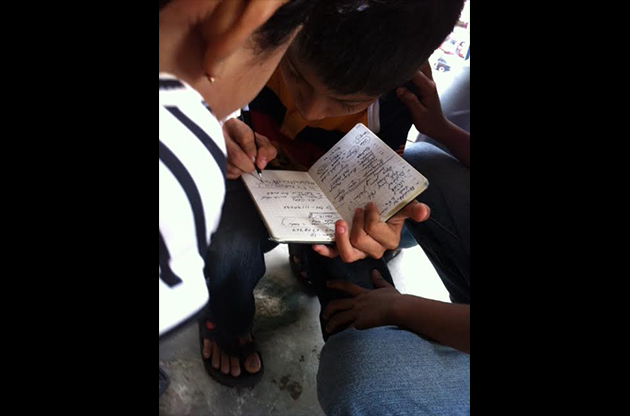
Rohingya children crowd around to write their names in the reporter's notebook
"No no. We don’t have Malaysian friends. It’s not that I don’t want to speak with the Malay boys. But they won’t look or talk to me, I am a poor person,” he says, sharing how his older brother was the only one who works for the family of four, earning about RM40 a day. Soyut sometimes helps him.
'We want to study, go to school'
An adult Rohingya man stops by, gestures to the loitering children and says: “What do they do? Every day they play lah. Just like there. Eat and sleep. No school”.
The children later come up to whisper to me they want to go to school.
Some want to learn, some just want to be part of a community. But others, just want to play football.
For Soyut, his hopes are simple but it seems hard for him to talk about it as he knew they were but dreams: “I want to go back but I can’t go back. I don’t know...I think I want to be an engineer. Yes, an engineer."
"I also want a bicycle!” he adds.
Soyut's dreams are quite normal for a boy his age, but the life he lives now is one only his fellow Rohingya can understand.