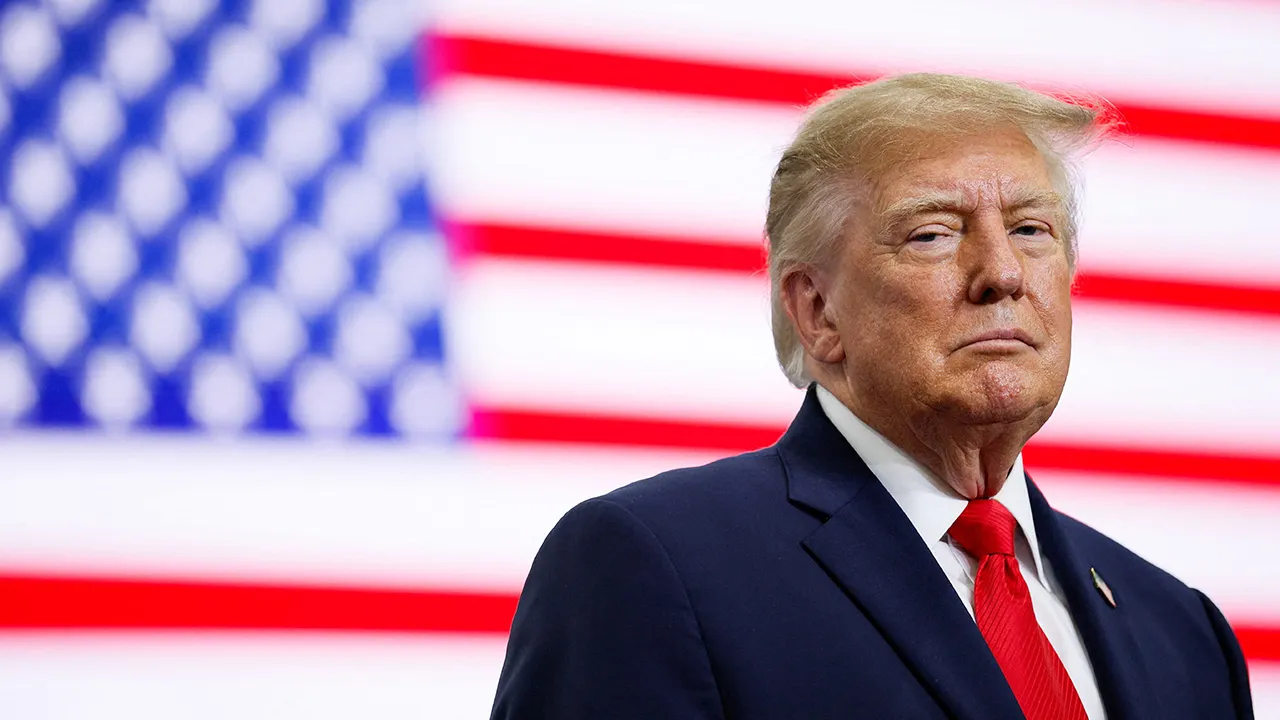

The sudden imposition of 25 percent tariffs by the Trump Administration on Malaysia, Japan, and South Korea, three critical stakeholders in the ASEAN Regional Forum (ARF), has shifted the diplomatic terrain.
AI Brief
As the region gathers in Kuala Lumpur for the 32nd ARF Ministerial Meeting, expectations are swirling that Secretary of State and National Security Advisor Marco Rubio will act as a salve for growing tensions. Yet, such hopes are misplaced.
It is important to recall that Rubio, a former rival of President Donald Trump during the 2016 Republican primaries, is not known for holding autonomous sway over foreign policy.
While he may hold two senior positions, his authority pales in comparison to the historical influence of a dual-role figure like Henry Kissinger in the mid-1970s.
At that time, Kissinger operated with intellectual and institutional coherence, shaping détente and opening up China. In contrast, Rubio’s roles today are mostly reactive, tethered to the erratic instincts of Trump’s inner circle rather than any strategic doctrine.
The Trump Administration is still in a state of flux. Decision-making flows directly from President Trump, whose latest trade pledge— “90 trade deals in 90 days”—collapsed under its own bravado. This bold assertion, pushed by economic advisor Peter Navarro, was never grounded in economic realism or diplomatic feasibility.
When that plan failed by July 9, the administration attempted to backfill its shortcomings by issuing 14 tariff letters to a mixed bag of allies and adversaries. With no clear methodology and ever-shifting deadlines, the new cut-off of August 1 only adds to the confusion.
This inability to stabilize policy timelines has created a credibility deficit that cannot be repaired with high-level visits or public assurances. The diplomatic architecture of the United States is wobbling.
Allies are unsure what the administration truly wants, while adversaries sense inconsistency they can exploit.
Expecting Marco Rubio to reverse this perception is misguided. His recent appointment as Secretary of State and National Security Advisor is not a sign of institutional strength but of administrative disarray. In fact, Rubio’s portfolio has become more of a political fire extinguisher than a strategic compass.
He is being deployed not to lead but to contain fallout—particularly over the dual impact of Trump’s tariff regime and Israel’s highly controversial strike on Iran’s suspected nuclear bunkers.
The latter event has not gone unnoticed by ASEAN. While Washington and Tel Aviv may believe their military precision operations were a success, several ARF members remain unconvinced that Iran’s nuclear capacity has been neutralized.
Strategic ambiguity continues to cloud the region. In this context, Rubio’s ability to credibly speak on East or South China Sea tensions, or on Cambodia-Thailand border dynamics, is deeply constrained.
More worrying still is the state of the Pentagon. Secretary of Defense Pete Hegseth, a former Fox News commentator and Trump loyalist, has exhibited a lack of grasp on the fundamental differences between Europe and Asia.
His insistence that all Asian allies must raise their defence budgets to 5 percent of GDP betrays a doctrinal vacuum. The irony is glaring—Washington itself does not spend 5 percent of its GDP on defence. The U.S. currently hovers at around 3.4 percent, even as it preaches fiscal militarism abroad.
This doctrinal inconsistency, bordering on hypocrisy, renders the U.S. position increasingly untenable in Asia.
Thus, the ARF convenes at a moment when U.S. hard power is perceived as coercive and erratic, and its soft power is in deep retreat. Washington is no longer the beacon of predictability or principled leadership.
Instead, it arrives at ARF as a country weighed down by its own contradictions—economic nationalism that defies global interdependence, and strategic expectations that exceed its regional credibility.
In this volatile environment, it would be prudent for all sides—ASEAN and dialogue partners alike—to tamp down their expectations for what ARF can realistically deliver this year.
The forum will not resolve the core contradictions of American foreign policy, nor will it paper over the widening rift between ASEAN’s multilateral ethos and Trump’s transactional worldview.
ARF remains a valuable multilateral platform. But it is not a venue for salvaging disjointed bilateral relations or rehabilitating U.S. prestige. If anything, this year’s summit may underscore the limits of Washington’s influence at a time when it is more isolated than ever.
Chaos begets chaos. And the U.S. is attending the ARF at one of the lowest points in its projection of both hard and soft power—not the other way around.
What ASEAN must do now is to reinforce its own internal cohesion. That means focusing on inclusive diplomacy, reinforcing commitments to the Treaty of Amity and Cooperation (TAC), and advancing norms that can contain great power instability rather than amplify it.
The ARF should serve as a reminder that multilateralism is about predictability, patience, and principle—three things the Trump Administration currently lacks.
Phar Kim Beng is Director of the Institute of Internationalization and ASEAN Studies (IINTAS), Professor of ASEAN Studies in International Islamic University of Malaysia (IIUM) and a former Head Teaching Fellow at Harvard University.
** The views and opinions expressed in this article are those of the author(s) and do not necessarily reflect the position of Astro AWANI.
Your gateway to global news, insights, and stories that matter.
AI Brief
- Marco Rubio lacks the authority to fix US foreign policy, which is seen as chaotic, reactive, and driven by Trump's impulses.
- The US enters the ARF weakened in both hard and soft power, with allies uncertain and adversaries emboldened by its inconsistency.
- ASEAN should focus on internal unity and diplomacy rather than expecting strategic leadership or coherence from the US at ARF.
It is important to recall that Rubio, a former rival of President Donald Trump during the 2016 Republican primaries, is not known for holding autonomous sway over foreign policy.
While he may hold two senior positions, his authority pales in comparison to the historical influence of a dual-role figure like Henry Kissinger in the mid-1970s.
At that time, Kissinger operated with intellectual and institutional coherence, shaping détente and opening up China. In contrast, Rubio’s roles today are mostly reactive, tethered to the erratic instincts of Trump’s inner circle rather than any strategic doctrine.
The Trump Administration is still in a state of flux. Decision-making flows directly from President Trump, whose latest trade pledge— “90 trade deals in 90 days”—collapsed under its own bravado. This bold assertion, pushed by economic advisor Peter Navarro, was never grounded in economic realism or diplomatic feasibility.
When that plan failed by July 9, the administration attempted to backfill its shortcomings by issuing 14 tariff letters to a mixed bag of allies and adversaries. With no clear methodology and ever-shifting deadlines, the new cut-off of August 1 only adds to the confusion.
This inability to stabilize policy timelines has created a credibility deficit that cannot be repaired with high-level visits or public assurances. The diplomatic architecture of the United States is wobbling.
Allies are unsure what the administration truly wants, while adversaries sense inconsistency they can exploit.
Expecting Marco Rubio to reverse this perception is misguided. His recent appointment as Secretary of State and National Security Advisor is not a sign of institutional strength but of administrative disarray. In fact, Rubio’s portfolio has become more of a political fire extinguisher than a strategic compass.
He is being deployed not to lead but to contain fallout—particularly over the dual impact of Trump’s tariff regime and Israel’s highly controversial strike on Iran’s suspected nuclear bunkers.
The latter event has not gone unnoticed by ASEAN. While Washington and Tel Aviv may believe their military precision operations were a success, several ARF members remain unconvinced that Iran’s nuclear capacity has been neutralized.
Strategic ambiguity continues to cloud the region. In this context, Rubio’s ability to credibly speak on East or South China Sea tensions, or on Cambodia-Thailand border dynamics, is deeply constrained.
More worrying still is the state of the Pentagon. Secretary of Defense Pete Hegseth, a former Fox News commentator and Trump loyalist, has exhibited a lack of grasp on the fundamental differences between Europe and Asia.
His insistence that all Asian allies must raise their defence budgets to 5 percent of GDP betrays a doctrinal vacuum. The irony is glaring—Washington itself does not spend 5 percent of its GDP on defence. The U.S. currently hovers at around 3.4 percent, even as it preaches fiscal militarism abroad.
This doctrinal inconsistency, bordering on hypocrisy, renders the U.S. position increasingly untenable in Asia.
Thus, the ARF convenes at a moment when U.S. hard power is perceived as coercive and erratic, and its soft power is in deep retreat. Washington is no longer the beacon of predictability or principled leadership.
Instead, it arrives at ARF as a country weighed down by its own contradictions—economic nationalism that defies global interdependence, and strategic expectations that exceed its regional credibility.
In this volatile environment, it would be prudent for all sides—ASEAN and dialogue partners alike—to tamp down their expectations for what ARF can realistically deliver this year.
The forum will not resolve the core contradictions of American foreign policy, nor will it paper over the widening rift between ASEAN’s multilateral ethos and Trump’s transactional worldview.
ARF remains a valuable multilateral platform. But it is not a venue for salvaging disjointed bilateral relations or rehabilitating U.S. prestige. If anything, this year’s summit may underscore the limits of Washington’s influence at a time when it is more isolated than ever.
Chaos begets chaos. And the U.S. is attending the ARF at one of the lowest points in its projection of both hard and soft power—not the other way around.
What ASEAN must do now is to reinforce its own internal cohesion. That means focusing on inclusive diplomacy, reinforcing commitments to the Treaty of Amity and Cooperation (TAC), and advancing norms that can contain great power instability rather than amplify it.
The ARF should serve as a reminder that multilateralism is about predictability, patience, and principle—three things the Trump Administration currently lacks.
Phar Kim Beng is Director of the Institute of Internationalization and ASEAN Studies (IINTAS), Professor of ASEAN Studies in International Islamic University of Malaysia (IIUM) and a former Head Teaching Fellow at Harvard University.
** The views and opinions expressed in this article are those of the author(s) and do not necessarily reflect the position of Astro AWANI.