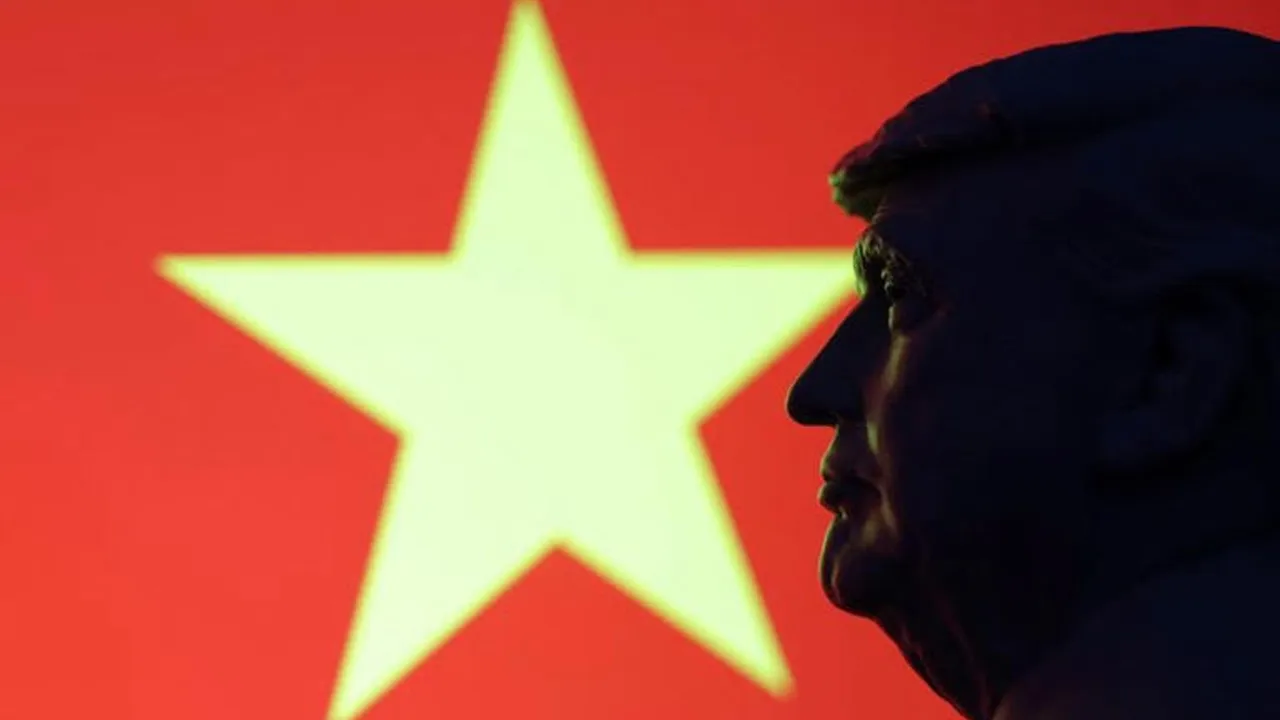

THE sudden spike in tensions between Cambodia and Thailand along their long and historically fraught border may have unnerved many within ASEAN.
AI Brief
Yet, the premise that this armed conflict—intense though it was over five days—could devolve into a larger proxy war between China and the United States is not only far-fetched, but also dangerously misinformed.
While Malaysia’s mediation as ASEAN Chair is timely and strategic, the notion that global powers are angling to turn this conflict into their next theatre of confrontation misunderstands the real limitations and imperatives of present geopolitics.
First and foremost, proxy wars are animated by powerful patrons who stand to gain from outsourcing their ideological or strategic struggles to smaller actors. But today, both Washington and Beijing are otherwise engrossed in what can only be described as their own epic economic dramas.
On one side, the United States under President Donald Trump is deepening its tariff war with China while managing the political fallout of inflation, debt ceilings, and a surging isolationist sentiment.
On the other side, China is attempting to stabilize its post-pandemic economy, respond to global decoupling trends, and defend the legitimacy of its model in an increasingly bifurcated global order.
For either power to be tempted into pouring resources into a minor Indo-Chinese border skirmish—especially in a region where neither enjoys unqualified local loyalty—is strategically unviable.
Second, the geography of the conflict betrays the myth of proxy potential. The bulk of the flashpoints are in the relatively underdeveloped northeastern stretches of both countries—territories which have historically been difficult to control, develop, or militarize to strategic advantage.
True, there was a naval mobilization in the Gulf of Thailand on days three and four of the fighting, but this was contained and demonstrative rather than escalatory.
The Thai Armed Forces, particularly the Navy, have kept a disciplined perimeter. In strategic terms, this is a skirmish more of national pride and political inertia than of territorial conquest.
In contrast, truly strategic maritime flashpoints—such as the East China Sea and the South China Sea—demand far greater attention from both China and the United States.
Beijing is preoccupied with defending its expansive maritime claims against Japan in the East China Sea and with confronting growing US military presence in the South China Sea, where freedom of navigation operations and defence pacts with the Philippines and Vietnam are accelerating.
These areas, unlike the Cambodian Thai border, are choke points of global trade and energy flow.
If China or the US were to choose where to expend their diplomatic and military capital, it would be in these high-stakes maritime zones—not in a borderland dispute lacking global economic or security significance.
Third, the historical aversion of both countries to colonialism—fiercely preserved in national memory—has produced strong antibodies against foreign manipulation.
This is not merely rhetorical. Both Cambodia and Thailand participated in the Bandung Conference of 1955 and later committed themselves to the Bali Concord of 1976, affirming that force must never be the instrument of foreign policy.
To break these norms today would not only delegitimize their own diplomatic standing but would also strip ASEAN of its credibility as a peace-building regional community.
Moreover, escalation without mediation is a trap. If the conflict were to spill into five months instead of five days, both countries would be left diplomatically isolated, vulnerable to sanctions, and at the mercy of great power manipulation.
Relying on the United States or China to 'step in' would only accelerate their dependence on actors who are far more concerned with their global posture than regional peace. Neither Cambodia nor Thailand can afford this. Even without Malaysia’s mediation, the prospect of mutual destruction remains a natural deterrent.
Indeed, the people themselves do not want war. The refugees of both countries—numbering 160,000 in Cambodia and 140,000 in Thailand—still carry living memories of the horrors of displacement and civil war from the 1970s.
For them, war is not an abstraction. Research shows border communities in both nations harbour no desire for another armed episode.
It is only some elements of the military and political elite who may benefit from brief surges in nationalism and tactical escalation. But popular will leans firmly against protracted violence.
Fourth, the economics of war matters. Armed conflicts require an industrial base capable of sustaining prolonged engagement. The Vietnam War, the Iran-Iraq War, and even the ongoing Russia-Ukraine war—all reveal the colossal resource drain of long-term warfare.
The United States and China, keen to avoid replication of Russia’s rapid depletion of arms and morale in Ukraine, have grown more cautious in how they expend their military and strategic capital. This is not a time for experimentation or expansion of conflict zones.
Fifth, Cambodia and Thailand themselves lack the industrial logistics to sustain an extended war without external support. And that support is unlikely to come. China is focused on consolidating control over Taiwan and managing its claims in the East and South China Sea, while the U.S. is reinforcing its Indo-Pacific architecture, particularly through the Philippines Enhanced Defense Cooperation Agreement (EDCA) and the Quad. Land-based conflicts in mainland Southeast Asia are, by comparison, peripheral.
Sixth, the territories in question are not only geographically marginal but also deeply compromised by criminality.
The borderlands of Cambodia and Thailand are infested with transnational syndicates—ranging from human trafficking networks to scam operations and cybercrime rings. These are not areas the U.S. or China wish to associate with, much less invest their political capital in.
If anything, both superpowers have declared war on precisely these forms of illicit activities. They have no strategic appetite for inheriting these territories as liabilities through proxy engagements.
Seventh, ASEAN’s institutional memory is alive. It remembers that prolonged violence in Cambodia in the 1980s and 1990s nearly tore the region apart. ASEAN’s diplomatic culture, shaped by its “non-intervention principle” and now increasingly evolving into “flexible engagement,” favours mediation and de-escalation.
Malaysia’s intervention—though not decisive—is emblematic of this ASEAN Way. But even without it, the mutual recognition of shared risk and reputational loss would likely nudge both parties toward deconfliction.
Eighth, the normative frameworks of Southeast Asia are evolving.
No longer is neutrality a passive stance. In the age of multipolarity and interdependence, regional actors are aware that becoming a pawn in a larger game carries existential risks.
Proxy wars are no longer fashionable, nor feasible. Cambodia and Thailand understand this. Their leaders, despite sabre-rattling, have not crossed into irreversible confrontation.
Ninth, the information war component is also lacking. Proxy wars today are fought not only with missiles but with narratives—waged on social media, amplified through disinformation campaigns.
Neither the Cambodian nor Thai conflict has generated the kind of sustained media warfare that typically accompanies proxy engagements.
The absence of ideological polarization, combined with general public apathy toward escalation, makes this an unlikely battleground for external agitators.
Tenth and finally, there are no clear ideological cleavages. Proxy wars are often proxies for something: capitalism versus communism, democracy versus authoritarianism, secularism versus theocracy.
The Cambodian Thai conflict is bereft of such binaries. It is a dispute grounded in sovereignty, historical grievance, and border mismanagement—not ideology.
Without this ideological core, it is difficult to imagine either superpower investing time, troops, or treasure in the outcome.
In sum, while the armed conflict between Cambodia and Thailand is deeply regrettable, it will not transform into a proxy war—neither by structure, intent, nor opportunity. With or without Malaysia’s mediation, the war’s logic contains its own limits. It is a sobering case of regional rivalry, not a redux of Cold War proxy politics.
The region—and the world—should work to keep it that way.
Phar Kim Beng, PhD, is Professor of ASEAN Studies and Director of the Institute of Internationaliation and ASEAN Studies (IINTAS) at the International Islamic University Malaysia.
Luthfy Hamzah is Senior Research Fellow at IINTAS and a specialist in trade, political economy, and strategic diplomacy in Northeast Asia.
** The views and opinions expressed in this article are those of the author(s) and do not necessarily reflect the position of Astro AWANI.
Your gateway to global news, insights, and stories that matter.

AI Brief
- The Cambodia-Thailand clash lacks strategic value for a US-China proxy war due to geography, limited global impact, and public opposition.
- Both superpowers are preoccupied with economic and maritime priorities, making involvement in a border skirmish unlikely.
- ASEAN norms, regional diplomacy, and historical memory favor de-escalation over external manipulation or prolonged conflict.
Yet, the premise that this armed conflict—intense though it was over five days—could devolve into a larger proxy war between China and the United States is not only far-fetched, but also dangerously misinformed.
While Malaysia’s mediation as ASEAN Chair is timely and strategic, the notion that global powers are angling to turn this conflict into their next theatre of confrontation misunderstands the real limitations and imperatives of present geopolitics.
First and foremost, proxy wars are animated by powerful patrons who stand to gain from outsourcing their ideological or strategic struggles to smaller actors. But today, both Washington and Beijing are otherwise engrossed in what can only be described as their own epic economic dramas.
On one side, the United States under President Donald Trump is deepening its tariff war with China while managing the political fallout of inflation, debt ceilings, and a surging isolationist sentiment.
On the other side, China is attempting to stabilize its post-pandemic economy, respond to global decoupling trends, and defend the legitimacy of its model in an increasingly bifurcated global order.
For either power to be tempted into pouring resources into a minor Indo-Chinese border skirmish—especially in a region where neither enjoys unqualified local loyalty—is strategically unviable.
Second, the geography of the conflict betrays the myth of proxy potential. The bulk of the flashpoints are in the relatively underdeveloped northeastern stretches of both countries—territories which have historically been difficult to control, develop, or militarize to strategic advantage.
True, there was a naval mobilization in the Gulf of Thailand on days three and four of the fighting, but this was contained and demonstrative rather than escalatory.
The Thai Armed Forces, particularly the Navy, have kept a disciplined perimeter. In strategic terms, this is a skirmish more of national pride and political inertia than of territorial conquest.
In contrast, truly strategic maritime flashpoints—such as the East China Sea and the South China Sea—demand far greater attention from both China and the United States.
Beijing is preoccupied with defending its expansive maritime claims against Japan in the East China Sea and with confronting growing US military presence in the South China Sea, where freedom of navigation operations and defence pacts with the Philippines and Vietnam are accelerating.
These areas, unlike the Cambodian Thai border, are choke points of global trade and energy flow.
If China or the US were to choose where to expend their diplomatic and military capital, it would be in these high-stakes maritime zones—not in a borderland dispute lacking global economic or security significance.
Third, the historical aversion of both countries to colonialism—fiercely preserved in national memory—has produced strong antibodies against foreign manipulation.
This is not merely rhetorical. Both Cambodia and Thailand participated in the Bandung Conference of 1955 and later committed themselves to the Bali Concord of 1976, affirming that force must never be the instrument of foreign policy.
To break these norms today would not only delegitimize their own diplomatic standing but would also strip ASEAN of its credibility as a peace-building regional community.
Moreover, escalation without mediation is a trap. If the conflict were to spill into five months instead of five days, both countries would be left diplomatically isolated, vulnerable to sanctions, and at the mercy of great power manipulation.
Relying on the United States or China to 'step in' would only accelerate their dependence on actors who are far more concerned with their global posture than regional peace. Neither Cambodia nor Thailand can afford this. Even without Malaysia’s mediation, the prospect of mutual destruction remains a natural deterrent.
Indeed, the people themselves do not want war. The refugees of both countries—numbering 160,000 in Cambodia and 140,000 in Thailand—still carry living memories of the horrors of displacement and civil war from the 1970s.
For them, war is not an abstraction. Research shows border communities in both nations harbour no desire for another armed episode.
It is only some elements of the military and political elite who may benefit from brief surges in nationalism and tactical escalation. But popular will leans firmly against protracted violence.
Fourth, the economics of war matters. Armed conflicts require an industrial base capable of sustaining prolonged engagement. The Vietnam War, the Iran-Iraq War, and even the ongoing Russia-Ukraine war—all reveal the colossal resource drain of long-term warfare.
The United States and China, keen to avoid replication of Russia’s rapid depletion of arms and morale in Ukraine, have grown more cautious in how they expend their military and strategic capital. This is not a time for experimentation or expansion of conflict zones.
Fifth, Cambodia and Thailand themselves lack the industrial logistics to sustain an extended war without external support. And that support is unlikely to come. China is focused on consolidating control over Taiwan and managing its claims in the East and South China Sea, while the U.S. is reinforcing its Indo-Pacific architecture, particularly through the Philippines Enhanced Defense Cooperation Agreement (EDCA) and the Quad. Land-based conflicts in mainland Southeast Asia are, by comparison, peripheral.
Sixth, the territories in question are not only geographically marginal but also deeply compromised by criminality.
The borderlands of Cambodia and Thailand are infested with transnational syndicates—ranging from human trafficking networks to scam operations and cybercrime rings. These are not areas the U.S. or China wish to associate with, much less invest their political capital in.
If anything, both superpowers have declared war on precisely these forms of illicit activities. They have no strategic appetite for inheriting these territories as liabilities through proxy engagements.
Seventh, ASEAN’s institutional memory is alive. It remembers that prolonged violence in Cambodia in the 1980s and 1990s nearly tore the region apart. ASEAN’s diplomatic culture, shaped by its “non-intervention principle” and now increasingly evolving into “flexible engagement,” favours mediation and de-escalation.
Malaysia’s intervention—though not decisive—is emblematic of this ASEAN Way. But even without it, the mutual recognition of shared risk and reputational loss would likely nudge both parties toward deconfliction.
Eighth, the normative frameworks of Southeast Asia are evolving.
No longer is neutrality a passive stance. In the age of multipolarity and interdependence, regional actors are aware that becoming a pawn in a larger game carries existential risks.
Proxy wars are no longer fashionable, nor feasible. Cambodia and Thailand understand this. Their leaders, despite sabre-rattling, have not crossed into irreversible confrontation.
Ninth, the information war component is also lacking. Proxy wars today are fought not only with missiles but with narratives—waged on social media, amplified through disinformation campaigns.
Neither the Cambodian nor Thai conflict has generated the kind of sustained media warfare that typically accompanies proxy engagements.
The absence of ideological polarization, combined with general public apathy toward escalation, makes this an unlikely battleground for external agitators.
Tenth and finally, there are no clear ideological cleavages. Proxy wars are often proxies for something: capitalism versus communism, democracy versus authoritarianism, secularism versus theocracy.
The Cambodian Thai conflict is bereft of such binaries. It is a dispute grounded in sovereignty, historical grievance, and border mismanagement—not ideology.
Without this ideological core, it is difficult to imagine either superpower investing time, troops, or treasure in the outcome.
In sum, while the armed conflict between Cambodia and Thailand is deeply regrettable, it will not transform into a proxy war—neither by structure, intent, nor opportunity. With or without Malaysia’s mediation, the war’s logic contains its own limits. It is a sobering case of regional rivalry, not a redux of Cold War proxy politics.
The region—and the world—should work to keep it that way.
Phar Kim Beng, PhD, is Professor of ASEAN Studies and Director of the Institute of Internationaliation and ASEAN Studies (IINTAS) at the International Islamic University Malaysia.
Luthfy Hamzah is Senior Research Fellow at IINTAS and a specialist in trade, political economy, and strategic diplomacy in Northeast Asia.
** The views and opinions expressed in this article are those of the author(s) and do not necessarily reflect the position of Astro AWANI.