THE conduct of the MALPAN bilateral exercise on 13 April 2026 between Japan and Malaysia in the South China Sea should not be read as a routine display of naval interoperability.
Rather, it is an understated yet consequential response to a far more volatile global maritime environment—one increasingly shaped not by Southeast Asia, but by the combustible dynamics of West Asia.
At first glance, the participation of the JS Asahi, the Royal Malaysian Navy’s KD Selangor, and aerial assets such as the Hawk Mk 208 suggests a familiar trajectory of bilateral defence cooperation. Yet beneath the choreography of air defence drills, cross-deck helicopter operations, and coordinated manoeuvres lies a deeper strategic recalibration.
MALPAN is less about the South China Sea per se than it is about insulating Southeast Asia from the ripple effects of instability emanating from beyond its immediate theatre.
The ongoing tensions surrounding the Strait of Hormuz and the Bab el-Mandeb have begun to distort global perceptions of maritime security.
These chokepoints—through which a significant portion of the world’s energy flows—have become synonymous with disruption, brinkmanship, and great power signalling. In strategic discourse, however, a troubling tendency has emerged: the extrapolation of such instability onto other vital waterways, including the Strait of Malacca.
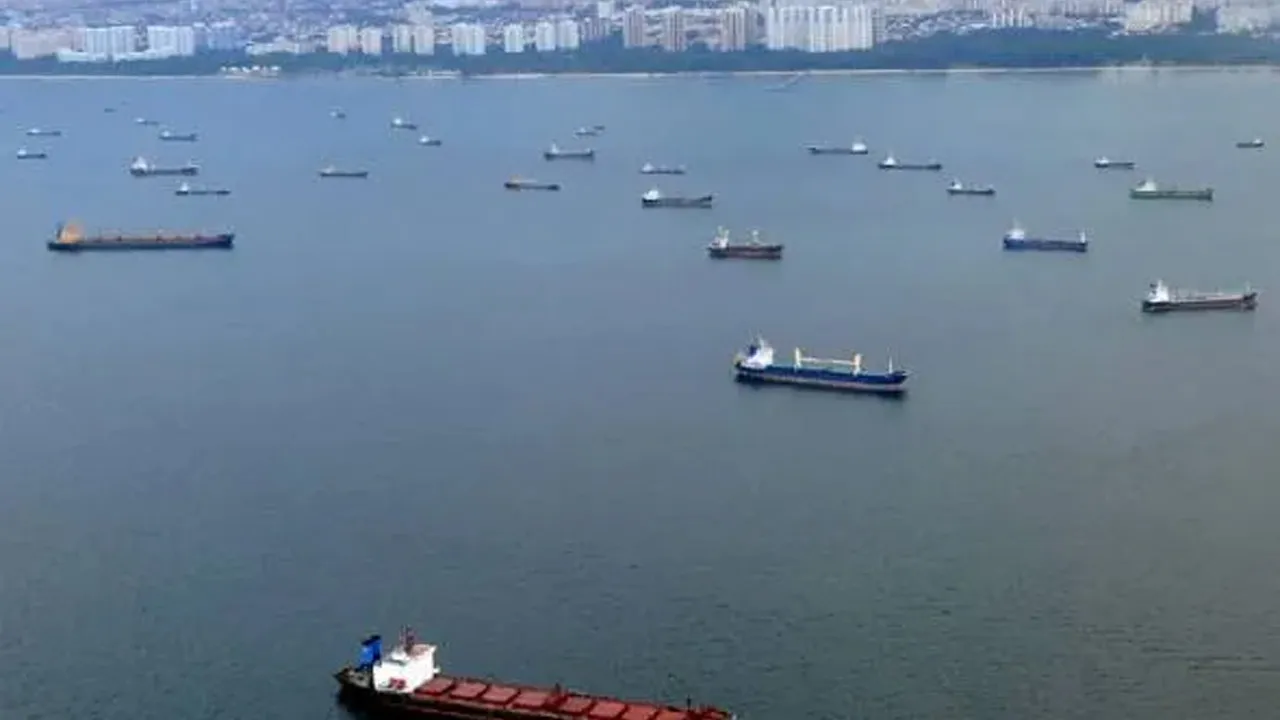
This is a category error with potentially dangerous consequences. The Strait of Malacca, while undeniably one of the busiest maritime arteries in the world, has not succumbed to the same patterns of militarised contestation. Littoral states—Malaysia, Indonesia, and Singapore—have, over decades, cultivated mechanisms of coordination that privilege stability over confrontation. To conflate Malacca with Hormuz is not only analytically flawed; it risks securitising a space that has thus far been managed through cooperation rather than coercion.
The world is, by most strategic estimates, punctuated by more than a hundred maritime chokepoints—ranging from the Suez Canal to the Panama Canal—each with the latent potential to become a node of great power rivalry. Yet not all chokepoints are created equal. The real fault lines today lie in West Asia, where the confluence of geopolitical rivalry and energy dependence has rendered Hormuz and Bab el-Mandeb acutely fragile. It is there, not in Southeast Asia, where the international community must prioritise de-escalation and diplomatic intervention.
And yet, perception often travels faster than reality. The anxieties generated in West Asia have inevitably seeped into Indo-Pacific strategic thinking. Whether under the banner of the “Free and Open Indo-Pacific” (FOIP)—a vision first articulated by Shinzo Abe and now carried forward by leaders such as Sanae Takaichi—or through broader Indo-Pacific Strategy (IPS) frameworks, there is a growing recognition that Maritime Domain Awareness (MDA) must be enhanced across all critical sea lanes, including those that are presently stable.
This is where MALPAN assumes its true significance. It is not a reaction to immediate threats in the South China Sea, but a pre-emptive investment in resilience. By integrating naval and air assets—including, for the first time, meaningful participation from the Royal Malaysian Air Force—the exercise signals an expansion of operational scope that aligns with the evolving demands of maritime security. It reflects an understanding that safeguarding sea lines of communication is as much about managing perceptions as it is about responding to tangible risks.
Equally important is the role of multilateral frameworks in anchoring this effort. The Five Power Defence Arrangements—linking Australia, Malaysia, Singapore, New Zealand, and the United Kingdom—continues to provide a quiet but effective platform for defence coordination. Its relevance, however, must now be viewed alongside the engagement of other key actors such as China, Japan, and South Korea, all of whom have a vested interest in preserving the integrity of Freedom of Navigation (FON).
FON itself is no longer a purely operational concept. It has become deeply entwined with the maintenance of a rules-based order (RBO)—one that is increasingly under strain. The challenge, therefore, is not merely to keep sea lanes open, but to ensure that the norms governing them are respected, internalised, and, where necessary, reinforced.
Herein lies the enduring importance of the Treaty of Amity and Cooperation in Southeast Asia. Often treated as a procedural prerequisite for Dialogue Partnership with ASEAN, the TAC is, in fact, a normative blueprint for regional coexistence. Its principles—non-interference, peaceful settlement of disputes, and mutual respect for sovereignty—are precisely what is lacking in many of today’s maritime flashpoints.
The time has come for states, both within and beyond Southeast Asia, to upgrade their commitment to the TAC—not as a symbolic gesture, but as a strategic necessity. In a world where maritime chokepoints can rapidly become theatres of confrontation, the TAC offers a framework for de-escalation that is both tested and adaptable. It is, in many ways, ASEAN’s quiet contribution to global order.
MALPAN, then, should be understood as part of a larger story. It is a reminder that while crises may originate elsewhere, their reverberations are felt everywhere. The task for Southeast Asia is not to mirror the instability of distant regions, but to preserve and strengthen its own model of cooperative security.
In the final analysis, the Strait of Malacca is not the next Hormuz. But ensuring that it never becomes one will require precisely the kind of foresight, coordination, and normative commitment that exercises like MALPAN seek to cultivate.
Phar Kim Beng, PhD, is Professor of ASEAN Studies and Director of the Institute of Internationaliation and ASEAN Studies (IINTAS) at the International Islamic University Malaysia.
Luthfy Hamzah is Senior Research Fellow at IINTAS and a specialist in trade, political economy, and strategic diplomacy in Northeast Asia.
** The views and opinions expressed in this article are those of the author(s) and do not necessarily reflect the position of Astro AWANI.