
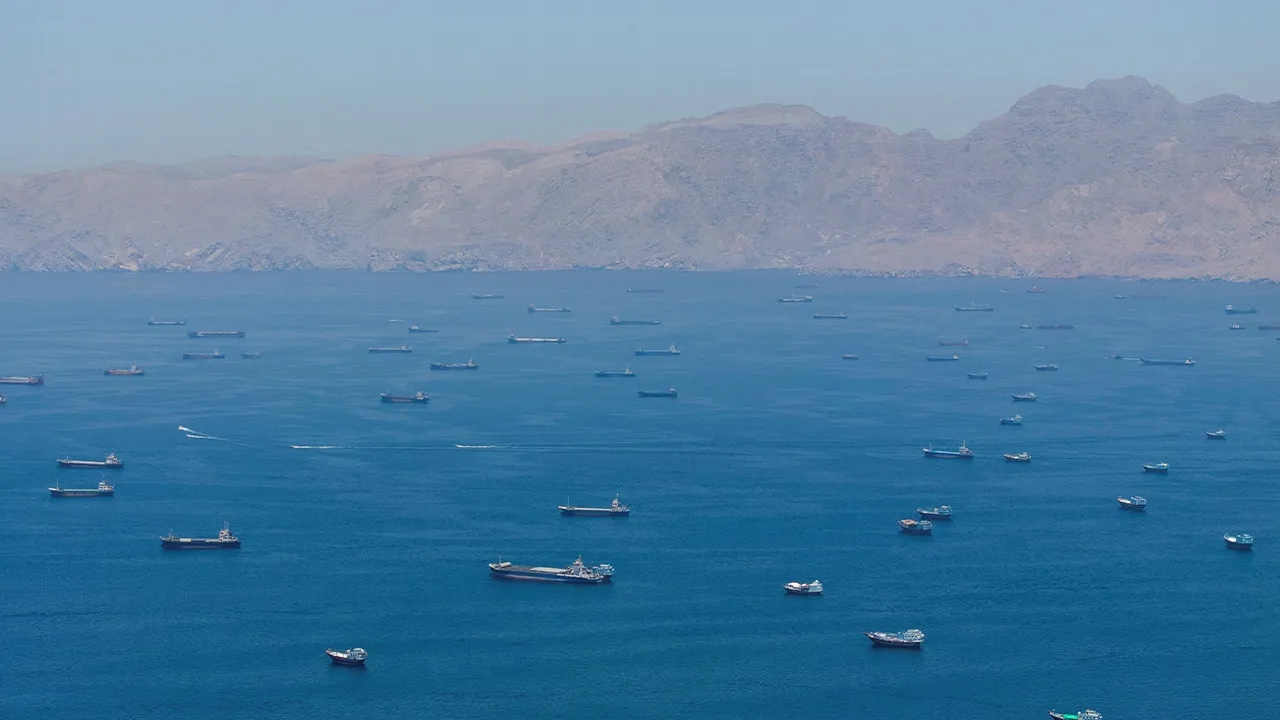
LONDON/SINGAPORE: Crude shipments through the Strait of Hormuz rose this week to their highest level since the U.S.-Israeli conflict with Iran began in February after a ceasefire deal reopened the waterway, data showed on Thursday.
Concerns about how long the strait would stay open also boosted trade.
Still, while oil shipments rose on strong demand, especially in Asia after months of disruptions, overall sailings remain a fraction of the daily average of 125 ships passing through the strait before the February 28 conflict began.
Four tankers carrying 6 million barrels of crude oil sailed through the strait on Thursday and an additional 4 million barrels of Iranian crude onboard two separate tankers also left, according to analysis from Kpler.
On Wednesday, some 10.8 million barrels of oil were shipped out on six tankers, Kpler analysis showed.
"The rebound reflects the adaptability of Mideast Gulf export systems rather than a clean return to pre-conflict trade," Kpler said in a report this week.
Many ships have been switching on their public AIS tracking transponders, but some may have gone undetected due in part to major disruption of AIS signals as well as ships not showing their movements through the strait. That makes it difficult to estimate the complete volume of shipments.
"Traffic levels are still below historical norms, and market participants continue to assess the durability of the current framework," Greece-based Allied Shipbroking said in a report this week.
"The 60-day agreement has reduced immediate risks to navigation, but it has not removed broader geopolitical uncertainties from the region."
U.S. Energy Secretary Chris Wright told the Reuters Global Energy Forum in New York on Wednesday that some 20 million barrels of crude oil exited the strait in the last 24 hours, amounting to around a fifth of world consumption, and similar to levels in recent days following an initial U.S.-Iran agreement to end the conflict.
Traffic through Hormuz is rising daily although ships are avoiding the central area of the waterway. Many have opted to hug the Omani side of the strait with fewer opting to use Iranian waters, according to analysis of ship movements.
The so-called Traffic Separation Scheme, adopted by the U.N.'s shipping agency in 1968, established routing lanes through Iranian and Omani waters in the strait. This central section is currently not usable due to the risk of mines, shipping and maritime security sources said.
These risks, together with uncertainty over what Iran's Revolutionary Guards may do, have limited even more traffic passing through, shipping industry sources said.
U.N. EVACUATION SCHEME PAUSED AFTER SHIP ATTACK
The Revolutionary Guards said in a statement on Thursday that safe passage through the strait was only possible through routes designated by Iran, warning that a newly announced shipping route proposed without coordination with Tehran was unacceptable and posed safety risks.
The statement added that action would be taken against vessels that fail to comply with the requirements.
A container ship was damaged after being hit by a projectile when attempting to pass through the strait close to the Omani coast on Thursday.
Two U.S. officials told Reuters Iran had fired at the cargo ship, which had reported being attacked on Thursday.
Earlier on Thursday, the Revolutionary Guards ordered two Panama-flagged ships to change course, British maritime security company Ambrey said.
The attack on the ship prompted the U.N's shipping agency to pause its voluntary evacuation scheme to enable hundreds of stranded ships and thousands of seafarers to sail out of the Gulf through the strait.
"To ensure a coordinated approach and navigational safety, the evacuation plan will be paused until further clarity is obtained," said Arsenio Dominguez, Secretary-General of the U.N.'s International Maritime Organization.