
Books are generally shaped by the era in which they are written. But there are exceptions, such as some of the great works of literature and philosophy. Some might have emerged from particular historical circumstances, but their response goes beyond prevailing anxieties. They might have reflected the intellectual climate of that epoch, but they also advance new paradigms of thinking. This is history’s way of testing ideas – with some fading as a result, confining their reach to a single generation; while others endure, speaking truths across centuries, even millenniums, and frontiers in ways their authors may not have fully anticipated.
As Francis Bacon, no less a contemporary of Shakespeare, once declared: “Reading maketh a full man; conference a ready man; and writing an exact man,” the mark of a truly meaningful book, coming forth from such an individual, therefore, lies in its capacity to remain relevant long after its initial publication, offering insight to readers who live in very different contexts from those in which it was first conceived. Prime Minister Datuk Seri Anwar Ibrahim’s The Asian Renaissance is one such book.
First published three decades ago, the book was written at a moment when Asia was undergoing rapid transformation. Economies were rising, societies were modernising, and debates about identity, culture, and development were intense. The mood was buoyant, the outlook hopeful, and the “tigers,” red-blooded and energetic, were ravenous for more kill.
This jubilance, symptomatic of an era of irrational exuberance, gave way to the Asian f inancial crisis, and the US subprime debacle, interspersed with the War on Terror, and the Covid-19 pandemic. In near lockstep, the author himself has lived through “the whips and scorns” of these dramatic personal and political upheavals since the 1997 calamity. To say that much has changed would be an understatement.
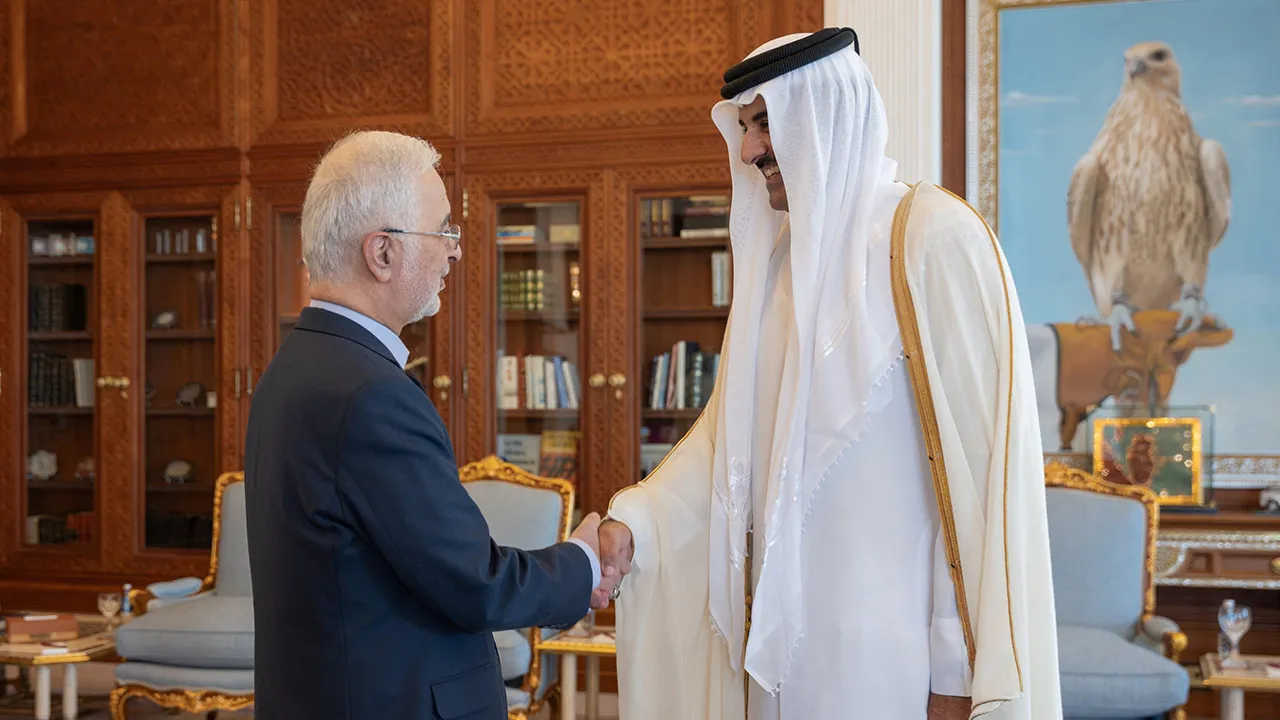
Yet the ideas espoused in The Asian Renaissance continue to resonate and find an intellectual home among new readers. This was abundantly clear when the Italian translation of the book was launched in Rome last week. At the session held in conjunction with the launch, the panel engaged with the text not as an artefact or historical document, but as a living work that could still speak to contemporary dilemmas. This was especially significant because the panel brought together policy practitioners, from senior civil servants to representatives of Rome’s leading think-tanks, and members from Italy’s Chamber of Deputies.
While profound changes have taken place since its publication, it would be a fool’s errand to assume that much water has flowed under the bridge as regards the underlying questions raised in The Asian Renaissance. If anything, they have only been refracted through new challenges, where the anxieties that once accompanied Asia’s rapid rise have simply taken new forms. Earlier debates may have revolved around whether Asian societies could modernise while remaining culturally rooted – often framed through Huntington’s Clash of Civilizations versus Fukuyama’s End of History – while contemporary discussions centre on how power, technology, and influence should be exercised in a deeply interconnected world. These questions will endure come hell or high water, and with the advent of Artificial Intelligence, Quantum Computing and Genomics, attendant upon these post-normal times, will attain even greater urgency.
Viewed this way, The Asian Renaissance transcends the temporal limits of global trends of the 1990s and opens up fresh vistas of perspectives for readers to reflect on the philosophical and ethical foundations of public life, governance, and civilisational building. The book advocates vigorously for an existence rooted in plurality in its outright rejection of jingoism and unequivocal in its refusal of any worldview that approached other societies from a position of condescension. To that end, the book centred the convivencia of medieval Iberia, where Muslims, Christians and Jews lived, traded, and borrowed from one another not in perfect peace, but definitely in pragmatic productivity.
The deeper lesson of convivencia is not nostalgia for the past, but a reminder that plural societies flourish when humility ameliorates power and dialogue tempers greed. It was with this spirit in mind that I framed my remarks in Rome. In my keynote, I emphasised that meaningful dialogue must begin with humility – about what we know and about what we may have misunderstood. It requires the courage to interrogate our assumptions, the honesty to acknowledge past mistakes, and the openness to learn from those who think and live differently from us.
Malaysia’s diplomatic posture manifests this spirit. The country has long straddled multiple relationships without reducing itself to a single allegiance or being held hostage to a single narrative. The country counts both superpowers among its top foreign investors and trading partners, and major middle powers across the globe among its most strategic.
Above all is the underpinning approach, characterised by the country’s insistence to remain open, refuse simplistic binaries, and preserve room for independent judgment. This aligns closely with the ethos of The Asian Renaissance, which does not imagine Asia’s future as one of domination or imitation, but as one of moral confidence rooted in pluralism, dignity, and the region’s place in the world.
Three decades after its first publication, the message of The Asian Renaissance continues to resonate. Where xenophobia, Islamophobia, and extremism, still reign supreme across the globe, the call for civilizational dialogue to foster trust and mutual respect remains not just relevant but acquires even greater urgency, what more as increasing geopolitical tensions and forced geo-economic realignments threaten to further disrupt global peace.
Be it the imperative for a humane economy, where free enterprise is encouraged and unbridled capitalism is held in check, where growth is balanced with social justice, and where development incorporates investment to meet the challenges of climate change, economic instability, and the disruptions of technology, The Asian Renaissance provides the necessary intellectual sustenance and moral and ethical compass not just for this day and age, but for decades to come.
Datuk Prof Dr Mohd Faiz Abdullah is the Chairman of Institute of Strategic & International Studies (ISIS) Malaysia.
** The views and opinions expressed in this article are those of the author(s) and do not necessarily reflect the position of Astro AWANI.