AI Brief
- French high school students continued protests over teacher shortages and poor facilities, with the government promising action but providing no specific details.
- Authorities reported 224 high schools closed and 151 partially reopened, while 94% of schools were either fully or partially open on Thursday.
- The protests have sparked political debate ahead of elections, with public opinion largely supporting student demands but divided on continuing demonstrations.
PARIS: French teenagers blockaded some high schools and prepared to rally again on Thursday after the government promised to address their grievances about teacher shortages and dilapidated school buildings but gave no specific details.
The protest movement, now into its third week, has exposed deep tensions in France between popular demands for investments in deteriorating public services and a cash-strapped government under pressure from bond markets to reduce its debt and deficit.
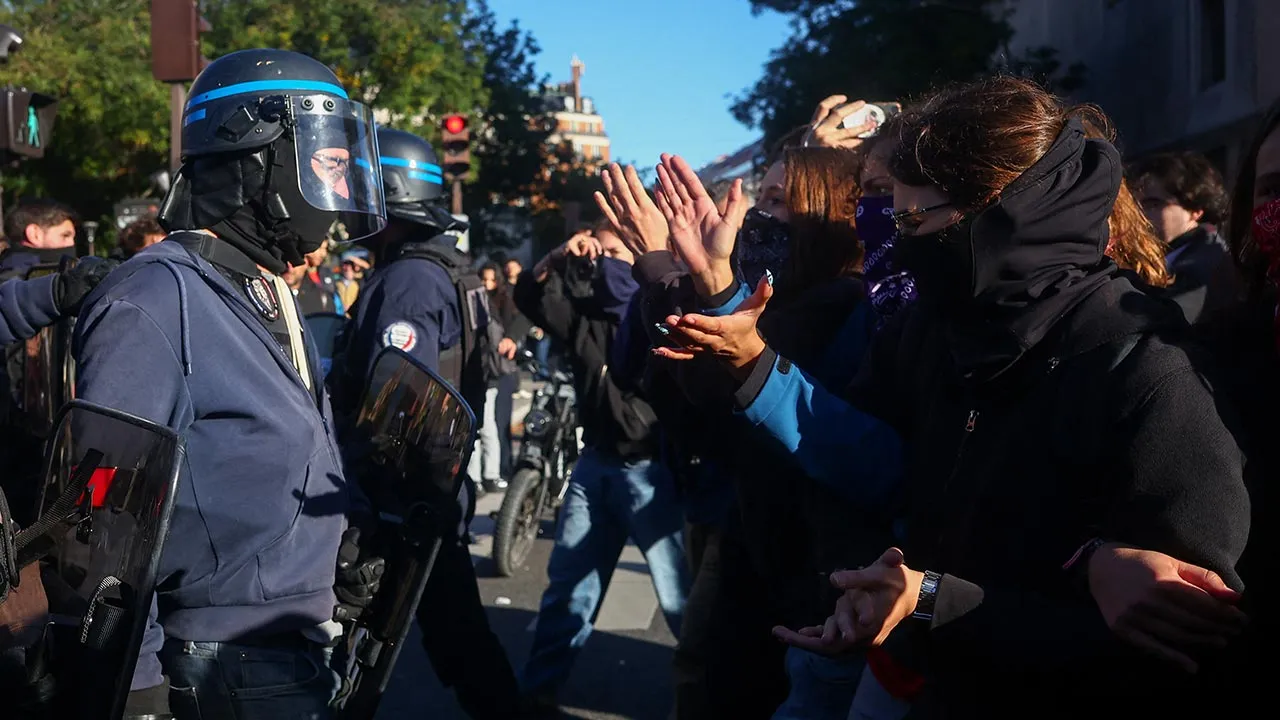
It has also led to hundreds of arrests, dozens of injuries and a heated debate about the use of force by riot police against teenagers. On Wednesday, the government suspended the use of stun grenades in the policing of the protests.
The education ministry said 224 high schools were closed on Thursday morning, while 151 were partially reopening after closures. It said the number of closures had dropped by 30% compared with Wednesday morning, and that 94% of high schools were either fully or partially open.
Near Helene Boucher high school in the 20th arrondissement of Paris, a predominantly working-class area, a barricade formed out of rubbish bins had been erected and protesters were chanting and holding up banners. Scuffles with police broke out.
Student rallies backed by teachers and trade unions were planned, including on Paris's Place de la Bastille, two days after hundreds of thousands of demonstrators took to the streets nationwide.
POLARISED POLITICAL RESPONSE AS ELECTION LOOMS
Whether Thursday's gatherings attract such large numbers will provide a test of the government's attempts to defuse the crisis, although unions are already planning a bigger day of protests on October 17.
Prime Minister Sebastien Lecornu addressed the nation late on Wednesday, pledging that the government would present "concrete, quick and fully funded responses" by late October, but offered no specifics.
An online consultation platform set up for high-school students to express their frustrations and make their demands had drawn more than 43,000 responses in its first two days.
Six months out from an election to replace President Emmanuel Macron after the end of his second consecutive presidential term, politicians' responses to the wave of student protests have been starkly polarised.
Far-right frontrunner Marine Le Pen has highlighted damage to schools caused by a minority of protesters and called for them or their parents to foot repair bills. On Tuesday, she outlined plans to slash public spending should she win.
Her hard-left opponent Jean-Luc Melenchon, who also has a chance of making the runoff, was given a rock-star reception on Tuesday at a demonstration in Paris, where he praised the protesters as "incredible" and denounced police brutality.
According to an Elabe poll for BFM TV, 72% of French people think the students' demands are legitimate, but 55% of them think the protests should stop.
'OUR DUTY IS TO LISTEN TO THEM'
The government has sought to tread a line between condemning violent incidents in which schools were set ablaze and staff injured, while also expressing sympathy with some of the students' complaints.
"Our duty as leaders is to listen to them," Finance Minister Roland Lescure told the BBC.
"It's hard to tell young people we're not going to have the money for you because we're spending a lot on health and pensions," he was quoted as saying, adding that there was a need to rebalance public spending between generations.
On Wednesday, protests by students and teachers also took place in other European nations including Belgium, Spain and Portugal.
In the Belgian city of Liege, where local media reported that more than 100 people have been arrested in connection with student protests this month, authorities imposed a ban on public gatherings of more than three people until October 16.
Belgium's foreign minister, Bernard Quintin, said on Thursday morning that hard-left activists had infiltrated the protests and were causing damage to property.