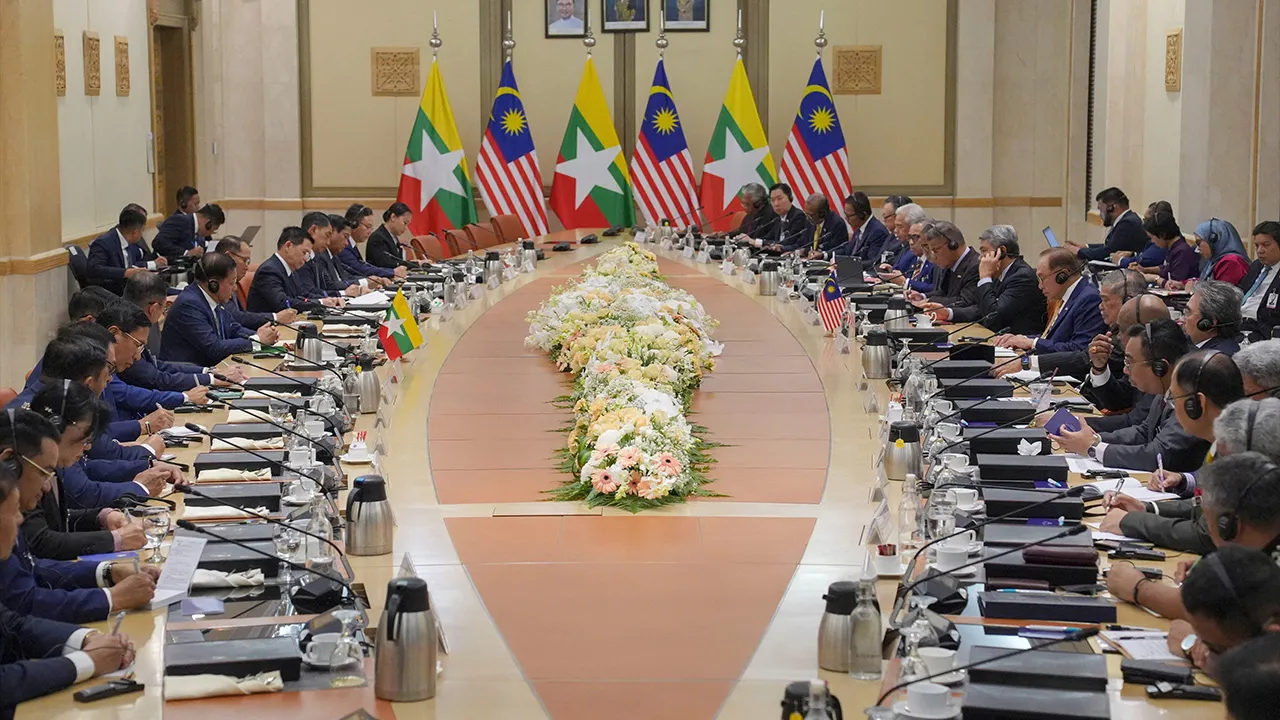

THE conflict between Thailand and Cambodia is undoubtedly bad. Extremely bad. Fighting that stretches from days into weeks—and potentially months—will inevitably generate massive humanitarian consequences. If escalation continues unchecked, millions on both sides of the border could be displaced, rendering communities homeless and economies shattered.
In scale and psychological trauma, this would be the most severe mainland Southeast Asian war since the Vietnam conflict involving the United States between 1962 and 1975. More than four decades later, the tragic irony is that Cambodia and Thailand appear trapped in a familiar cycle of violence, one that diplomacy has struggled to permanently arrest. If neither side is able—or willing—to comply fully with the Kuala Lumpur Peace Accord, the region risks reliving a history it once believed had been decisively left behind.
Yet as dire as Southeast Asia’s predicament may appear, it pales in comparison to what could unfold in Northeast Asia.
When analysts warn that Southeast Asia is unstable, they often forget that Northeast Asia is not merely unstable—it is structurally explosive. The Sino-Taiwanese confrontation alone would not remain a bilateral conflict. The United States and Japan would almost certainly be drawn into a vortex of violence, transforming a regional crisis into a global one. Sea lanes, semiconductor supply chains, energy flows, and alliance credibility would all be placed at risk simultaneously.
Even more precarious, however, is the slow but unmistakable escalation on the Korean Peninsula.
South Korea is now actively exploring the acquisition of nuclear-powered submarines, ostensibly to counter the growing threat posed by North Korea. At first glance, this appears to be a defensive and rational response to Pyongyang’s expanding missile and nuclear arsenal. Yet beneath the surface lies a far more dangerous logic—one that risks eroding long-standing non-proliferation norms and accelerating a regional nuclear cascade.
North Korea, for all its belligerence, does not currently possess nuclear-powered submarines. It relies instead on diesel-electric platforms with limited endurance and survivability. This asymmetry matters. Seoul’s pursuit of nuclear submarines is therefore not a direct response to an existing capability, but a pre-emptive escalation that reshapes strategic expectations across the region.
If deterrence is the true objective, South Korea would be far better served by investing heavily in anti-submarine warfare (ASW). Advanced sonar networks, maritime patrol aircraft, undersea sensors, and cooperative intelligence with allies would directly address the real threat: North Korea’s ability to deploy submarines covertly and threaten South Korean or allied shipping. ASW strengthens defence without crossing normative red lines.
Nuclear submarines, by contrast, carry symbolic and strategic meanings that extend far beyond propulsion. They are widely understood as platforms closely associated with nuclear weapons states, strategic second-strike capabilities, and long-term power projection. Once acquired, they inevitably raise questions—both domestically and internationally—about why such platforms are necessary and what future capabilities they might eventually support.
This is precisely the concern highlighted in the Bulletin of the Atomic Scientists article on how nuclear submarines could pave the way for nuclear weapons in South Korea.
The article argues that nuclear-powered submarines are not merely neutral military assets; they are deeply embedded in the architecture of nuclear deterrence. Their endurance, stealth, and survivability make them ideal platforms for nuclear-armed missiles, even if initially deployed without them. As a result, acquiring such submarines lowers the political, technical, and psychological barriers to eventual nuclear armament.
The Bulletin notes that South Korea already possesses advanced civilian nuclear infrastructure, significant technological expertise, and latent weapons capability. Introducing nuclear submarines would further normalize the presence of highly enriched nuclear material within the military domain, complicating oversight and weakening non-proliferation commitments. Over time, this could blur the line between peaceful nuclear use and weapons-related applications.
Equally troubling is the regional ripple effect. If South Korea moves in this direction, Japan will face intense pressure to follow suit. Tokyo, with its own advanced nuclear technology and deep anxieties about regional security, would find it increasingly difficult to justify restraint. China, in turn, would interpret these moves as further evidence of encirclement, reinforcing its own naval nuclear modernization. The Korean Peninsula would thus become one node in a much wider spiral of strategic mistrust.
The Bulletin also emphasizes alliance dynamics. While the United States may tolerate or even quietly support nuclear-powered submarines for South Korea under the banner of extended deterrence, such tolerance risks undermining Washington’s long-standing commitment to non-proliferation. It sends mixed signals: that nuclear restraint is expected of adversaries but negotiable among allies.
This is where Northeast Asia fundamentally differs from Southeast Asia.
Southeast Asia, for all its conflicts, has largely internalized the norm of nuclear restraint through the Southeast Asia Nuclear Weapon-Free Zone. ASEAN’s security problems are grave, but they remain largely conventional. Northeast Asia, by contrast, sits at the intersection of unresolved wars, great-power rivalry, and nuclear brinkmanship. The margin for error is far thinner.
The lesson is not that Southeast Asia should feel relieved, but that policymakers must resist the temptation to normalize escalation elsewhere simply because violence already exists at home. Thailand and Cambodia demonstrate how quickly miscalculation can spiral out of control, even without nuclear weapons. Northeast Asia shows how much worse that spiral could become when nuclear symbolism and strategic ambiguity are added to the mix.
If stability is the goal, restraint—not prestige platforms—must guide policy. Nuclear submarines may promise security, but in Northeast Asia, they risk delivering precisely the opposite.
Phar Kim Beng, PhD, is Professor of ASEAN Studies and Director of the Institute of Internationaliation and ASEAN Studies (IINTAS) at the International Islamic University Malaysia.
Luthfy Hamzah is Senior Research Fellow at IINTAS and a specialist in trade, political economy, and strategic diplomacy in Northeast Asia.
** The views and opinions expressed in this article are those of the author(s) and do not necessarily reflect the position of Astro AWANI.
Your gateway to global news, insights, and stories that matter.

In scale and psychological trauma, this would be the most severe mainland Southeast Asian war since the Vietnam conflict involving the United States between 1962 and 1975. More than four decades later, the tragic irony is that Cambodia and Thailand appear trapped in a familiar cycle of violence, one that diplomacy has struggled to permanently arrest. If neither side is able—or willing—to comply fully with the Kuala Lumpur Peace Accord, the region risks reliving a history it once believed had been decisively left behind.
Yet as dire as Southeast Asia’s predicament may appear, it pales in comparison to what could unfold in Northeast Asia.
When analysts warn that Southeast Asia is unstable, they often forget that Northeast Asia is not merely unstable—it is structurally explosive. The Sino-Taiwanese confrontation alone would not remain a bilateral conflict. The United States and Japan would almost certainly be drawn into a vortex of violence, transforming a regional crisis into a global one. Sea lanes, semiconductor supply chains, energy flows, and alliance credibility would all be placed at risk simultaneously.
Even more precarious, however, is the slow but unmistakable escalation on the Korean Peninsula.
South Korea is now actively exploring the acquisition of nuclear-powered submarines, ostensibly to counter the growing threat posed by North Korea. At first glance, this appears to be a defensive and rational response to Pyongyang’s expanding missile and nuclear arsenal. Yet beneath the surface lies a far more dangerous logic—one that risks eroding long-standing non-proliferation norms and accelerating a regional nuclear cascade.
North Korea, for all its belligerence, does not currently possess nuclear-powered submarines. It relies instead on diesel-electric platforms with limited endurance and survivability. This asymmetry matters. Seoul’s pursuit of nuclear submarines is therefore not a direct response to an existing capability, but a pre-emptive escalation that reshapes strategic expectations across the region.
If deterrence is the true objective, South Korea would be far better served by investing heavily in anti-submarine warfare (ASW). Advanced sonar networks, maritime patrol aircraft, undersea sensors, and cooperative intelligence with allies would directly address the real threat: North Korea’s ability to deploy submarines covertly and threaten South Korean or allied shipping. ASW strengthens defence without crossing normative red lines.
Nuclear submarines, by contrast, carry symbolic and strategic meanings that extend far beyond propulsion. They are widely understood as platforms closely associated with nuclear weapons states, strategic second-strike capabilities, and long-term power projection. Once acquired, they inevitably raise questions—both domestically and internationally—about why such platforms are necessary and what future capabilities they might eventually support.
This is precisely the concern highlighted in the Bulletin of the Atomic Scientists article on how nuclear submarines could pave the way for nuclear weapons in South Korea.
The article argues that nuclear-powered submarines are not merely neutral military assets; they are deeply embedded in the architecture of nuclear deterrence. Their endurance, stealth, and survivability make them ideal platforms for nuclear-armed missiles, even if initially deployed without them. As a result, acquiring such submarines lowers the political, technical, and psychological barriers to eventual nuclear armament.
The Bulletin notes that South Korea already possesses advanced civilian nuclear infrastructure, significant technological expertise, and latent weapons capability. Introducing nuclear submarines would further normalize the presence of highly enriched nuclear material within the military domain, complicating oversight and weakening non-proliferation commitments. Over time, this could blur the line between peaceful nuclear use and weapons-related applications.
Equally troubling is the regional ripple effect. If South Korea moves in this direction, Japan will face intense pressure to follow suit. Tokyo, with its own advanced nuclear technology and deep anxieties about regional security, would find it increasingly difficult to justify restraint. China, in turn, would interpret these moves as further evidence of encirclement, reinforcing its own naval nuclear modernization. The Korean Peninsula would thus become one node in a much wider spiral of strategic mistrust.
The Bulletin also emphasizes alliance dynamics. While the United States may tolerate or even quietly support nuclear-powered submarines for South Korea under the banner of extended deterrence, such tolerance risks undermining Washington’s long-standing commitment to non-proliferation. It sends mixed signals: that nuclear restraint is expected of adversaries but negotiable among allies.
This is where Northeast Asia fundamentally differs from Southeast Asia.
Southeast Asia, for all its conflicts, has largely internalized the norm of nuclear restraint through the Southeast Asia Nuclear Weapon-Free Zone. ASEAN’s security problems are grave, but they remain largely conventional. Northeast Asia, by contrast, sits at the intersection of unresolved wars, great-power rivalry, and nuclear brinkmanship. The margin for error is far thinner.
The lesson is not that Southeast Asia should feel relieved, but that policymakers must resist the temptation to normalize escalation elsewhere simply because violence already exists at home. Thailand and Cambodia demonstrate how quickly miscalculation can spiral out of control, even without nuclear weapons. Northeast Asia shows how much worse that spiral could become when nuclear symbolism and strategic ambiguity are added to the mix.
If stability is the goal, restraint—not prestige platforms—must guide policy. Nuclear submarines may promise security, but in Northeast Asia, they risk delivering precisely the opposite.
Phar Kim Beng, PhD, is Professor of ASEAN Studies and Director of the Institute of Internationaliation and ASEAN Studies (IINTAS) at the International Islamic University Malaysia.
Luthfy Hamzah is Senior Research Fellow at IINTAS and a specialist in trade, political economy, and strategic diplomacy in Northeast Asia.
** The views and opinions expressed in this article are those of the author(s) and do not necessarily reflect the position of Astro AWANI.
Your gateway to global news, insights, and stories that matter.