
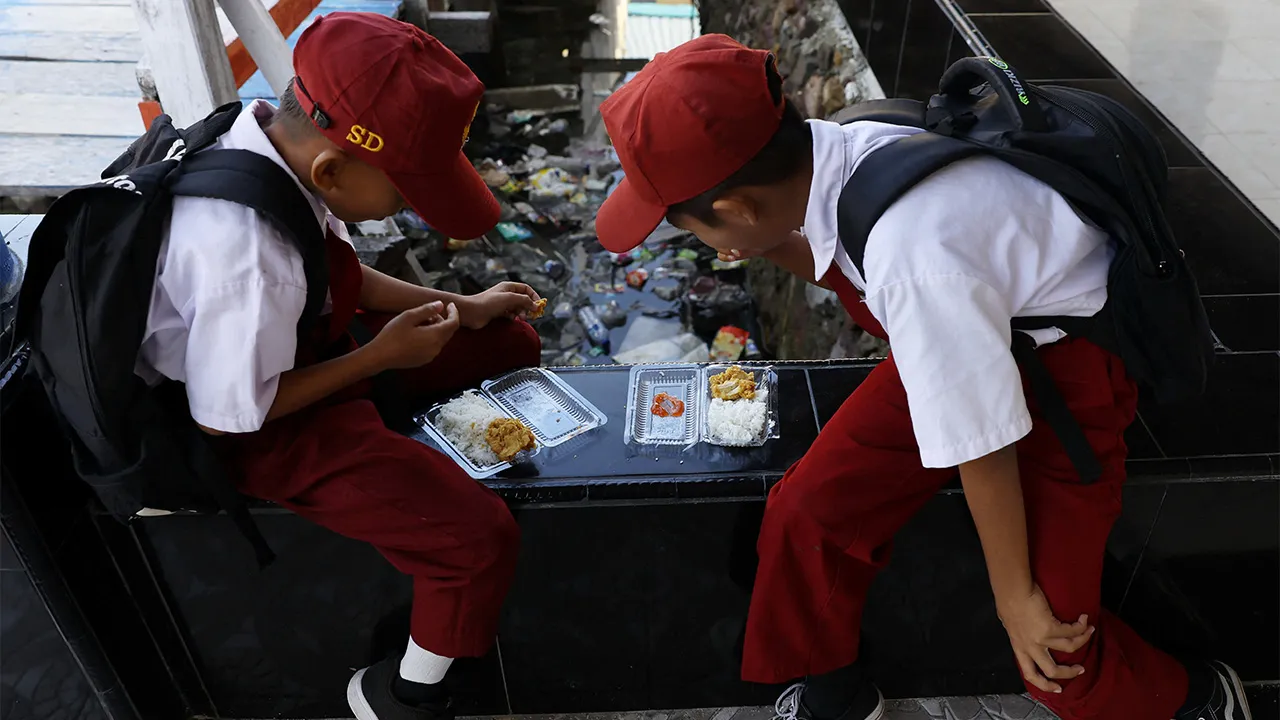
GORONTALO, INDONESIA: Loan sharks are circling a kitchen that stands on stilts above the waters of Tomini Bay, off the coast of Indonesia's Sulawesi island in the remote fishing village of Torosiaje.
The kitchen, which cost 1.8 billion rupiah (US$100,000), was built under a government plan to incentivise investors to help provide the massive infrastructure needed for President Prabowo Subianto's flagship initiative to deliver free meals to 83 million Indonesians, including school children and pregnant and breastfeeding women.
"My reputation has been badly damaged, and the losses are enormous," Sigit Buludawa, a 34-year-old lawyer who built the kitchen in November using all his money and loans from unlicensed lenders, told Reuters during a recent visit to his low-income village.
Sigit is one of at least 400 investors who borrowed money to build more than 1,500 kitchens in remote areas on reimbursement terms that have now been delayed or changed as the government seeks to reduce costs for the free meals programme, according to multiple interviews with kitchen owners, public documents and confidential government contracts reviewed by Reuters.
Mounting debts are the latest blow for an initiative that has struggled with governance issues, supply chains problems, mass food poisoning cases and financial cutbacks since it was launched last year, leaving kitchens idle, children unfed and investors owing tens of millions of dollars.
The National Nutrition Agency (NNA), which oversees the programme, did not respond to Reuters request for comment. Prabowo has rung the changes in an effort to get the initiative back on track, sacking the agency's first head and launching investigations into alleged corruption. Last week, the agency's new chief Sudaryono said he will prioritise the operations of kitchens in areas with high child stunting rates and in remote areas.
Around 700 kitchens - including Sigit's - have official contracts ensuring repayment, said Herwil Junaidi Harefa, head of the Food and Nutrition Association for Remote, Frontier and Outlying Areas, a union of kitchen owners. Another 800 are complete, but await final government inspection, he added.
Most owners face pressure from banks or loan sharks, with some equipment repossessed, said Herwil, who himself carries an 8 billion rupiah debt after setting up multiple kitchens.
Dozens of association members protested in Jakarta last month.
A VILLAGE ON STILTS
The free meals programme is a huge logistical undertaking given the archipelago's 17,000 islands and the world's fourth largest population.
It takes hours of driving through the hills, followed by a 10-minute boat ride to reach Torosiaje, home to the seafaring Bajo tribe where stilt houses are connected by narrow walkways.
The kitchen was built to serve around 400 village students as well as pregnant and breastfeeding mothers.
Sigit said his government inspection was completed in February, but he has not been reimbursed and the interest on his 1 billion rupiah (US$55,000) debt has piled up.
Now he has no idea how, or if, he will ever see the money, and what he will do with his idle kitchen, complete with stoves, fridges and hundreds of serving trays.
THE SCHEME
Last year, the NNA sought to accelerate kitchen construction in remote, underdeveloped areas with high levels of child stunting and limited access.
NNA and local governments had an attractive pitch: investors would be fully reimbursed along with an additional return of at least 100% of their initial investment, including incentives and rental costs over four years, according to the first technical guidelines reviewed by Reuters, dated October 2025.
Payment was due within 35 to 45 days of government appraisal, NNA officials said during meetings, according to four owners.
The programme hit a high of almost 28,000 kitchens built and 13,000 more were planned.
Prabowo touted the expansion at the World Economic Forum in Davos in January, saying it would soon overtake fast-food chain McDonald's in numbers of people served globally.
The government then cut this year's free meals budget from 335 trillion rupiah to 268 trillion rupiah to find fiscal room after the Iran war.
In March, the NNA restructured payments: 60% after construction and the remainder in two instalments once requirements were met, and changed the scheme again in May to pay daily incentives over two years, according to documents seen by Reuters and reported here for the first time.
In June, authorities raided NNA offices, and agency head Dadan Hindayana was sacked and arrested. New management imposed efficiency measures, freezing 13,000 planned new kitchens. The budget was further cut to 229 trillion rupiah.
After Dadan's arrest, kitchen owners lost access to a dedicated portal containing their contracts, appointment letters, and virtual repayment account numbers, four owners told Reuters.
Uncertainty persists in Jakarta. Dadan's successor suddenly resigned last month. Newly appointed NNA chief Sudaryono met some kitchen owners and has promised a solution, without providing details.
'POOR GOVERNANCE'
The problems underscored poor governance in the programme's budget management and private sector initiatives, said Ubaid Matraji, head of Network for Education Watch, an education NGO.
Ubaid also said the programme prioritised major cities like Jakarta even though those areas have easier access to food and above-average nutrition.
The areas that most need this programme are more far-flung - like Torosiaje and Sandalan, another remote village in Gorontalo, where most residents farm corn, coconut, or papaya and earn US$100 a month or less.
Zaenuri Mustofa, a 42-year-old agricultural produce collector, built a kitchen in Sandalan and still owes contractors money after racking up debts of 700 million rupiah.
"I have had enough, I don't want to go through that again," he told Reuters.
BaiqSriyono, a mother of a 5-year-old in Sandalan, said villagers are disappointed and wonder when the programme will begin.
"We hope it can start soon... it can help our children," she said.
As kitchen owners await payments and the fate of their unused kitchens, loan repayments mount.
"We’re actually helping the government," Herwil said. "Why are they doing this to us?"