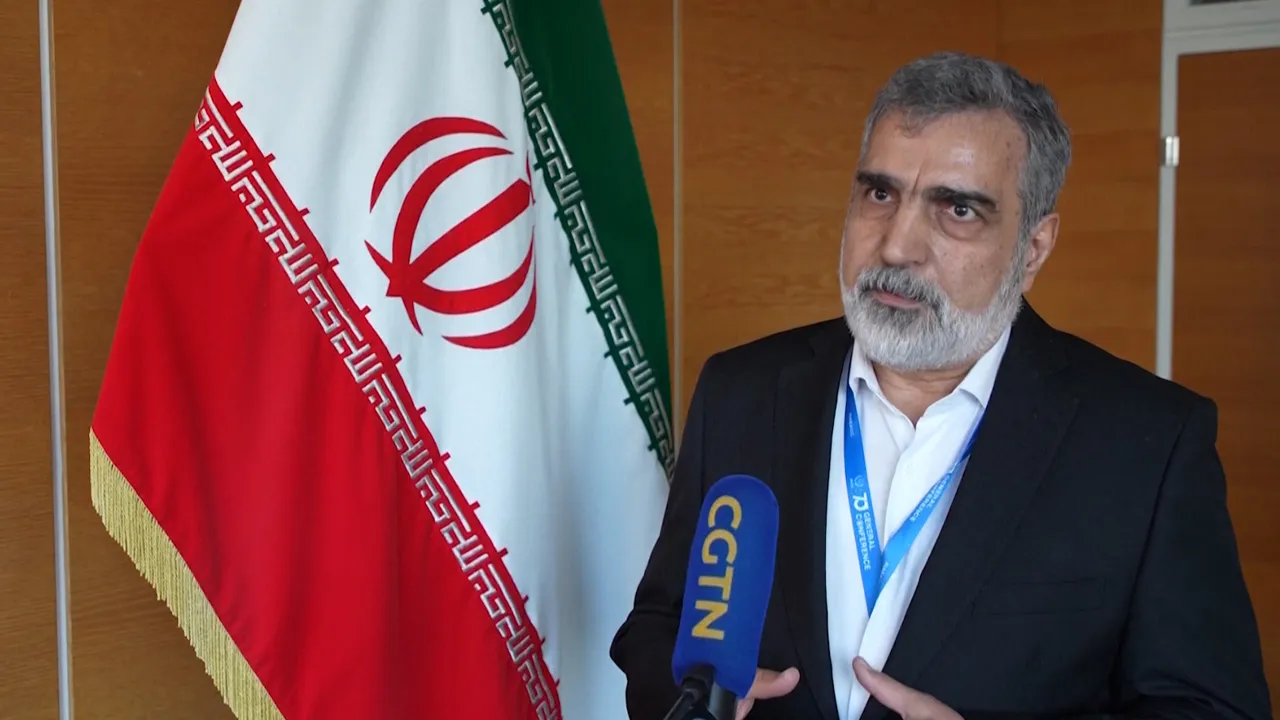
IRAN is working to secure the Strait of Hormuz and remains resolutely determined to defend itself, deputy head and spokesman of the Atomic Energy Organization of Iran Behrouz Kamalvandi said in Vienna.
Speaking on the sidelines of the 70th General Conference of the International Atomic Energy Agency (IAEA), Kamalvandi said that only a handful of ships are currently moving through the strait, disputing U.S. claims that traffic through the strategic waterway is increasing.
"We are doing all our best to secure the situation, to secure the Strait of Hormuz. But the number of ships is not the number that they are claiming. We have only a one-digit number of ships which are in traffic, going and coming into the Strait of Hormuz," said Kamalvandi.
As the conflict remains unsettled, he emphasized that Iran will hold strong in defense of itself for as long as circumstances require.
"If you are under invasion, you have every card to play to defend yourself. So we have more than cards. We have, of course, enough cards, but more than cards, we have a very strong will to defend our country. And of course we will be able to prevail in this situation no matter how much pressure they put on us," said Kamalvandi.
According to Iran's state-run IRIB news agency reports on Monday, Austria has denied a visa to president of the Atomic Energy Organization of Iran Mohammad Eslami, who was scheduled to deliver a speech at the 70th Regular Session of the IAEA General Conference later in the day. The reports cited "obstructionism" by the United States and certain other countries as the reason.
Kamalvandi sharply criticized the decision to prevent Eslami from attending this week's IAEA General Conference.
"They issued a visa about two weeks ago. But all of a sudden, under pressure from Americans, they revoked it. And, this is not good. This is something that is not a matter only for Iran, it is a matter of international issue. And I think everybody, every country has to react," he said.
The 70th Regular Session of the IAEA General Conference, running from Monday to Friday, has drawn nearly 4,000 senior officials and representatives from IAEA member states, and delegations of international organizations and non-governmental organizations.