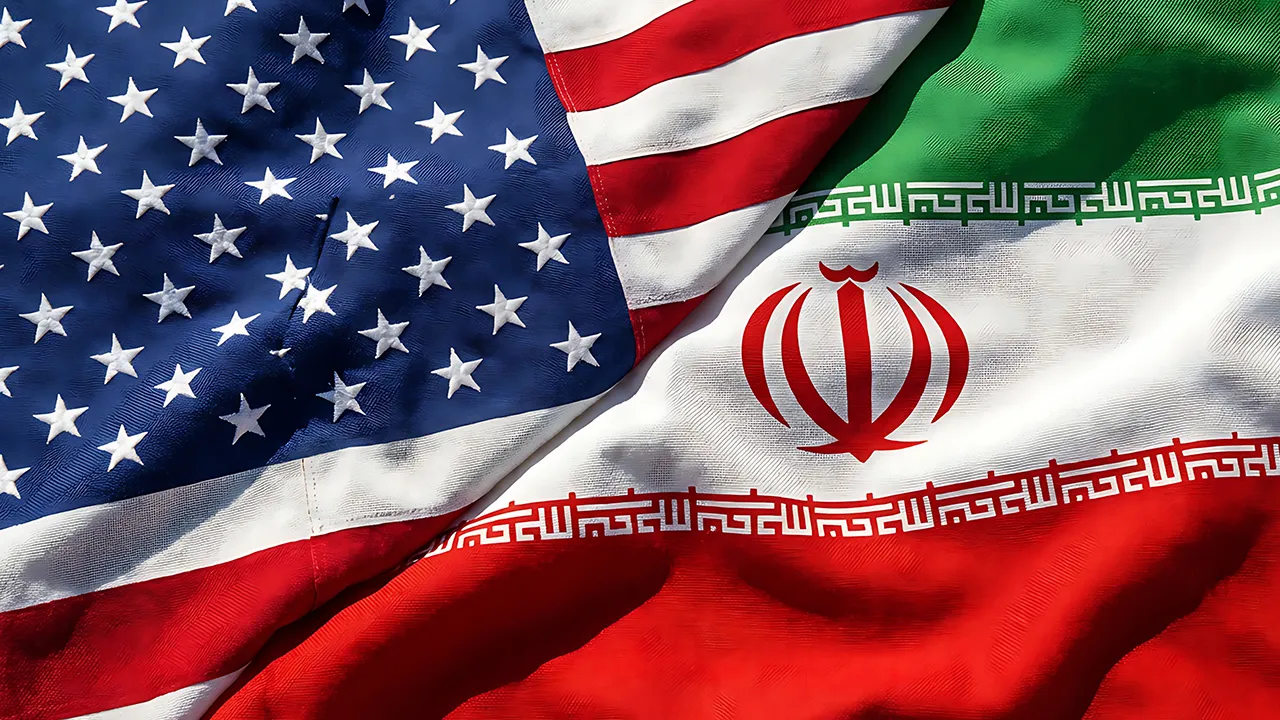
WHEN the 14-point Memorandum of Understanding between Iran and the United States (U.S.), now known as the Islamabad Memorandum, was signed on June 17, 2026, many observers were baffled.
Only three and a half months earlier, on February 28, 2026, a U.S. strike had pulverized the Shajareh Tayyebeh elementary school in Minab. More than 160 people were killed by a Tomahawk cruise missile, the vast majority of them children aged 7 to 12. It was the first day of the war. The intelligence used to justify the strike was more than a decade old. Even more heinously, witnesses described a “double-tap” sequence: after the first strike, surviving pupils were moved into a prayer hall, only for a second missile to strike the area in which they had taken shelter. Subsequent satellite and forensic analysis showed that the wider compound was hit repeatedly.
EMIR Research highlighted in its earlier analysis how this cynical atrocity infuriated the entire Iranian nation and united it around those who defend country’s sovereignty, making any talk about negotiations with the enemy akin to signing a “traitor” label on one’s own back (“The American Unipolar Deflation: What the War on Iran Really Exposes”).
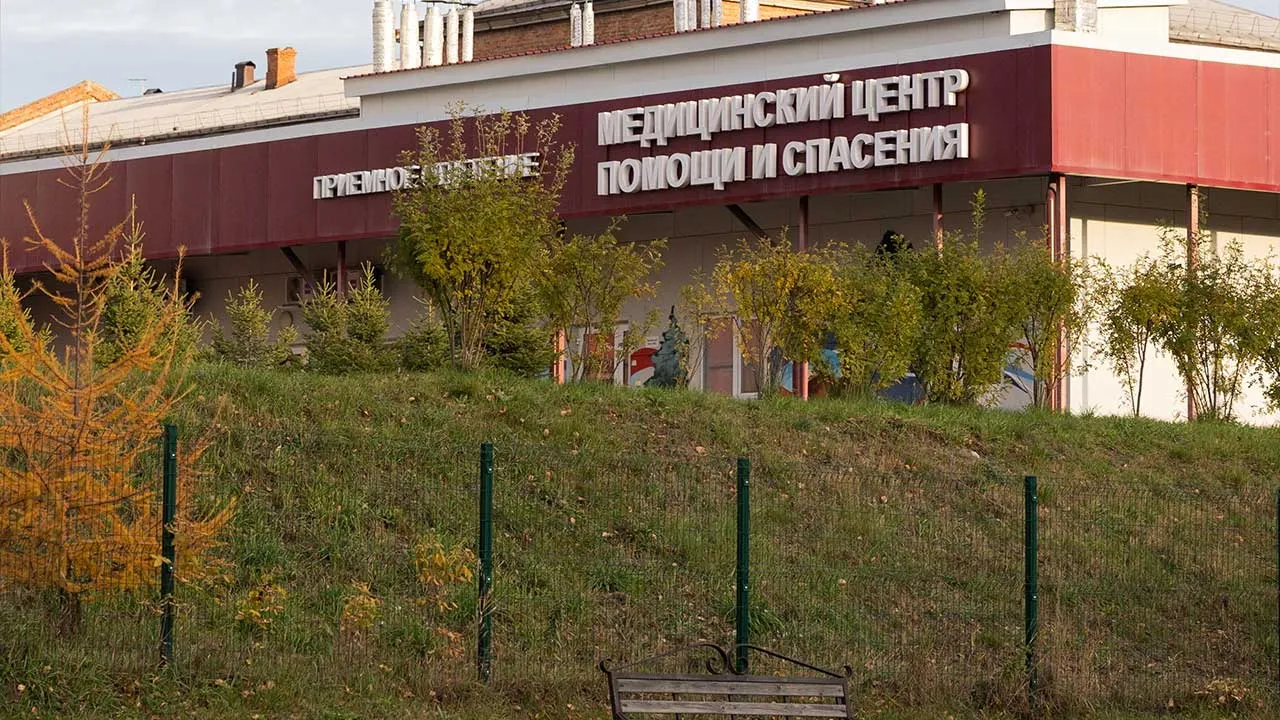
Notably, Minab was not an isolated aberration. By April 2026, Iran announced that attacks on civilian centers had reached staggering levels: 83,351 residential units affected, alongside 322 medical centres and 763 schools. The U.S. escalated against civilians systematically, targeting hospitals, schools, homes, water infrastructure, and even wheat silos. By June 2026, U.S. strikes had cut off water to 20,000 people in Bemani.
This did not look like a war of precision at all but deliberate targeting of the country’s civic tissue, making any talk of negotiations politically indefensible --- or so it should have been.
Yet, less than four months after Minab, Iran signed an MoU with the very power prosecuting such a heinous war.
On the surface, the contradiction was staggering. At the level of statecraft, it is less so.
The agreement emerged after a prolonged contest over how Iran should convert battlefield leverage into political outcome. On March 23, 2026, Trump postponed threatened attacks on Iran’s power grid for five days, claiming “productive” conversations with Iranian officials. Tehran publicly denied this. Parliament Speaker Mohammad Baqer Qalibaf called the claim fake news, while the Revolutionary Guards said Iran was negotiating only through “impact-focused operations.” Yet regional intermediaries were relaying messages and direct talks in Islamabad were already being explored.
Either Trump was inventing the contacts in his trademark fashion, or parts of the Iranian system were indeed communicating through backdoor channels. The latter became harder to dismiss as the civilian-technocratic wing pressed for a pause. Iran International, citing unnamed sources familiar with the dispute, reported that President Masoud Pezeshkian had clashed with IRGC commander Ahmad Vahidi, warning that without a ceasefire the economy might collapse within weeks and demanding restoration of executive authority to the civilian government.
The economic caution was not irrational --- no responsible leadership ignores its population's suffering. But timing matters. A pause was of greater immediate value to Washington, whose air-defense inventories and missile stocks required replenishment, than to Iran, which had imposed a strategic stalemate and held decisive leverage over Straits of Hormuz (refer to “The American Unipolar Deflation”) --- precisely why the U.S. pushed for negotiations. A pause would allow the U.S. to regroup while binding Iran’s hands.
This is the deeper meaning of what EMIR Research has called the "subscription elite": those system layers whose loyalty is to external dependency rather than national sovereignty, who inevitably seek negotiation over deterrence.
War, however, is an x-ray diagnostic. It reveals not merely who speaks patriotically, but whose decisions actually increase the country’s capacity to remain sovereign.
Iran's counter-intelligence purge had begun well before the MoU. Police chief Ahmad-Reza Radan said in May, 2026, that 6,500 alleged “traitors and spies” had been arrested since the war began. Wartime accusation must never substitute for due process, but the sheer scale alone showed the state understood the conflict as an internal penetration campaign as much as an external assault.
However, the same diagnostic principle must be applied to the patriotic camp, as resistance cannot become a licence for adventurism. As disputes over the MoU intensified, the language of a “soft coup” entered Iran’s political discourse, with hardline factions accusing Pezeshkian, Qalibaf and Foreign Minister Abbas Araghchi of subverting revolutionary leadership.
This very circulation of coup language was dangerous because such a path would only serve Washington’s objectives more efficiently. The cheapest regime-change operation is the one in which the targeted state fragments itself: military against civilian, institution against institution, faction against faction.
Iran did not take that bait.
Supreme Leader Mojtaba Khamenei’s handling of the MoU was more surgical than it first appeared. He authorised the agreement while publicly recording his clear reservations. In his written message, he said he held a different view. He approved it only after Pezeshkian accepted responsibility for protecting Iran's rights and resisting excessive U.S. demands. The civilian-diplomatic leadership was permitted to test its proposition—and it had to own the result.
As expected, Washington supplied that result almost immediately.
On June 26 and 27, 2026, strikes and counter-strikes resumed, with both sides accusing the other of violating the ceasefire. On July 7, 2026, after three commercial vessels, including a Qatari LNG tanker, were attacked in the Straits of Hormuz, Washington revoked the waiver permitting Iranian oil sales. U.S. Central Command then launched first massive escalation, striking more than 80 Iranian targets, followed by further attacks. Trump soon declared, “Cease Fire is OVER.”
This proved once again how pointless it is to have any agreement with the U.S.
It also demonstrated once again that Trump is not in control. He cannot guarantee anything signed, as bombs fly with or without his blessing (EMIR Research highlighted this earlier, see “Endless Wars, Two Americas, One Failing Machine” and “The Iran War Paradox: How Washington’s Escalation Is Strengthening Tehran”). So, his declaration that the “Cease Fire is OVER” is a textbook example of the principle: if you can’t stop the process, “lead” it. He cannot control the U.S. war machine, which operates on “autopilot,” so he takes credit for its collapse and recasts the MoU retrospectively as a “test”, insisting such memoranda meant little when dealing with Iran.
For Iran, the political effect was decisive. The sceptics did not need to overthrow Pezeshkian, silence the technocrats or sabotage the agreement. They merely had to let the United States behave as it repeatedly has with Washington’s signature invalidating itself.
Mojtaba Khamenei could then state that repeated U.S. breaches had shown Trump’s signature to be “utterly worthless and devoid of credibility”. The subscription elite was not defeated by decree. Its premise was defeated by experience.
A Reuters report from heavily bombed southern Iran suggested that this conclusion extended beyond the governing establishment. Residents interviewed there, including long-standing critics of the Islamic Republic, rejected renewed unrest under foreign attack. One former protester said he would defend the country “not for this regime but for the soil beneath my feet”. The interviews cannot stand as a nationwide opinion poll, but they illuminate an important distinction: domestic grievance does not automatically translate into consent to foreign coercion.
The Islamabad Memorandum, then, was not evidence of Iranian weakness. It was very precise and controlled political exposure. It allowed one governing tendency to exhaust its argument without destabilizing the state. When Washington broke the arrangement, it strengthened the very forces it had hoped to marginalize.
Iran is not emerging from this episode as a fractured country. It is emerging with a sharper hierarchy of trust, a clearer understanding of external dependency, and a population increasingly aware that reform at home cannot be built upon submission abroad.
Strategic patience is not passivity. Sometimes it consists of allowing an opponent to prove, publicly and irreversibly, why it cannot be trusted.
Dr Rais Hussin is the President / CEO of EMIR Research, an independent think tank focused on strategic policy recommendations based on rigorous research.
** The views and opinions expressed in this article are those of the author(s) and do not necessarily reflect the position of Astro AWANI.