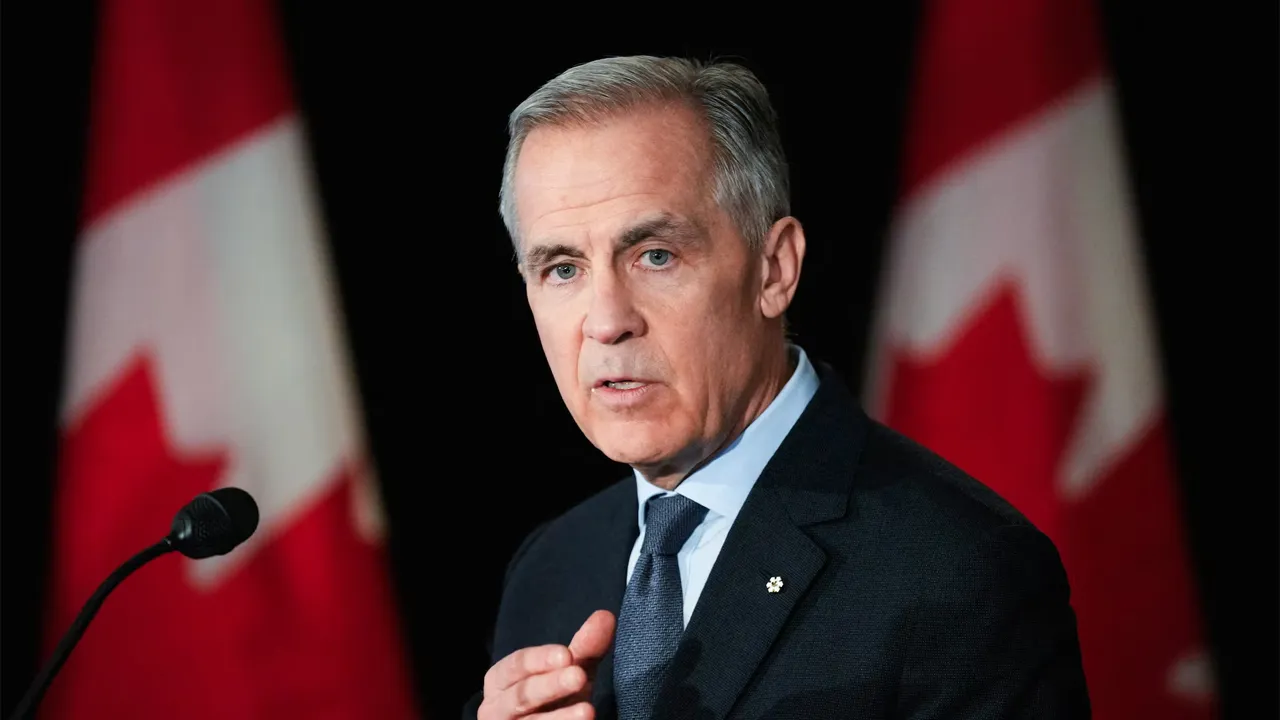
OTTAWA: Canadian Prime Minister Mark Carney has captured global attention by championing the idea of an alliance of mid-level economic powers that would operate beyond President Donald Trump's increasingly protectionist United States.
Yet Carney's push to lessen dependence on the U.S. is colliding with a stubborn reality: access to American markets remains a crucial part of Canada's appeal to prospective trading partners, according to interviews with a dozen government officials and business leaders.
Since winning election in April 2025, Carney's team has led four trade missions, including two to Asia, seeking foreign investment in mining, engineering and infrastructure projects. A fifth, the largest so far, is headed to Japan later this month.
But Canadian officials acknowledge that the main draw for many potential trading partners is the prospect of gaining tariff-free access to the world's largest market through Canada's participation in the U.S.-Mexico-Canada agreement.
Carney regularly touts Canada's preferential access to the U.S. market, noting that more than 85% of bilateral trade remains tariff-free.
AN INVESTMENT ATTRACTION MESSAGE
"That (USMCA deal) has been kind of a baseline of our investment attraction message," a top Canadian government official who requested anonymity to speak frankly told Reuters.
Global companies investing in Canada are urging leaders to re-commit to the trade pact which is due for renewal on July 1, according to lobbying records.
The agreement, negotiated in Trump's first term, requires all three countries to review the deal by the July deadline and decide whether to extend it for another 16 years, or on an annual basis for 10 years. Countries can also quit the agreement with six months' notice.
The agreement allows duty-free entry to products - provided sufficient production takes place within North America.
While the U.S. has started talks with Mexico to renew the agreement, it's not clear when the U.S. will begin formal negotiations with Canada.
For companies investing in Canada, the outcome of those discussions is a subject of intense interest.
"In different parts of the world everybody wants to know what's happening with the U.S. because we are just so close proximity-wise," Canada's Trade Minister Maninder Sidhu said in an interview.
FOR AUTOMAKERS U.S. ACCESS REMAINS KEY
The auto sector - dominated by Japanese automakers Toyota and Honda - is a prime example.
Canada's lobbying registry shows that Toyota lobbied for the USMCA free trade deal on 13 of the 14 occasions it engaged with the government this year. Honda raised the trade deal during 21 of its 27 contacts with the federal government, the lobbying records show, citing "the need to ensure protections for North America's integrated automobile industry and supplier network."
Together the two companies account for over 75% of vehicles made in Canada.
Canadian lobbying records only indicate the companies' topic of concern.
"For many of the Japanese companies investing here, one of the reasons for their investment is definitely the special access Canada has enjoyed over the long years," said Ishii Hideaki, Minister and Deputy Head of Mission at the Japanese Embassy in Ottawa.
Besides Japanese firms, lobbying records show Sweden's Volvo Group has urged Ottawa to "maintain the USMCA as is" while South Korea's Kia Corp. warned changes to the pact could raise costs and cause job losses.
Honda, Volvo and Kia did not respond to requests for comment on their lobbying efforts. Toyota declined to comment on lobbying.
Carney's office directed a request for comments to Canada's Ministry of Foreign Affairs, which oversees trade.
"Strengthening Canada’s longstanding economic partnership with the United States and expanding our trade relationships are mutually reinforcing priorities," the ministry said in an emailed response.
In response to Reuters' questions, Mexico's Economic Minister Marcelo Ebrard said that many global firms choose Mexico as a regional hub for North American production.
The White House did not respond to a request for comment.
CANADA STILL DEPENDENT ON US MARKETS
Under Carney, Canada has signed a trade deal with Indonesia, an investment pact with the United Arab Emirates, and is aiming to secure agreements with the Philippines, Thailand, the Association of Southeast Asian Nations and India as well as the South American trade bloc Mercosur this year.
Canada has also inked a more limited trade deal with China and pushed to increase trade with Japan, Vietnam, Pakistan and Bangladesh, Sidhu said.
Non-U.S. exports reached C$213.8 billion (US$154.16 billion) last year, up 16% from a year ago.
Government officials said they believe Canada could more than double non-U.S. trade over the next decade - if Carney's trade push with China proves effective.
Goldy Hyder, CEO of the Business Council of Canada, which represents large companies, praised the government's efforts to attract investment into critical minerals and energy. But he also sounded a note of caution.
"For large investors from Asia or Europe looking at Canada, any decision to deploy capital would necessarily take into account not only our national investment climate but also our connections to the North American continental economy as a whole."
The U.S. remains Canada's dominant export market, accounting for nearly 70% of all exports, according to government data, down from 76% a year ago. Canadian exports to the U.S. totalled about C$565 billion (US$407.38 billion) last year, led by crude oil, motor vehicles and parts and machinery.
Sidhu, the trade minister, said his pitch to foreign companies includes Canada's free-trade access to Asian, Latin American and European markets under other trade agreements as well as the USMCA.
"There's no choke points when we ship to Asia. So that's very important for countries around the world, especially with what's taking place with the Strait of Hormuz," Sidhu told Reuters.
While Canada remains an important partner in its own right, some prospective partners said, the possibility of integrating into broader North American supply chains exerts a powerful attraction.
"If Canada has established a strong network with other countries or economies, our (free trade agreement) with Canada will definitely be a big boost for our sectors who can take advantage of this ecosystem,” Allan Gepty, undersecretary at the Philippines' Department of Trade and Industry, told Reuters.