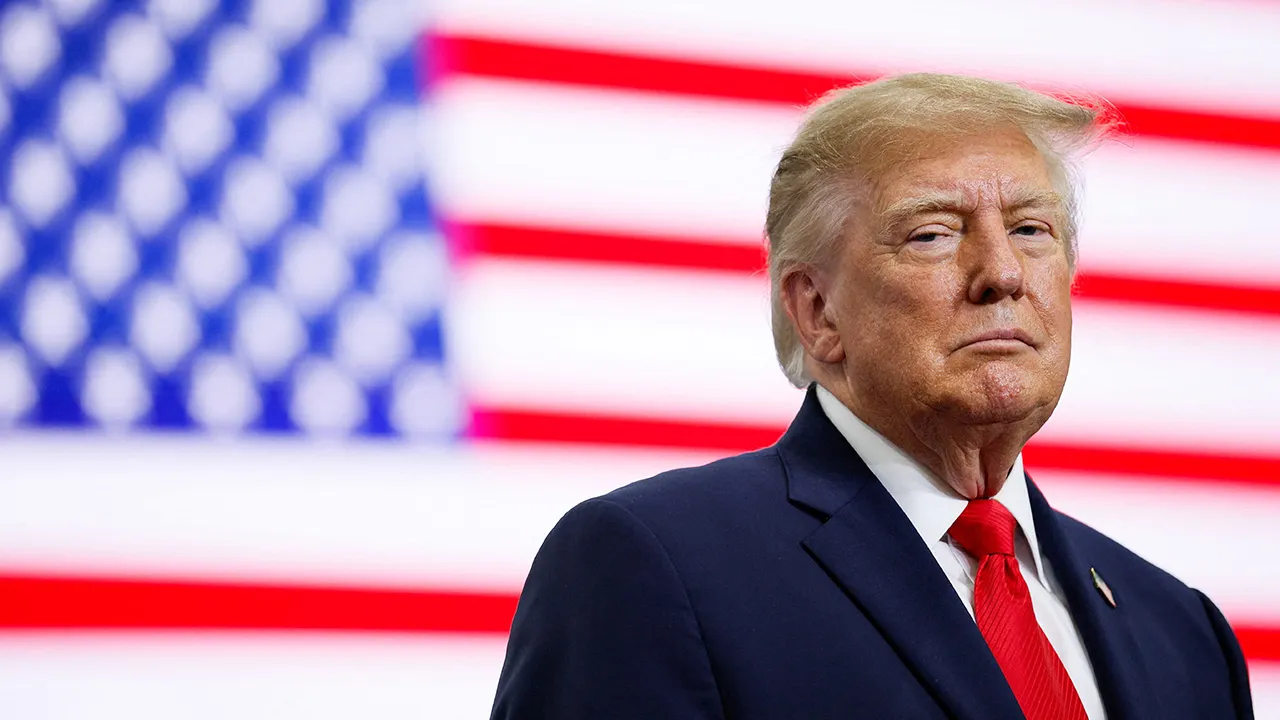

IN US President Donald Trump’s second term, there is no such thing as a “morning after.” That August 1 will lead to a better trade deal.
AI Brief
The assurance of Secretary of State Marco Rubio cum National Security Advisor at the ASEAN Regional Forum (ARF) that "ASEAN could get a better tariff deal" is impossible to accept at face value.
Why?
Whereas US ASEAN Trade affects 1 million jobs all across ASEAN, the latter contributes to only 77,000 jobs in the US according to the statement of Marco Rubio reported in Free Malaysia Today. The difference in the number of employments is too vast to appease Trump.
In fact, Vietnam should not celebrate at all based on its economic framework with Washington DC.
What exists instead is a continuous barrage of pressure—day after day of threat, designed to extract maximum concessions through a climate of permanent uncertainty.
This atmosphere is particularly dangerous for Vietnam, which now sits on the razor’s edge of Trump’s tariff doctrine.
With up to 95 percent of its GDP growth driven by exports, and the United States as one of its largest markets, Vietnam is acutely vulnerable. It has long been hailed as the winner of the U.S.-China trade war during Trump’s first term, absorbing manufacturing supply chains fleeing China. But that success has become its liability.
Trump’s team views Vietnam not as an economic partner, but as a suspect node in China’s transhipment network—a conduit, they argue, for Chinese-origin goods masquerading under Vietnamese labels to circumvent U.S. tariffs. This perception—regardless of how well-founded—carries existential consequences.
Even when Vietnam’s tax rates are competitive or even lower than regional peers, that doesn’t matter. Once the Trump administration deems a country guilty of enabling China, due process gives way to punishment. A punitive tariff of up to 45 percent looms as a constant threat, ready to be unleashed without warning, investigation, or negotiation.
Trump does not distinguish between intentional trade evasion and structural vulnerabilities. If even a handful of Chinese firms operating in Vietnam are accused of funnelling goods into the U.S. via backdoor routes, Vietnam will suffer the consequences wholesale.
It won’t matter if there’s a framework agreement for 20 percent tariffs or if Hanoi offers pledges of compliance. As history shows, Trump prefers accusation over arbitration and shock over diplomacy.
Vietnam’s trouble is deeper still. Its export-led economy, heavily reliant on electronics, textiles, and furniture—sectors where Chinese-origin components are ubiquitous—makes total decoupling from China nearly impossible.
Yet Trump expects just that. Vietnam is being pushed into an impossible dual obligation: serve the U.S. market cleanly, while divorcing itself from Chinese input entirely—an economic fantasy in the age of integrated supply chains.
The strategic irony is painful. The very firms that helped Vietnam climb the value chain are now liabilities. A single audit, a leaked customs manifest, or a viral White House tweet accusing Vietnam of “cheating” could trigger economic retaliation of catastrophic scale.
No due diligence, no bilateral warning, just tariffs—swift and blunt.
And with no buffer mechanism in the current U.S.-Vietnam framework, nor any ASEAN-wide shield, Hanoi is exposed. The framework agreement Trump once flirted with—offering a “modest” 20 percent tariff as compromise—now hangs like a sword. Even that deal is not a ceiling; it’s a floor.
Unless Vietnam can quickly insulate its export sectors, enhance origin verification mechanisms, and engage the U.S. through ironclad institutional channels—preferably backed by external auditor—it risks becoming the next example in Trump’s economic strongman tactics.
This is not speculation. It is déjà vu. Trump has done it before. And unless Southeast Asia learns to read his playbook in its second printing, he will do it again—with Vietnam as the next headline casualty.
Phar Kim Beng is Director of the Institute of Internationalization and ASEAN Studies (IINTAS), Professor of ASEAN Studies in International Islamic University of Malaysia (IIUM) and a former Head Teaching Fellow at Harvard University.
** The views and opinions expressed in this article are those of the author(s) and do not necessarily reflect the position of Astro AWANI.
Your gateway to global news, insights, and stories that matter.
AI Brief
- Trump's administration sees Vietnam as a backdoor for Chinese goods, making it a target for harsh tariffs.
- Vietnam's export-heavy economy is highly vulnerable due to its deep reliance on Chinese components.
- Without stronger safeguards and US engagement, Vietnam could face sudden, severe trade penalties like those seen in Trump's first term.
The assurance of Secretary of State Marco Rubio cum National Security Advisor at the ASEAN Regional Forum (ARF) that "ASEAN could get a better tariff deal" is impossible to accept at face value.
Why?
Whereas US ASEAN Trade affects 1 million jobs all across ASEAN, the latter contributes to only 77,000 jobs in the US according to the statement of Marco Rubio reported in Free Malaysia Today. The difference in the number of employments is too vast to appease Trump.
In fact, Vietnam should not celebrate at all based on its economic framework with Washington DC.
What exists instead is a continuous barrage of pressure—day after day of threat, designed to extract maximum concessions through a climate of permanent uncertainty.
This atmosphere is particularly dangerous for Vietnam, which now sits on the razor’s edge of Trump’s tariff doctrine.
With up to 95 percent of its GDP growth driven by exports, and the United States as one of its largest markets, Vietnam is acutely vulnerable. It has long been hailed as the winner of the U.S.-China trade war during Trump’s first term, absorbing manufacturing supply chains fleeing China. But that success has become its liability.
Trump’s team views Vietnam not as an economic partner, but as a suspect node in China’s transhipment network—a conduit, they argue, for Chinese-origin goods masquerading under Vietnamese labels to circumvent U.S. tariffs. This perception—regardless of how well-founded—carries existential consequences.
Even when Vietnam’s tax rates are competitive or even lower than regional peers, that doesn’t matter. Once the Trump administration deems a country guilty of enabling China, due process gives way to punishment. A punitive tariff of up to 45 percent looms as a constant threat, ready to be unleashed without warning, investigation, or negotiation.
Trump does not distinguish between intentional trade evasion and structural vulnerabilities. If even a handful of Chinese firms operating in Vietnam are accused of funnelling goods into the U.S. via backdoor routes, Vietnam will suffer the consequences wholesale.
It won’t matter if there’s a framework agreement for 20 percent tariffs or if Hanoi offers pledges of compliance. As history shows, Trump prefers accusation over arbitration and shock over diplomacy.
Vietnam’s trouble is deeper still. Its export-led economy, heavily reliant on electronics, textiles, and furniture—sectors where Chinese-origin components are ubiquitous—makes total decoupling from China nearly impossible.
Yet Trump expects just that. Vietnam is being pushed into an impossible dual obligation: serve the U.S. market cleanly, while divorcing itself from Chinese input entirely—an economic fantasy in the age of integrated supply chains.
The strategic irony is painful. The very firms that helped Vietnam climb the value chain are now liabilities. A single audit, a leaked customs manifest, or a viral White House tweet accusing Vietnam of “cheating” could trigger economic retaliation of catastrophic scale.
No due diligence, no bilateral warning, just tariffs—swift and blunt.
And with no buffer mechanism in the current U.S.-Vietnam framework, nor any ASEAN-wide shield, Hanoi is exposed. The framework agreement Trump once flirted with—offering a “modest” 20 percent tariff as compromise—now hangs like a sword. Even that deal is not a ceiling; it’s a floor.
Unless Vietnam can quickly insulate its export sectors, enhance origin verification mechanisms, and engage the U.S. through ironclad institutional channels—preferably backed by external auditor—it risks becoming the next example in Trump’s economic strongman tactics.
This is not speculation. It is déjà vu. Trump has done it before. And unless Southeast Asia learns to read his playbook in its second printing, he will do it again—with Vietnam as the next headline casualty.
Phar Kim Beng is Director of the Institute of Internationalization and ASEAN Studies (IINTAS), Professor of ASEAN Studies in International Islamic University of Malaysia (IIUM) and a former Head Teaching Fellow at Harvard University.
** The views and opinions expressed in this article are those of the author(s) and do not necessarily reflect the position of Astro AWANI.