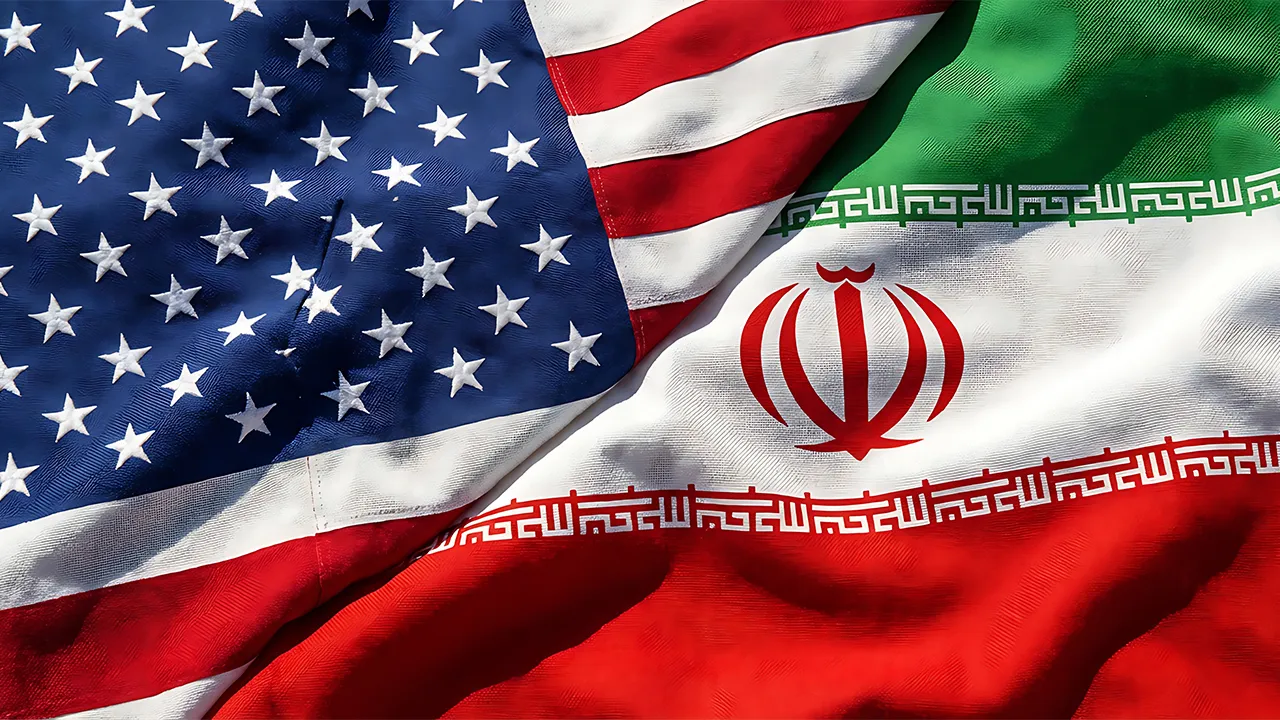
PEACE, I have learned from watching it being built far from the cameras, is not an event. It is a habit, and habits take years to form. So when President Trump was filmed at a dinner table in Versailles this week, signing the memorandum of understanding with Iran and murmuring that it had not been easy, my first response was relief and my second was caution. After more than three months of a war that drew in the United States, Israel, Iran and Lebanon, the guns are meant to fall silent, the naval blockade is to lift, and the Strait of Hormuz, the artery through which a fifth of the world’s oil moves, is to reopen. Anyone who values human life should welcome this. A ceasefire that holds is worth more than any argument I am about to make.
But we should be precise about what was signed. It is a memorandum of understanding: a page and a half, committing both sides to negotiate a binding agreement within sixty days, extendable by mutual consent. It is, in Washington’s own description, not a deal but a prelude to one. And the President was candid about the alternative, telling reporters at the G7 that if the timeline lapses, the bombing resumes. That is the nature of paper. It can pause a war. It cannot, by itself, keep the peace. The two are not the same thing, and confusing them is how we end up back where we started.
I do not write this as a sceptic of diplomacy. I have spent much of my working life in its service: observing elections in Afghanistan, Pakistan and Iran, and sitting with the international contact group that helped end one of Asia’s longest insurgencies in the southern Philippines. That work taught me a humbling lesson. The signing ceremony, the one the cameras come for, is the easiest part.
A graveyard of agreements
The United States and Iran have signed paper before. In 1981 the Algiers Accords ended the hostage crisis. In 2015 the Joint Comprehensive Plan of Action capped Iran’s nuclear programme in return for sanctions relief, a genuine achievement negotiated over years by six powers. Three years later, Washington tore it up. The lesson of the JCPOA is not that diplomacy failed. It is that a document is only as durable as the political will of whoever next holds office. A signature can be revoked with a signature.
Reach back further and the irony sharpens. The new memorandum has both governments promising to respect each other’s sovereignty and to refrain from interfering in each other’s internal affairs. Yet the founding wound of this relationship was precisely such interference: in 1953 the intelligence services of the United States and Britain helped overthrow Iran’s elected prime minister, Mohammad Mossadegh, after he nationalised the country’s oil. That single act poisoned the well for seventy years. Trust destroyed by deeds is not rebuilt by sentences.
The seduction of the reconstruction cheque
Here the document reveals its deeper flaw. Among its fourteen points is a promise that the United States, with regional partners, will assemble a plan worth at least US$300 billion for Iran’s reconstruction and development. The theory is old and intuitive: tie nations together through commerce and prosperity, and war becomes unthinkable. Montesquieu called it doux commerce, the civilising softness of trade. In 1910 the Englishman Norman Angell argued in The Great Illusion that Europe’s economies had grown so interdependent that war between great powers had become futile. Four years later those same nations marched into the trenches. Angell was not wrong that war was ruinous. He was wrong that ruin alone would deter it.
I have seen the reconstruction theory tested up close, and I am wary of it. In Afghanistan, where I helped run the country’s first presidential election observation in 2004, the world poured in tens of billions of dollars. Two decades later, little of the promised stability remained. Money disbursed from outside, on a drafting schedule measured in weeks, by partners whose interests diverge, does not build a nation. Worse, petrodollars flowing to a state already dependent on oil revenue tend to entrench what economists call the rentier state, a government funded by resource rents rather than by its own people, and therefore accountable to neither. That is the opposite of the patient, broad-based development that actually anchors peace. A cheque is a transaction. Peace is not a transaction.
What partnership actually requires
The most durable peace I have witnessed was neither bought nor signed in a single afternoon. In the southern Philippines, decades of war between the government and the Moro Islamic Liberation Front ended not with one treaty but with years of painstaking work: an international contact group, confidence built and rebuilt, a normalisation process, the slow construction of institutions that gave former adversaries a stake in the same future. The paper, when it finally came, merely ratified a relationship that had already been built. That is the right order of things, and it is almost always reversed in the headlines.
Our own region offers the same lesson. ASEAN is mocked for its slowness, its endless consultation, its preference for quiet consensus over confrontation. But that patience is the point. Habits of dialogue, repeated until they become reflex, are what keep neighbours who once fought one another from fighting again. Europe learned it too, binding France and Germany together through coal, steel, courts and markets until war between them became unimaginable. None of this can be signed at a dinner in Versailles. It has to be lived into existence.
From ceasefire to coexistence
There is something quietly hopeful in how this agreement came about. It was brokered not by the old great powers but by middle powers of the Global South, and it carries the name of one of their capitals rather than a Western one. They, and the Muslim world, did the patient shuttle diplomacy. That is a model worth nurturing, because peace brokered by neighbours tends to outlast peace imposed by distant patrons.
But mediation only opens the door. What must follow is harder and far less photogenic. The goal is not that Washington and Tehran come to like each other, which they may never do, but that they build the ordinary habits of coexistence, the mutual reliance and basic recognition of one another’s humanity that allow two adversaries to share a region without reaching for their weapons. Everything I have seen, in lecture halls and at negotiating tables alike, points to the same first principle: that lasting peace rests not on the absence of enemies but on the acknowledgement that the other is human, and is not going anywhere.
So let us welcome the ceasefire without mistaking it for peace. The absence of war can be achieved with paper and a sixty-day clock. The presence of peace is the work of a generation. A document can pause this war. Only a relationship, built patiently and in good faith, can ensure there is not another.
Herizal Hazri is an adjunct professor at the University of Malaya. He has worked on peace processes, democratic development and election observation across Asia, including in Iran, Afghanistan, Pakistan and the southern Philippines.