
INTERNATIONAL
The Power of Storytelling: Filmmakers become advocates to achieve coexistence and human fraternity
The second session on The Human Lens: Cinema as a Mirror of Compassion and Coexistence. Picture by Astro AWANI
VENICE: Storytelling is no longer just an artistic pursuit. It is a tool for advocacy, and a bridge between lived experience and institutional change.
This idea was brought to life by Founder and Managing Director of the Polar Research and Policy Initiative, Dr. Dwayne Ryan Menezes. With a background in policy and international institutions, Menezes shared how he transitioned from producing reports that reached a few hundred readers to co-founding a film company that now reaches millions.
“We’re really trying to bridge the world between policy and film to generate as much impact as we can,” he said, describing how Think-Film Impact Production has produced over 20 documentaries, including Oscar-nominated and Emmy-winning works.
Menezes’ approach is rooted in the belief that film can communicate complex issues in ways that policy papers cannot. His company has helped introduce impact-focused programming at major festivals like Cannes and Venice, creating platforms where storytelling meets advocacy.
“We’ve created juries that include both film and policy voices to highlight people who use their platforms to raise awareness about difficult topics,” he explained.
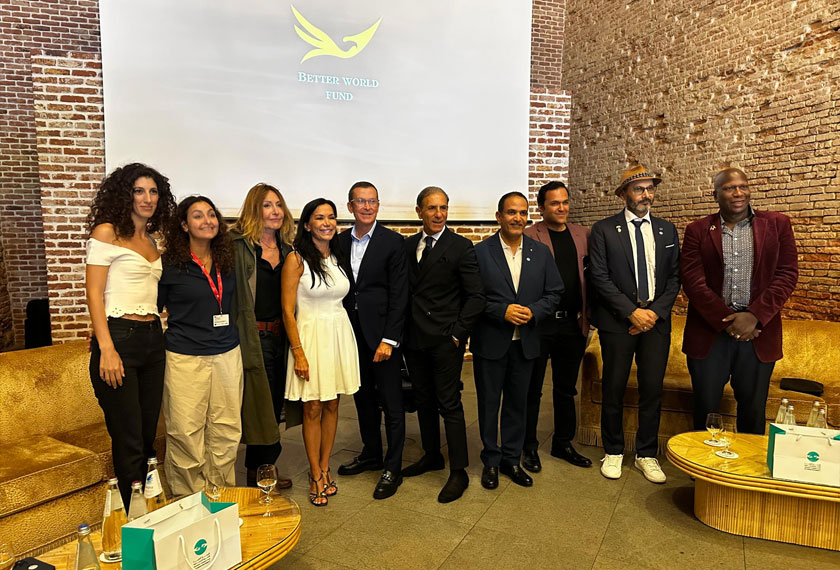
Echoing this fusion of art and activism was a producer from Naples, Maria Carolina Terzi, whose company Mad Entertainment uses film to spotlight stories of social transformation. She spoke about a recent project that tells the story of a priest who revitalized a marginalized neighborhood, not by fighting crime, but by standing beside mothers and children.
“We can change the people with amazing stories because in Italy, like everywhere, there are amazing people that do this for heart and not for money,” she said.
Together, these voices illustrated how storytelling can be a form of resistance, a call to action, and a means of shaping public discourse. Whether it’s a grassroots story from Naples or a policy-driven documentary screened at the UN, the message was clear: filmmakers are no longer just artists, they are advocates.
The forum “The Ties That Bind: A Journey Towards Understanding and Human Fraternity” held alongside the Venice International Film Festival, was organized by the Higher Committee of Human Fraternity (HCHF) in collaboration with the Better World Fund (BWF).
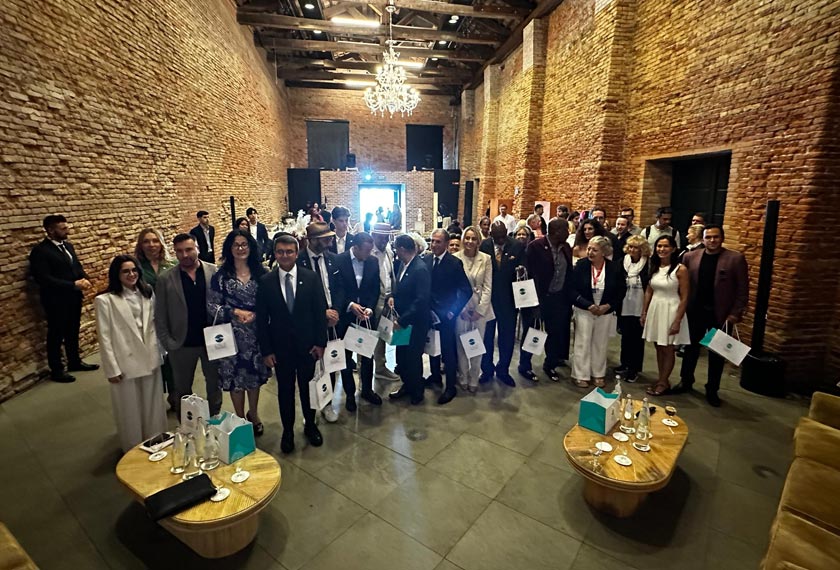
It forms part of a global mission to fulfill the aspirations of the Abu Dhabi Document of Human Fraternity, signed in 2019 by Pope Francis and the Grand Imam of Al-Azhar Sheikh Ahmed Al-Tayeb. The document calls for peace, mutual respect, and dialogue among people of all faiths and cultures, offering a blueprint for fostering understanding and collaboration in a divided world.
By integrating policy with storytelling, the speakers at Venice are helping to realise that vision of one film, one audience, and one conversation at a time.

This idea was brought to life by Founder and Managing Director of the Polar Research and Policy Initiative, Dr. Dwayne Ryan Menezes. With a background in policy and international institutions, Menezes shared how he transitioned from producing reports that reached a few hundred readers to co-founding a film company that now reaches millions.
“We’re really trying to bridge the world between policy and film to generate as much impact as we can,” he said, describing how Think-Film Impact Production has produced over 20 documentaries, including Oscar-nominated and Emmy-winning works.
Menezes’ approach is rooted in the belief that film can communicate complex issues in ways that policy papers cannot. His company has helped introduce impact-focused programming at major festivals like Cannes and Venice, creating platforms where storytelling meets advocacy.
“We’ve created juries that include both film and policy voices to highlight people who use their platforms to raise awareness about difficult topics,” he explained.
Echoing this fusion of art and activism was a producer from Naples, Maria Carolina Terzi, whose company Mad Entertainment uses film to spotlight stories of social transformation. She spoke about a recent project that tells the story of a priest who revitalized a marginalized neighborhood, not by fighting crime, but by standing beside mothers and children.
“We can change the people with amazing stories because in Italy, like everywhere, there are amazing people that do this for heart and not for money,” she said.
Together, these voices illustrated how storytelling can be a form of resistance, a call to action, and a means of shaping public discourse. Whether it’s a grassroots story from Naples or a policy-driven documentary screened at the UN, the message was clear: filmmakers are no longer just artists, they are advocates.
The forum “The Ties That Bind: A Journey Towards Understanding and Human Fraternity” held alongside the Venice International Film Festival, was organized by the Higher Committee of Human Fraternity (HCHF) in collaboration with the Better World Fund (BWF).
It forms part of a global mission to fulfill the aspirations of the Abu Dhabi Document of Human Fraternity, signed in 2019 by Pope Francis and the Grand Imam of Al-Azhar Sheikh Ahmed Al-Tayeb. The document calls for peace, mutual respect, and dialogue among people of all faiths and cultures, offering a blueprint for fostering understanding and collaboration in a divided world.
By integrating policy with storytelling, the speakers at Venice are helping to realise that vision of one film, one audience, and one conversation at a time.
#HCHF
#HumanFraternity
#HigherCommitteeOfHumanFraternity
#coexistence
#VeniceInternationalFilmFestival