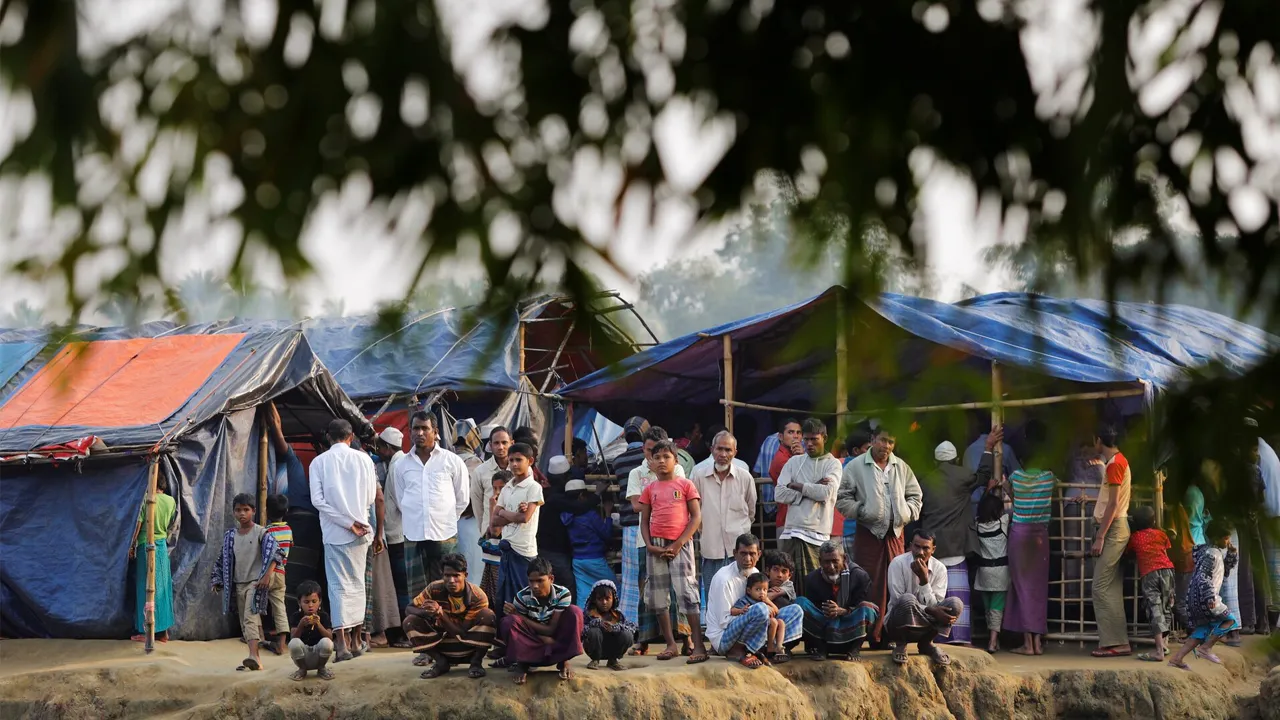
ROHINGYA refugees are continuously targeted online. It is costing them their health and safety, and it should trouble every Malaysian.
For the past couple of months, increasing "concerns" about Rohingya refugees have dominated Malaysian social media. Behind the quotation marks lies a steady stream of predominantly unchecked misinformation, disinformation and hate speech, which is resulting in real world consequences for patients MSF supports. Many have faced or are facing imminent evictions, with no intervention from the government to prevent them. It is pushing people away from healthcare, deeper into hiding, and in some cases, into a psychiatric crisis.
What this looks like, day in day out, for our teams who see refugee patients
Since mid-June, coinciding with the surge of misinformation, disinformation and hate speech, our mental health teams have shared:
"Refugee patients are hiding in the jungle at night when they hear about raids”
"A patient who had already successfully completed his psychiatric treatment medication for six to seven months has needed to restart."
One patient has been so acutely affected by the ongoing hate speech that our teams noted it as a sign of his psychosis. In his disorganized speech, he seemed to ask, "What did I do wrong to be blamed in this country?" and asked himself, "We dirtied Malaysia?" He keeps apologizing to the people around him for his imagined wrongdoings. He is 19 years old – indicating a very early onset of psychosis.
This is the tip of the iceberg of what our mental health team is seeing in Rohingya patients right now.
This is not new – Malaysia should not play a part in a repeat
The role hate speech played in driving targeted violence in Rakhine state, and driving hundreds of thousands of Rohingya to flee Myanmar for their lives in 2017 is well documented. Our monitoring shows that hate speech directed at Rohingya refugees in Malaysia over the past couple of months has reached similarly heightened levels. Since June, posts on social media — specifically Threads — have called for Rohingya refugees to be "put in a room and set on fire," to "rape them," to "shoot them like crows," and for "the women" to "be sterilized," among other genocidal and dehumanising calls to action.
Malaysia does not have to look far to know what unchecked hate speech does to a community once it is allowed to spread. Language like this cannot be treated lightly and normalizing it as part of public discussion only perpetuates it — once it is accepted, it becomes easier to justify what follows it.
Tackle hate speech and baseless claims immediately
Action should have been taken already – but it is still needed now before a further escalation. We are calling on the Malaysian Communications and Multimedia Commission (MCMC) to put proper checks on this kind of content aimed at sowing division. How is it acceptable for various news outlets and tabloids to regurgitate baseless claims made against refugees, accompanied by misleading AI-generated visuals?
It is crucial to note that this is not simply organic public sentiment. A recent undercover investigation by Malaysian outlet The Fourth found that marketing agencies, paid cybertroopers, and influencers are willing to accept multi-million-ringgit political campaigns built around promoting hate speech, racial and religious division, in exchange for virality and votes.
Any response from the government on the proliferation of misinformation, disinformation, and hate speech in online discussions must reckon with the fact that some of this content is being commissioned.
Return with no confirmation of safety
On 29 July, Prime Minister Anwar Ibrahim announced that Myanmar had agreed to take back 5,000 Rohingya currently in Malaysia, describing it as a step towards preserving public order. With no guarantee of safety upon return, Malaysia risks putting a vulnerable community back in the very place they risked their lives to flee.
Malaysia has not signed the 1951 Refugee Convention. Even so, it remains bound by customary international law's principle of non-refoulement — the requirement not to return anyone to a country where they would face persecution. Malaysia reaffirmed that same principle in the 2001 revised Bangkok Principles, a regional refugee framework it helped draft. While not legally binding, it is a clear statement of where Malaysia stands.
This is not a question of instating new obligations, rather a question of living up to the principles Malaysia already helped write.
Fleeing persecution is not a crime
Rohingya refugees in Malaysia have survived, and continue to survive, decades of violence, constrained living, and life in limbo while they await resettlement. We must remember that no one wants to leave their home – individuals fleeing persecution should not be treated as criminals.
That should not make them a convenient target for political gain. Malaysia can set an example by choosing to be a country rejects unacceptable, dehumanising and inflammatory speech against a persecuted minority.
Aymen Abdullah, Head of Mission of Doctors Without Borders in Malaysia.
** The views and opinions expressed in this article are those of the author(s) and do not necessarily reflect the position of Astro AWANI.