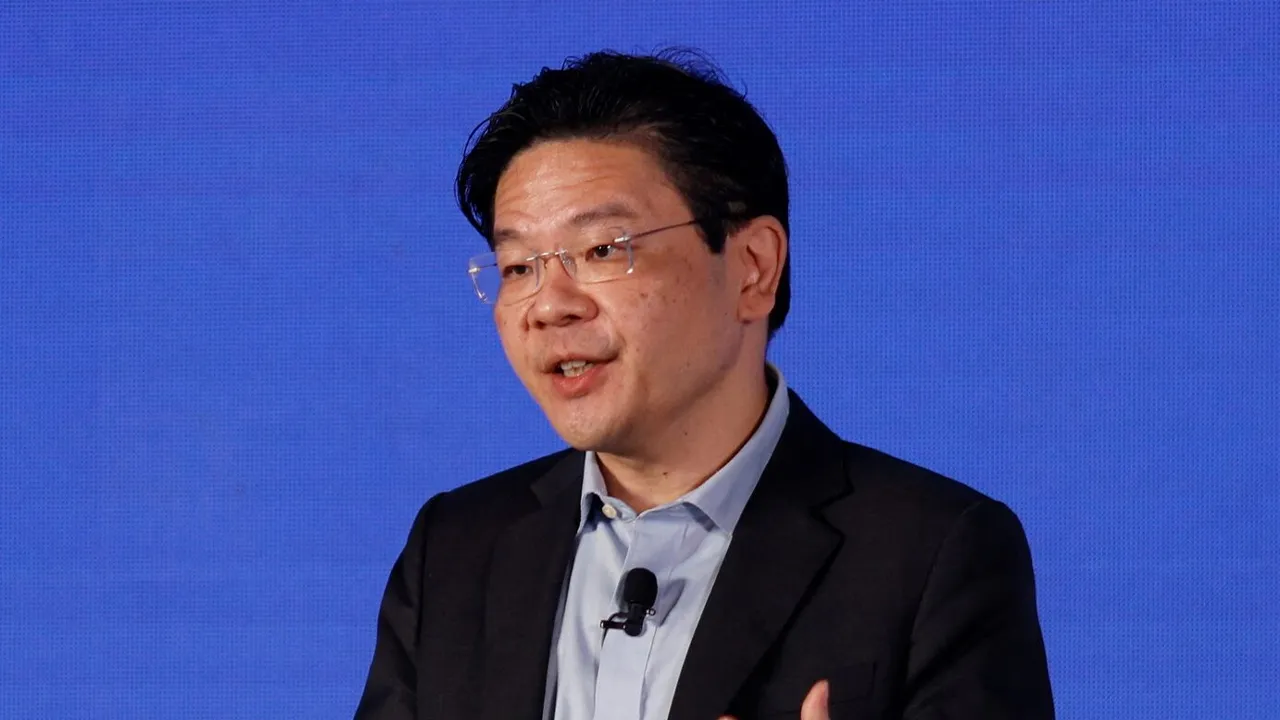
SINGAPORE: Ministerial salaries in Singapore, already among the world's highest, will go up from October 15, boosting the prime minister's annual pay by 64% to S$3.6 million (US$2.85 million) from S$2.2 million, Prime Minister Lawrence Wong said on Tuesday.
Singapore pays its political leaders high salaries to attract talent and deter graft, but the issue is thorny in the city-state, where the median wage worker made S$5,775 a month in 2025.
Wong acknowledged the sensitivity in a speech in parliament, saying political salaries were a difficult and emotive topic.
"The sums involved are more than what most citizens earn, so I understand why Singaporeans scrutinise them closely and why many feel strongly about the matter," Wong said, adding that he would donate his increment to charity for the next five years.
But it was not just a matter of pay, he added.
"It is ultimately about whether Singapore will continue to have the quality of political leadership we need to take our country forward and to serve Singaporeans well in the years ahead," Wong said.
In comparison, the British prime minister makes US$230,000 while U.S. President Donald Trump earns US$400,000, according to data from non-profit PoliticalSalaries.com, which ranks the Singapore prime minister as the highest-paid world leader.
The data set shows the Hong Kong chief executive is the second-highest earner globally with US$719,000 annually, followed by the Swiss president at US$606,000.
A Singapore junior minister, whose salary is now S$1.1 million a year, will have a new salary that can go up to S$1.8 million a year, depending on performance and responsibilities.
The increment for political office holders will start with a one-off increase of up to 9%, with subsequent adjustments based on performance, rather than an immediate jump to S$1.8 million.
By the end of this term of government, most junior ministers will earn about S$1.35 million and those who do well can "move higher", said Wong.
Singapore last adjusted ministerial salaries in 2012, when ministers took a pay cut of 36% to allay public discontent about how much they earned.
Lawmakers will debate the issue in parliament on Thursday.
The numbers have provoked comment on social media, with some users on Reddit calling the pay adjustment "tone deaf" while others said the hikes would be justified if ministers did a better job of navigating challenging times.
Opposition parties have not issued statements on the topic.
Wong said it was "easier politically" for him to leave things as they were but that "would not be the right thing to do" as salaries in the private sector, civil service, judicial service and public sector had moved higher since 2012.
After the 2012 pay cut, salaries were reviewed again in 2017 but the government chose not to adopt a recommendation to hike. A second review due in 2023 was deferred until now because of economic uncertainty.
The city state uses the salary of the top 1,000 Singaporean earners as a benchmark for ministerial pay, as their qualities and abilities "reflect the desired calibre of the people whom Singapore needs for good government", the Public Service Division says on its website.
Referring to the top earners' benchmark, Chong Ja Ian, a political scientist at the National University of Singapore, said: "Given rising income disparity, this could mean that ministers associate more with the very rich rather than the experiences of ordinary Singaporeans."
The high salaries are meant to attract top talent and prevent corruption, and cases of graft have been rare.
In a recent case, former transport minister S. Iswaran was jailed in 2024 for obstructing justice and receiving more than US$300,000 worth of gifts.