KUALA LUMPUR: The rise of digital platforms has transformed the information landscape, with the public no longer relying solely on Western media to understand the IsraelPalestine conflict.
Instead, people now have access to a wide range of news sources and perspectives from around the world.
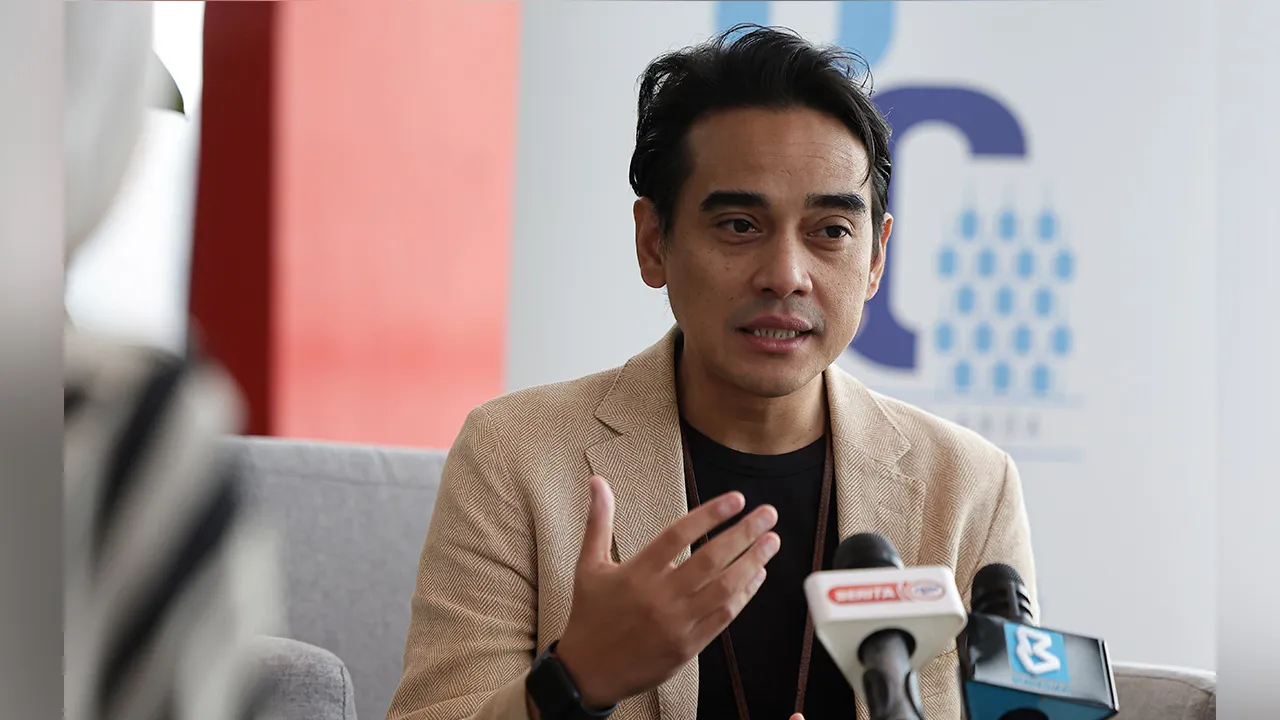
Director-General of Broadcasting, Ashwad Ismail, said advances in digital technology over the past decade have made audiences more critical in assessing international issues, as they are now able to verify and compare information across multiple platforms.
"For nearly two decades in the media industry, I have observed that conflicts, particularly those involving Muslim-majority countries, are often reported from differing perspectives by Western and Eastern media.
"In the past, people depended largely on international media, especially Western outlets, to understand developments in the Middle East. Today, anyone can share information and become part of the global conversation.
"I see the growth of digital platforms as a positive development because it enables us to better understand public views, sentiments and reactions to events on the ground, particularly in Palestine," he said.
He was speaking as a panellist at the academic forum titled Western Media Framing of the Middle East: Narrative Power, Media Law and Implications for Malaysia, organised by the Faculty of Communication and Media Studies, Universiti Teknologi MARA (UiTM) Shah Alam, which was held online recently.
According to Ashwad, the changing media landscape has transformed the public from passive news consumers into active participants in public discourse.
"Today, we have numerous platforms to express our views, share knowledge and experiences. This development has created greater opportunities for the public to participate directly in discussions on important issues," he said.
He noted that the Israel-Palestine conflict, which intensified following the October 7, 2023 attacks, marked a turning point in how people follow and understand international affairs through digital platforms.
Citing a survey conducted in the United States, Ashwad said more than 60 per cent of Generation Z respondents expressed support for the Palestinian cause.
"This is truly remarkable because we have never witnessed such a shift before. The landscape of public discourse has changed as younger generations have become increasingly vocal in expressing support for the Palestinian cause.
"The influence of social media users has also placed pressure on international mainstream media to provide more comprehensive coverage of the Israel-Palestine conflict," he said.
Ashwad, who also participated in the humanitarian mission to Gaza aboard the Mavi Marmara in 2010, said these developments have challenged the dominance of Western media narratives by giving audiences greater access to alternative sources of information.
Commenting on the implications for Malaysia, he said local media organisations should continue reporting the conflict from a national perspective that is aligned with the country's foreign policy.
As Malaysia's public broadcaster, Radio Televisyen Malaysia (RTM), he said, has the responsibility to reflect the country's long-standing official position in support of the Palestinian cause.
At the same time, Ashwad stressed that the media has a moral responsibility to ensure humanitarian crises in Muslim-majority countries continue to receive international attention.
"When it comes to Palestine, Sudan and the Pakistan-Afghanistan border region, we cannot adopt a one-size-fits-all approach. Every conflict has its own historical background and unique context," he said.
He added that in a conflict spanning more than eight decades, the media should not remain neutral on humanitarian issues in Palestine.
"We are free to take a position. The Palestinian conflict has lasted for more than eight decades, and it is not an issue that should be taken lightly. We must continue to support the establishment of a sovereign and independent Palestinian state, while ensuring peace and ending the suffering inflicted on the Palestinian people by the Israeli regime," he said.
The academic forum, organised by postgraduate students of the COM733 International Communication course, was attended by more than 25 students, academics and media practitioners.