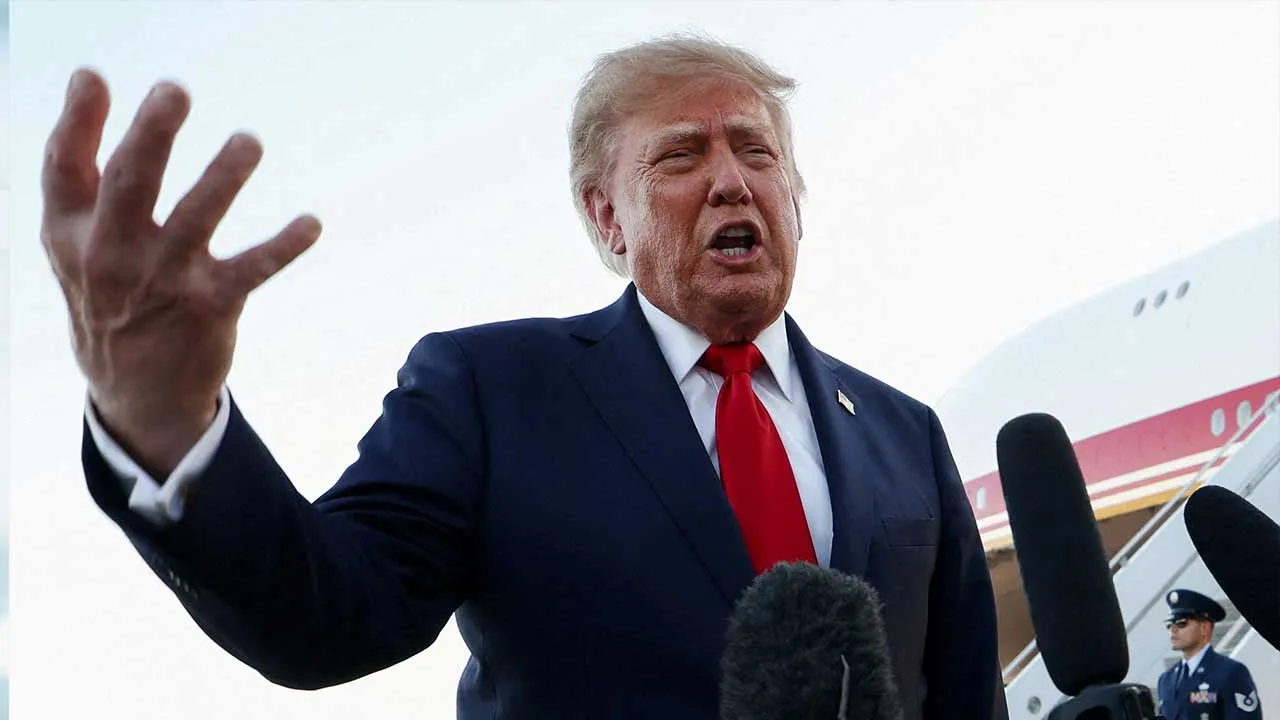

WASHINGTON: U.S. President Donald Trump and Colombian President Gustavo Petro said on Tuesday that they had a cordial meeting in their first face-to-face encounter, defying the fears of some analysts and advisers who questioned whether the two would get along given that they had traded barbs for months and represent radically different ideologies.
AI Brief
Petro arrived at the White House without the public fanfare afforded to some foreign leaders, and no media were allowed to attend the roughly two-hour meeting. In separate remarks afterward, neither leader clearly stated that they walked away with concrete agreements, but both discussed the encounter in upbeat terms.
Asked by reporters if they had come to an accord to counter narcotics flows coming from Colombia, Trump said the two leaders were working on it.
"Yeah, we did," Trump said. "We worked on it, and we got along very well. He and I weren't exactly the best of friends, but I wasn't insulted because I never met him. I didn't know him at all."
Following the meeting, Petro posted a photo on X with a note apparently handwritten by Trump with the words: "Gustavo - A great honor - I love Colombia." It also contained a photograph of the two leaders shaking hands and smiling.
"What I sensed or saw through the press and social networks that looked like contradictions with my ideas - I didn't see them there. I think they were more with other officials than with him," Petro said in an interview with Colombian radio station Caracol.
Petro said he asked Trump to help capture major drug traffickers living outside Colombia.
He added that he asked the U.S. president to mediate a diplomatic spat between Colombia and neighboring Ecuador, whose president, Daniel Noboa, is a staunch Trump ally. Trump agreed to give Noboa a call, Petro said.
LEADERS HAVE CRITICIZED EACH OTHER
Trump, who has voiced a desire for American dominance over all of Latin America, has in recent months had an up-and-down relationship with Petro, a former anti-imperialist guerrilla who was elected Colombia's president in 2022.
In October, Trump called Petro an "illegal drug leader" though he provided no evidence, and in January, he mooted military action against the longtime ally, which he has accused of failing to control the narcotics trade.
Petro has been harshly critical of Trump. He has said the Trump administration's deadly strikes on alleged drug boats amount to war crimes and he described the U.S. operation last month deposing Venezuelan leader Nicolas Maduro as a "kidnapping."
In January, the two leaders held a phone call that both described positively, a surprise thaw that resulted in Petro's invitation to Washington. Trump told reporters on Monday that Petro's tone had changed of late, implying that he had become more acquiescent after the Maduro raid.
'THE DESIGN WAS SPECTACULAR'
For foreign leaders, meetings with Trump can be fraught, and many have resorted to flattery to minimize tension with the president and his advisers. While it was far from clear that Petro - who has positioned himself as a thorn in Washington's side for almost all of his career - would choose that route, he was ultimately drawn into it.
In one photo released by the White House, a Petro aide can be seen holding a pamphlet reading: "COLOMBIA: America's #1 Ally against Narcoterrorists."
In the radio interview after the meeting, Petro effusively complimented Trump's Oval Office renovations, which have mainly consisted of adding copious amounts of gold leaf.
"It was more beautiful this time. I told him he was a good designer," Petro said. "The design was spectacular."
Trump told reporters the two leaders were working on sanctions, without elaborating. Petro himself is under U.S. sanctions - which the Trump administration issued in October - for alleged but unproven links to the drug trade, which Petro has denied.
If the leaders had failed to reach a more lasting rapprochement, it could have had profound implications for regional security, analysts said.
Colombia is the world's top producer of coca, the main ingredient in cocaine, and several U.S.-designated terrorist organizations are present in the country.
But it has also been one of Washington's staunchest allies in the region, working closely with successive administrations to suppress drug flows northward.
Under Petro, coca production in Colombia has climbed, though the exact figures are a matter of dispute. Bogota argues that while the government has shifted away from forced eradication - a policy that can harm subsistence farmers - it has ramped up seizures and more sophisticated interdiction efforts.
Last week, Petro urged Colombian migrants to return from Chile, Argentina and the United States so as not to be treated like "slaves." He also said it is better to live in Havana than in Miami, which he described as traffic-clogged and cultureless.
AI Brief
- U.S. President Donald Trump and Colombian President Gustavo Petro hold cordial meeting despite past animosity, focusing on countering narcotics flows from Colombia.
- Meeting lacked public fanfare and media presence, with both leaders expressing positive sentiments afterward but no clear concrete agreements announced.
- Petro requested Trump's help in capturing drug traffickers, sought mediation between Colombia and Ecuador, signaling a potential shift in their previously contentious relationship.
Petro arrived at the White House without the public fanfare afforded to some foreign leaders, and no media were allowed to attend the roughly two-hour meeting. In separate remarks afterward, neither leader clearly stated that they walked away with concrete agreements, but both discussed the encounter in upbeat terms.
Asked by reporters if they had come to an accord to counter narcotics flows coming from Colombia, Trump said the two leaders were working on it.
"Yeah, we did," Trump said. "We worked on it, and we got along very well. He and I weren't exactly the best of friends, but I wasn't insulted because I never met him. I didn't know him at all."
Following the meeting, Petro posted a photo on X with a note apparently handwritten by Trump with the words: "Gustavo - A great honor - I love Colombia." It also contained a photograph of the two leaders shaking hands and smiling.
"What I sensed or saw through the press and social networks that looked like contradictions with my ideas - I didn't see them there. I think they were more with other officials than with him," Petro said in an interview with Colombian radio station Caracol.
Petro said he asked Trump to help capture major drug traffickers living outside Colombia.
He added that he asked the U.S. president to mediate a diplomatic spat between Colombia and neighboring Ecuador, whose president, Daniel Noboa, is a staunch Trump ally. Trump agreed to give Noboa a call, Petro said.
LEADERS HAVE CRITICIZED EACH OTHER
Trump, who has voiced a desire for American dominance over all of Latin America, has in recent months had an up-and-down relationship with Petro, a former anti-imperialist guerrilla who was elected Colombia's president in 2022.
In October, Trump called Petro an "illegal drug leader" though he provided no evidence, and in January, he mooted military action against the longtime ally, which he has accused of failing to control the narcotics trade.
Petro has been harshly critical of Trump. He has said the Trump administration's deadly strikes on alleged drug boats amount to war crimes and he described the U.S. operation last month deposing Venezuelan leader Nicolas Maduro as a "kidnapping."
In January, the two leaders held a phone call that both described positively, a surprise thaw that resulted in Petro's invitation to Washington. Trump told reporters on Monday that Petro's tone had changed of late, implying that he had become more acquiescent after the Maduro raid.
'THE DESIGN WAS SPECTACULAR'
For foreign leaders, meetings with Trump can be fraught, and many have resorted to flattery to minimize tension with the president and his advisers. While it was far from clear that Petro - who has positioned himself as a thorn in Washington's side for almost all of his career - would choose that route, he was ultimately drawn into it.
In one photo released by the White House, a Petro aide can be seen holding a pamphlet reading: "COLOMBIA: America's #1 Ally against Narcoterrorists."
In the radio interview after the meeting, Petro effusively complimented Trump's Oval Office renovations, which have mainly consisted of adding copious amounts of gold leaf.
"It was more beautiful this time. I told him he was a good designer," Petro said. "The design was spectacular."
Trump told reporters the two leaders were working on sanctions, without elaborating. Petro himself is under U.S. sanctions - which the Trump administration issued in October - for alleged but unproven links to the drug trade, which Petro has denied.
If the leaders had failed to reach a more lasting rapprochement, it could have had profound implications for regional security, analysts said.
Colombia is the world's top producer of coca, the main ingredient in cocaine, and several U.S.-designated terrorist organizations are present in the country.
But it has also been one of Washington's staunchest allies in the region, working closely with successive administrations to suppress drug flows northward.
Under Petro, coca production in Colombia has climbed, though the exact figures are a matter of dispute. Bogota argues that while the government has shifted away from forced eradication - a policy that can harm subsistence farmers - it has ramped up seizures and more sophisticated interdiction efforts.
Last week, Petro urged Colombian migrants to return from Chile, Argentina and the United States so as not to be treated like "slaves." He also said it is better to live in Havana than in Miami, which he described as traffic-clogged and cultureless.