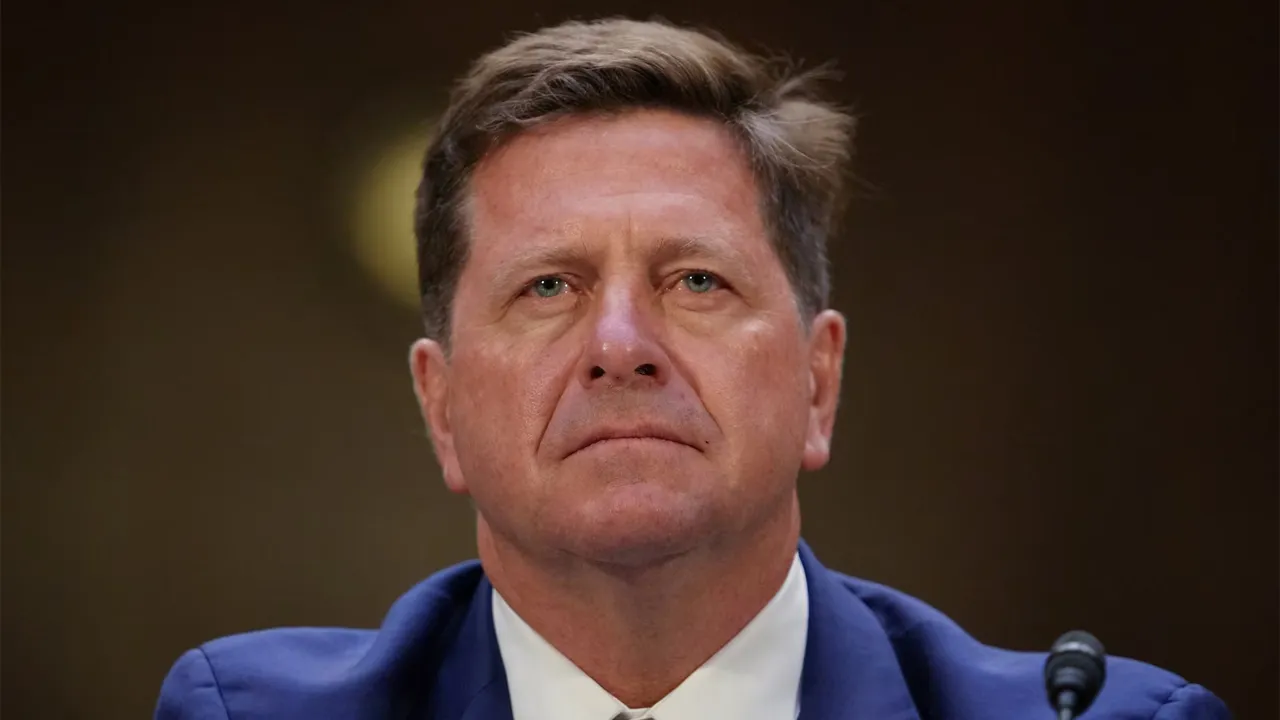
WASHINGTON: U.S. Senate Republicans on Tuesday confirmed President Donald Trump's nominee, Manhattan U.S. Attorney Jay Clayton, to be the nation's top spy, despite opposition from Democrats following an angry confirmation hearing.
Clayton fills a role vacated in June when Tulsi Gabbard stepped down after a tenure marked by clashes with congressional Democrats, who accused her of advancing Trump's political agenda and promoting debunked election claims.
The vote was 51-47 to confirm Clayton for the job of Director of National Intelligence, overseeing the 18 U.S. intelligence agencies. The vote was along party lines, with Trump's Republicans backing his nominee and members of the Democratic caucus voting no.
The controversy over Gabbard and election claims took on new significance after Clayton repeatedly refused during his confirmation hearing to directly acknowledge that Trump lost the 2020 presidential election to Democrat Joe Biden.
With just over three months left before mid-term elections that will decide which party controls Congress, Trump has escalated efforts to make "election security" a central issue, despite established findings that voter fraud is rare.
Democrats have accused Trump of using the issue to cast doubt on any of their election victories.
CONTENTIOUS HEARING
Clayton's hearing earlier this month at times erupted into shouting, as Clayton insisted to several Democratic senators that he was not an election denier, but would say only that Biden was "certified" as president, went through "the processes," or "had the most electoral votes," not that he won six years ago.
Clayton also faced questioning from Democrats about his decision to issue subpoenas ordering New York Times journalists to testify before a federal grand jury after reporting on security concerns involving Trump's new Qatari-donated Air Force One plane.
A prosecutor said at a court hearing last week that the Trump administration would withdraw the subpoenas after a judge's close questioning about the investigation.
Clayton's confirmation process was dogged by controversy even before his July 15 hearing. In mid-June, Trump abruptly threw doubt on the nomination by ordering the postponement of Clayton's first hearing in an effort to force Congress to pass an overhaul of U.S. voting rules.
Senators, including the Republican Senate intelligence committee chairman, Tom Cotton of Arkansas, said at the time they expected the hearing to go ahead as scheduled, but then said Clayton would not appear after Trump ordered him to stay away.
CONCERNS OVER ACTING DNI PULTE
The delay particularly angered Democrats because Trump had named Federal Housing Finance Agency Director Bill Pulte, who is loyal to Trump but lacks national security expertise, as acting DNI. Pulte has ordered a series of layoffs of intelligence staff since assuming the interim position in June.
Amid the controversy, Democrats refused to provide the votes needed to renew a foreign surveillance program, 702 of the Foreign Intelligence Surveillance Act, which is used by U.S. intelligence agencies to collect the electronic communications of thousands of foreigners located outside of the United States.
Senate aides said that they did not know when Section 702 might be renewed, despite Clayton's confirmation. Senate Republicans have a 53-47 seat majority and need support from at least seven Democrats to meet the 60-vote threshold for passing the FISA renewal.
Clayton, 60, is a former lawyer at Sullivan & Cromwell who specialized in mergers and capital raising. During Trump's first term, he served as the chairman of the Securities and Exchange Commission, where he developed a reputation as a political moderate who sought consensus with the Democratic commissioners.
Trump in April 2025 nominated Clayton as interim U.S. Attorney for the Southern District of New York, considered one of the most powerful prosecutorial posts in the country.
His official biography shows that he has no intelligence background and lacks extensive national security experience, a legal requirement to serve as DNI. But his backers, including some Democrats before the controversies surrounding his hearings, said his position as Manhattan U.S. attorney involved enough national security work to qualify him for the post.