
INTERNATIONAL
When science meets spirituality, former NASA scientist and peace advocate unite for human fraternity
Humanity with Ambassador Dr Khalid Al Ghaith (Sen Gen HCHF) & Herizal Hazri (Senior Advisor HCHF). - AWANI
VIENNA: At the forum “The Ties That Bind: A Journey Towards Understanding and Human Fraternity”, two extraordinary voices; one grounded in science, the other in spiritual philosophy, offered a compelling vision for a more unified world.
AI Brief
The former Prime Minister of Mali and former NASA scientist, Dr. Cheick Modibo Diarra, spoke of the solar system not just as a scientific marvel, but as a metaphor for human coexistence.
“Each planet is different, but if you change the slightest characteristic of any of them, the whole system collapses. That’s the lesson of human fraternity. Our differences are essential to our survival,” said Diarra.
His reflections, drawn from decades of space exploration, underscored the idea that diversity is not a challenge to be solved, but a balance to be preserved.
Diarra’s commitment to this principle extends far beyond theory. Through a 12-year initiative, he brought together young girls from 13 African countries for science camps that blended rigorous education with cultural exchange.
“They arrived as strangers and left as sisters. They no longer saw each other through the lens of nationality or religion, but through shared purpose,” he recalled.
His work demonstrates how science, when paired with empathy, becomes a tool for unity.
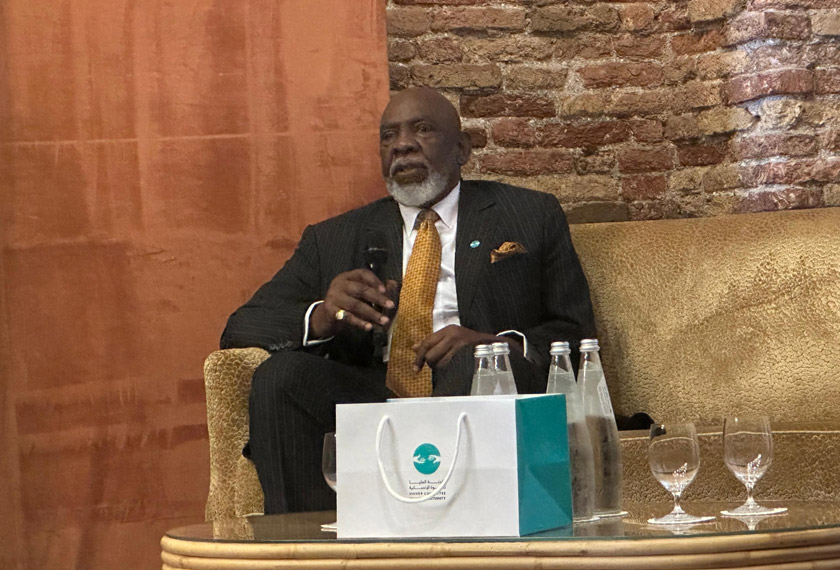
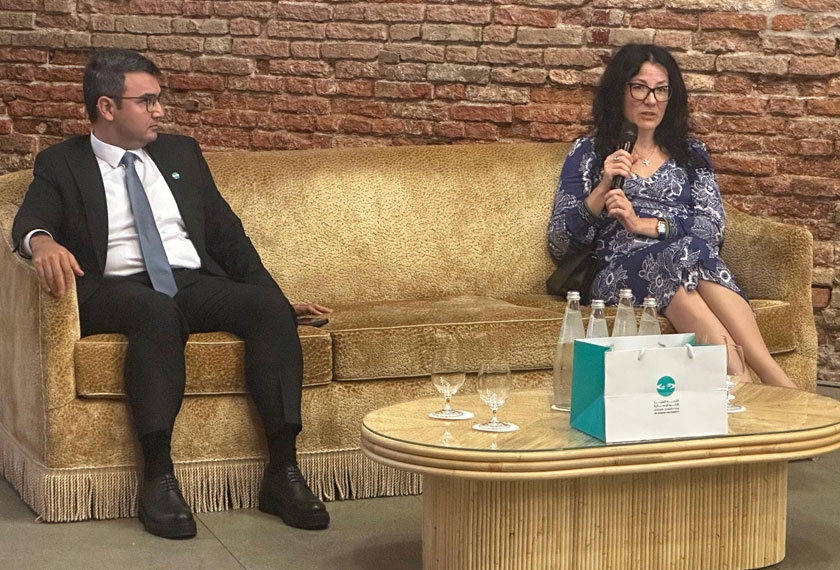
In contrast, but not in conflict, President of the Permanent Secretariat of the World Summit of Nobel Peace Laureates, Ekaterina Zagladina, offered a spiritual and philosophical framework for the same goal.
“Human fraternity is not just something we do. it’s something we become,” she said.
For Zagladina, peace is not merely the absence of conflict, but a state of consciousness cultivated through ethical choices and inner transformation.
She warned against the illusion that material progress alone leads to happiness.
“Even if we achieve all those advances, it doesn’t mean we remain happy. The basement of life is love, compassion, and understanding,” she explained.
Drawing from ancient wisdom and modern peacebuilding, Zagladina argued that the path to fraternity begins not with systems, but with the soul.
Together, Diarra and Zagladina offered a rare synthesis of perspectives. One is rooted in data, the other in devotion. Their dialogue revealed that science and spirituality, often seen as opposing forces, can in fact be complementary paths toward the same destination. A world where human fraternity is not just imagined but lived.
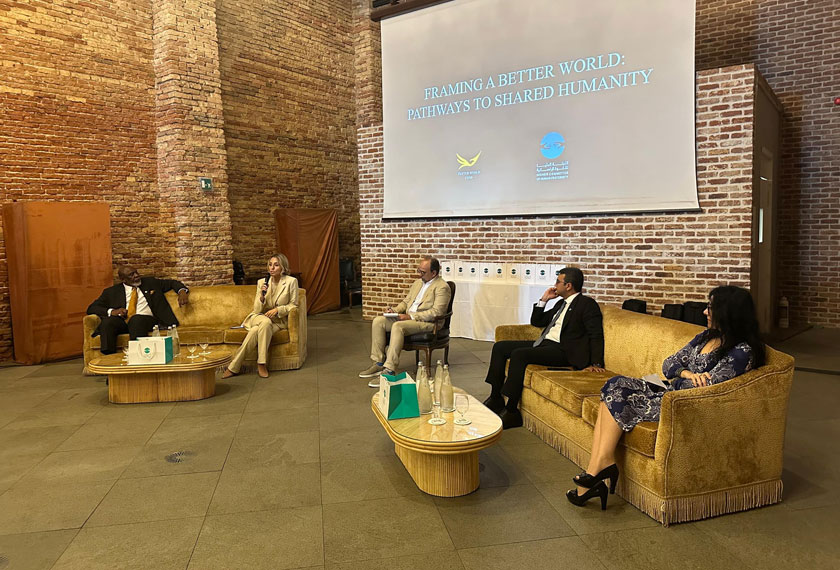
This forum was organised by the Higher Committee of Human Fraternity (HCHF) in collaboration with the Better World Fund (BWF). It is part of a global mission to fulfill the aspirations of the Abu Dhabi Document of Human Fraternity, signed in 2019 by Pope Francis and the Grand Imam of Al-Azhar Sheikh Ahmed Al-Tayeb. The document calls for peace, mutual respect, and dialogue among people of all faiths and cultures, offering a blueprint for fostering understanding and collaboration in a divided world.
Your gateway to global news, insights, and stories that matter.

AI Brief
- Dr. Cheick Modibo Diarra used the solar system as a metaphor for human coexistence, stressing that diversity is essential for balance.
- Ekaterina Zagladina emphasised that true peace comes from inner transformation, compassion, and ethical living.
- Together, they showed how science and spirituality can work hand in hand to promote unity, empathy, and global understanding.
The former Prime Minister of Mali and former NASA scientist, Dr. Cheick Modibo Diarra, spoke of the solar system not just as a scientific marvel, but as a metaphor for human coexistence.
“Each planet is different, but if you change the slightest characteristic of any of them, the whole system collapses. That’s the lesson of human fraternity. Our differences are essential to our survival,” said Diarra.
His reflections, drawn from decades of space exploration, underscored the idea that diversity is not a challenge to be solved, but a balance to be preserved.
Diarra’s commitment to this principle extends far beyond theory. Through a 12-year initiative, he brought together young girls from 13 African countries for science camps that blended rigorous education with cultural exchange.
“They arrived as strangers and left as sisters. They no longer saw each other through the lens of nationality or religion, but through shared purpose,” he recalled.
His work demonstrates how science, when paired with empathy, becomes a tool for unity.
In contrast, but not in conflict, President of the Permanent Secretariat of the World Summit of Nobel Peace Laureates, Ekaterina Zagladina, offered a spiritual and philosophical framework for the same goal.
“Human fraternity is not just something we do. it’s something we become,” she said.
For Zagladina, peace is not merely the absence of conflict, but a state of consciousness cultivated through ethical choices and inner transformation.
She warned against the illusion that material progress alone leads to happiness.
“Even if we achieve all those advances, it doesn’t mean we remain happy. The basement of life is love, compassion, and understanding,” she explained.
Drawing from ancient wisdom and modern peacebuilding, Zagladina argued that the path to fraternity begins not with systems, but with the soul.
Together, Diarra and Zagladina offered a rare synthesis of perspectives. One is rooted in data, the other in devotion. Their dialogue revealed that science and spirituality, often seen as opposing forces, can in fact be complementary paths toward the same destination. A world where human fraternity is not just imagined but lived.
This forum was organised by the Higher Committee of Human Fraternity (HCHF) in collaboration with the Better World Fund (BWF). It is part of a global mission to fulfill the aspirations of the Abu Dhabi Document of Human Fraternity, signed in 2019 by Pope Francis and the Grand Imam of Al-Azhar Sheikh Ahmed Al-Tayeb. The document calls for peace, mutual respect, and dialogue among people of all faiths and cultures, offering a blueprint for fostering understanding and collaboration in a divided world.