
THE U.S.-Israeli military assault on Iran have disrupted commercial shipping in the Gulf, a key source of fuel and petroleum products. The interruption immediately pushed up the prices of these energy supplies on financial markets.
Some oil refineries in the Middle East, China and India shut their crude units because of the raging conflict in the Middle East.
As a result of a lower supply outlook in fuel markets, European diesel futures reached their highest level since October 2022, at US$1,130.
WHAT IS THE STRAIT OF HORMUZ?
The strait lies between Oman and Iran and links the Gulf north of it with the Gulf of Oman to the south and the Arabian Sea beyond. It is 21 miles (33 km) wide at its narrowest point, with the shipping lane just 2 miles (3 km) wide in either direction.
WHY DOES IT MATTER?
About a fifth of the world's total oil consumption passes through the strait.
More than 20 million barrels of crude, condensate and fuels passed through the strait daily last year on average, data from analytics firm Vortexa showed.
OPEC members Saudi Arabia, Iran, the United Arab Emirates, Kuwait and Iraq export most of their crude via the strait, mainly to Asia.
Qatar, among the world's biggest liquefied natural gas exporters, sends almost all of its LNG through the strait.
OPEC+ top producers Saudi Arabia and the UAE have raised oil exports in recent days as part of contingency plans.
The UAE and Saudi Arabia have sought to find other routes to bypass the strait. About 2.6 million barrels per day (bpd) of unused capacity from existing UAE and Saudi pipelines could be available to bypass Hormuz, the U.S. Energy Information Administration said in June last year.
The U.S. Fifth Fleet, based in Bahrain, is tasked with protecting commercial shipping in the area.
CHOKE-POINT FOR OIL, GAS AND OTHER PRODUCTS
Some 20% of global oil, including from producers Saudi Arabia, the United Arab Emirates, Iraq, Kuwait and Iran, passes through Hormuz, along with large volumes of liquefied natural gas (LNG) from Qatar.
Having shifted away from Russian energy since its invasion of Ukraine, Europe now relies more heavily on imports from the Gulf region.
Among European countries, Britain, Italy, Belgium and Poland are the most reliant on LNG imports that pass via the Strait of Hormuz, according to data from the U.S. Energy Information Administration.
The Gulf is also a major exporter of propane, butane and ethane, which are used for heating, fuel and in agriculture, according to data from broker Kpler.
HIGHER FUEL COSTS ?
More than 200 vessels including oil and liquefied gas tankers have dropped anchor around the Strait of Hormuz and surrounding waters as a result of the Iran conflict, shipping data shows.
This has immediately pushed up oil and gas prices.
WHAT ELSE IS AFFECTED BEYOND ENERGY SUPPLIES?
The vast flow of commercial goods between Europe and Asia has long gone through the Suez Canal.
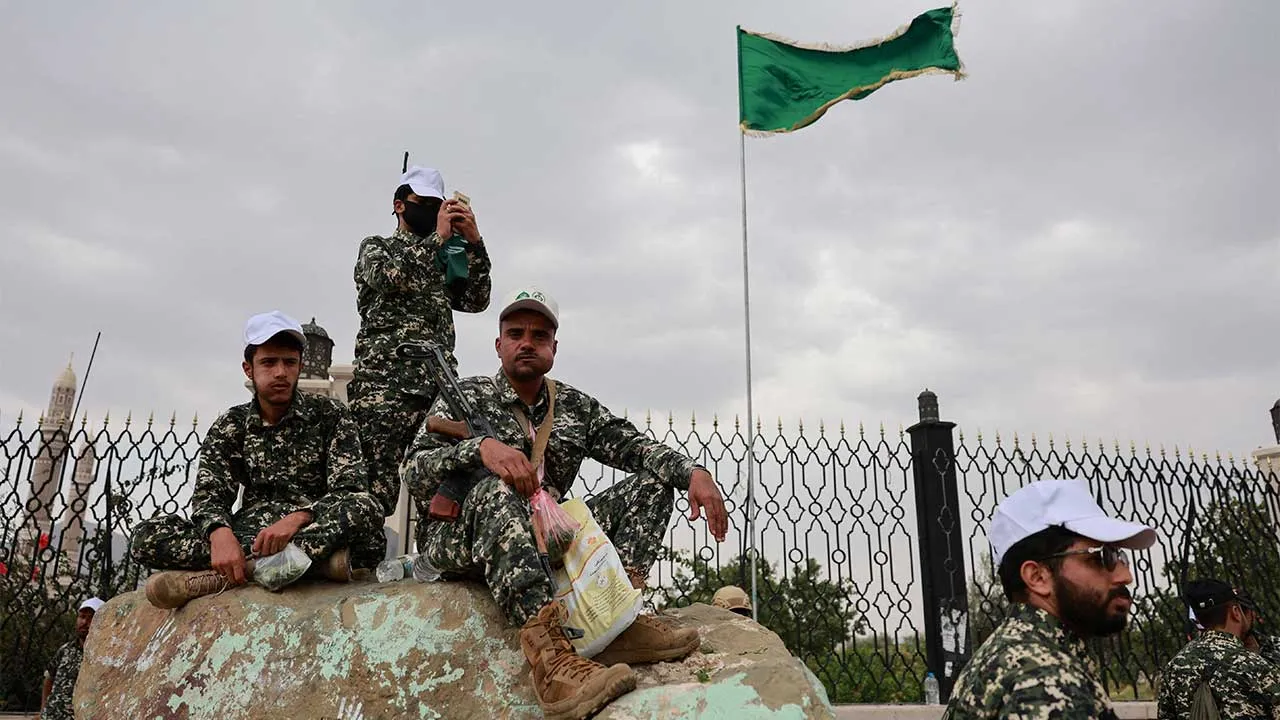
Many vessels on that route were rerouted around Africa in late 2023 following attacks in the Red Sea by Yemen's Houthi rebels but, prior to the outbreak of the Iran conflict, shipping companies had been weighing increased use of the critical Asia-Europe trade corridor.
Shipping companies on Sunday again began rerouting vessels around Africa, away from the Suez Canal, potentially boosting freight rates and lifting the cost on imported goods.
CONTINUED ATTACKS ON OIL TANKERS
Attacks on oil tankers continued on Thursday in the Gulf, as the Bahamas-flagged crude oil tanker Sonangol Namibe reported its hull was breached after a blast near Iraq's Khor al Zubair port.
Around 300 oil tankers remained inside the Strait of Hormuz as vessel traffic in and out of the chokepoint nearly halted following the outbreak of war, according to ship tracking data from Vortexa and Kpler that excludes some of the smallest tankers.
Gas prices also rose on Thursday, after President Vladimir Putin warned Russia could halt its remaining gas flows to Europe, adding to concerns about supply after Qatar announced force majeure on LNG shipments.
European benchmark gas prices were up by 5% at 51.44 euros per megawatt-hour by 1244 GMT, having risen by 8.3% to 52.80 euros/MWh earlier in the session.
Iran launched a wave of missiles at Israel early on Thursday, sending millions of residents into bomb shelters as the conflict entered its sixth day, and just hours after moves to halt the U.S. attacks were blocked in Washington.
On Wednesday, a U.S. submarine sank an Iranian warship off Sri Lanka, killing at least 80 people, and NATO air defences destroyed an Iranian ballistic missile fired towards Turkey.
Crude oil supplies from Iraq and Kuwait could start shutting in within days if the Strait remains closed, potentially cutting 3.3 million barrels per day (bpd) by day eight of the conflict, J.P. Morgan analysts said in a note.
Iraq, the second-largest crude producer in the Organization of the Petroleum Exporting Countries, has cut output by nearly 1.5 million bpd for lack of storage and an export route, officials told Reuters.
Qatar, the biggest liquefied natural gas producer in the Gulf, declared force majeure on gas exports on Wednesday, with sources saying a return to normal production volumes may take at least a month.