Iranian armed forces targeted U.S. military infrastructure in neighbouring Gulf states on Thursday (July 9) following U.S. strikes on Iran's southern coastal and eastern provinces, putting further strain on a three-week-old ceasefire agreement.
Oil prices, which had spiked amid concerns over the impact of the renewed attacks on global supplies, fell back on Thursday as investors weighed whether the flare-up was tactical and temporary or might augur a complete collapse in the ceasefire.
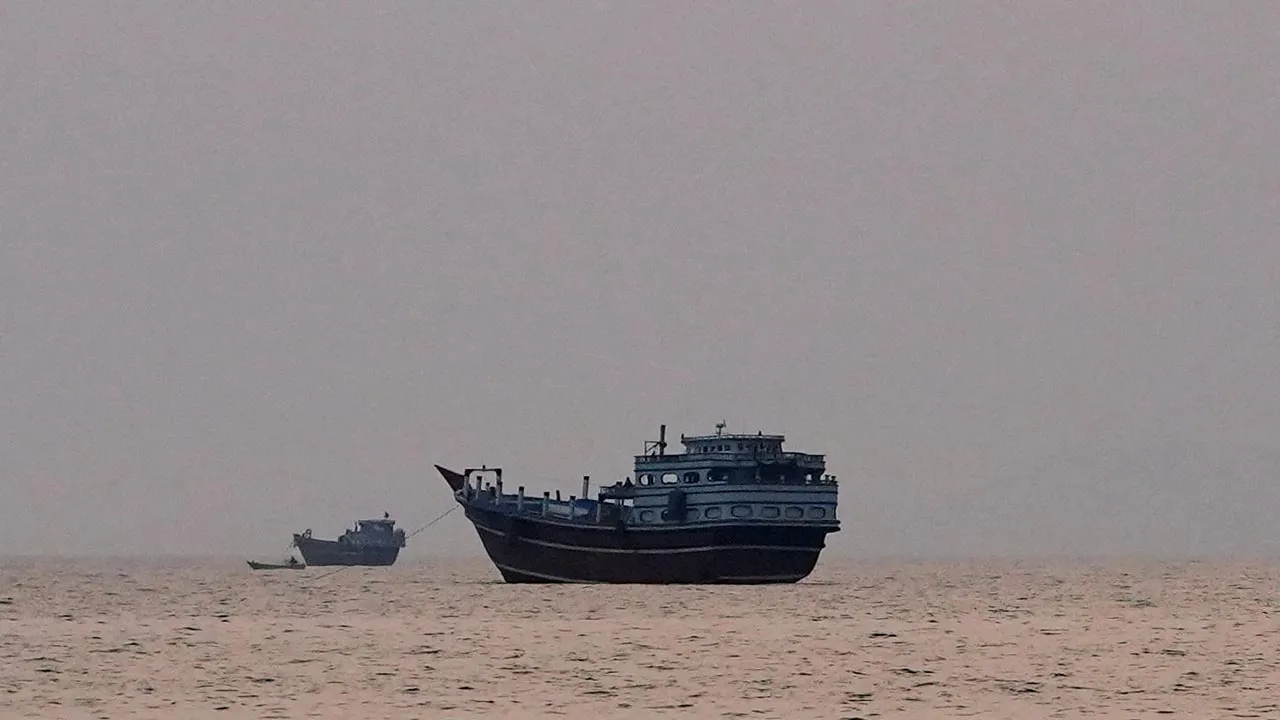
The U.S. military said on Wednesday (July 8) its latest strikes on Iran were aimed at keeping the Strait of Hormuz open after Iran targeted three tankers in the area. The assault came hours after U.S. President Donald Trump said he believed the interim ceasefire with Iran to be "over."
While Iran has not claimed responsibility for the ship attacks, analysts say Tehran uses such actions to gain leverage in negotiations.
The Strait of Hormuz handled about a fifth of global oil supplies before the war erupted on February 28 with U.S. and Israeli strikes against Iran.
Tehran has since taken effective control of the strait, allowing it to force a stalemate in its confrontation with the world's most powerful military.
WHAT IS THE STRAIT OF HORMUZ?
The strait lies between Oman and Iran and links the Gulf north of it with the Gulf of Oman to the south and the Arabian Sea beyond. It is 21 miles (33 km) wide at its narrowest point, with the shipping lane just 2 miles (3 km) wide in either direction.
WHY DOES IT MATTER?
About a fifth of the world's total oil consumption passes through the strait.
More than 20 million barrels of crude, condensate and fuels passed through the strait daily last year on average, data from analytics firm Vortexa showed.
OPEC members Saudi Arabia, Iran, the United Arab Emirates, Kuwait and Iraq export most of their crude via the strait, mainly to Asia.
Qatar, among the world's biggest liquefied natural gas exporters, sends almost all of its LNG through the strait.
The U.S. Fifth Fleet, based in Bahrain, is tasked with protecting commercial shipping in the area.
CHOKE-POINT FOR OIL, GAS AND OTHER PRODUCTS
Some 20% of global oil, including from producers Saudi Arabia, the United Arab Emirates, Iraq, Kuwait and Iran, passes through Hormuz, along with large volumes of liquefied natural gas (LNG) from Qatar.
Having shifted away from Russian energy since its invasion of Ukraine, Europe now relies more heavily on imports from the Gulf region.
Among European countries, Britain, Italy, Belgium and Poland are the most reliant on LNG imports that pass via the Strait of Hormuz, according to data from the U.S. Energy Information Administration.
The Gulf is also a major exporter of propane, butane and ethane, which are used for heating, fuel and in agriculture, according to data from broker Kpler.
WHAT ELSE IS AFFECTED BEYOND ENERGY SUPPLIES?
The vast flow of commercial goods between Europe and Asia has long gone through the Suez Canal.
Many vessels on that route were rerouted around Africa in late 2023 following attacks in the Red Sea by Yemen's Houthi rebels but, prior to the outbreak of the Iran conflict, shipping companies had been weighing increased use of the critical Asia-Europe trade corridor.