
NATIONAL
ASEAN’s diversity is strength, not obstacle to regional unity
Ichal pointed to ASEAN’s framework as one of the most effective regional mechanisms in the world for navigating complex internal and cross-border issues. Pic by AWANI
JAKARTA: Despite Southeast Asia’s broad spectrum of political systems, cultures, and histories, the region continues to prove that diversity is not a barrier to cooperation and in fact, may be its greatest asset.
The view was expressed by Secretary General of the Asian Democracy Network (ADN), Ichal Supriadi to AWANI International at the sidelines of the International Conference on Human Fraternity (ICHF), held recently in Jakarta.
“These countries (in ASEAN) despite having diverse political systems and people, they unite in their commitment to respecting human dignity, helping the poor, reducing the gaps, and finding conflict resolutions in the region,” he said.
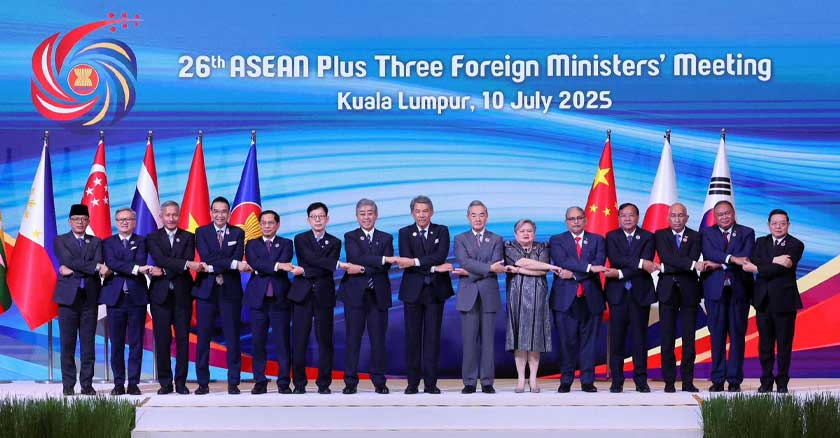
Ichal pointed to ASEAN’s framework as one of the most effective regional mechanisms in the world for navigating complex internal and cross-border issues.
“There is an interconnectivity and relevance between the role of leaders and the need to approach conflict with empathy.
“Leadership in ASEAN must focus on lessening the gap and preventing potential conflicts,” Ichal added.
He cited a recent example where Malaysia played a crucial mediating role in the tensions between Cambodia and Thailand.
“I commend the role taken by Malaysian leaders who immediately created space, brought all conflicting parties to the table, and eventually helped deliver positive outcomes.
“That kind of intervention is something we need to celebrate,” he said.
Ichal also expressed confidence in ASEAN’s capacity to function as a stabilising force, provided it continues to evolve and empower leaders to act decisively in the face of conflict.
He noted that while ASEAN’s charter and structures are well-established and respected, the organisation must go beyond official diplomacy to address root causes of conflict including economic disparity, social injustice, and minority tensions.
At the same time, he emphasised the vital role of civil society grounding regional cooperation in real-world needs and solutions.
“Governments often have power, but not always the capacity to fully understand problems on the ground.
“Civil society and grassroots organisations bring that perspective, they know what’s needed and how to work efficiently on the ground,” he said.
He added that social movements might stand alone but with the right leadership and approach, they can be part of a larger, impactful regional framework.
The International Conference on Human Fraternity opened on Tuesday (29th July) in Jakarta, bringing together global leaders, religious figures, and academics to promote peaceful coexistence and mutual understanding in an increasingly divided world.
Co-organised by the Higher Committee of Human Fraternity (HCHF) and the Indonesian International Islamic University (UIII), the conference carries the timely theme: “Advancing Human Fraternity Amid Global Uncertainty: Towards a More Peaceful and Prosperous Civilization.”
The gathering aims to reinvigorate global dialogue on the shared values of compassion, respect, and human dignity across cultures and beliefs.
Your gateway to global news, insights, and stories that matter.

The view was expressed by Secretary General of the Asian Democracy Network (ADN), Ichal Supriadi to AWANI International at the sidelines of the International Conference on Human Fraternity (ICHF), held recently in Jakarta.
“These countries (in ASEAN) despite having diverse political systems and people, they unite in their commitment to respecting human dignity, helping the poor, reducing the gaps, and finding conflict resolutions in the region,” he said.
Ichal pointed to ASEAN’s framework as one of the most effective regional mechanisms in the world for navigating complex internal and cross-border issues.
“There is an interconnectivity and relevance between the role of leaders and the need to approach conflict with empathy.
“Leadership in ASEAN must focus on lessening the gap and preventing potential conflicts,” Ichal added.
He cited a recent example where Malaysia played a crucial mediating role in the tensions between Cambodia and Thailand.
“I commend the role taken by Malaysian leaders who immediately created space, brought all conflicting parties to the table, and eventually helped deliver positive outcomes.
“That kind of intervention is something we need to celebrate,” he said.
Ichal also expressed confidence in ASEAN’s capacity to function as a stabilising force, provided it continues to evolve and empower leaders to act decisively in the face of conflict.
He noted that while ASEAN’s charter and structures are well-established and respected, the organisation must go beyond official diplomacy to address root causes of conflict including economic disparity, social injustice, and minority tensions.
At the same time, he emphasised the vital role of civil society grounding regional cooperation in real-world needs and solutions.
“Governments often have power, but not always the capacity to fully understand problems on the ground.
“Civil society and grassroots organisations bring that perspective, they know what’s needed and how to work efficiently on the ground,” he said.
He added that social movements might stand alone but with the right leadership and approach, they can be part of a larger, impactful regional framework.
The International Conference on Human Fraternity opened on Tuesday (29th July) in Jakarta, bringing together global leaders, religious figures, and academics to promote peaceful coexistence and mutual understanding in an increasingly divided world.
Co-organised by the Higher Committee of Human Fraternity (HCHF) and the Indonesian International Islamic University (UIII), the conference carries the timely theme: “Advancing Human Fraternity Amid Global Uncertainty: Towards a More Peaceful and Prosperous Civilization.”
The gathering aims to reinvigorate global dialogue on the shared values of compassion, respect, and human dignity across cultures and beliefs.