SPORT is often treated as entertainment, but for governments it can also be diplomacy, economic policy and nation branding rolled into one. In recent months, Malaysia has demonstrated how global sporting events can be used not only to entertain the public, but also to strengthen international relationships, generate economic activity and create a sense of shared national excitement.
Two developments stand out, Malaysia securing access to the 2026 FIFA World Cup broadcasts and the unexpected return of Formula 1 to Sepang through the Formula 1 Gulf Air Bahrain Grand Prix in Malaysia. Both offer an interesting window into Prime Minister Datuk Seri Anwar Ibrahim’s approach to what might be described as sports diplomacy.
For football fans, the government’s decision to ensure access to the 2026 FIFA World Cup carries particular significance. RTM and Unifi TV were appointed official broadcasters in Malaysia, with coverage across free-to-air and digital platforms. All 104 matches are available through the participating platforms, while RTM is providing extensive coverage to ensure that the tournament is accessible to a broad segment of Malaysians.
The government allocated RM26.2 million to secure the broadcasting rights, while strategic cooperation with the private sector helped widen access and distribution.
Broadcasting rights for major global sporting competitions have become increasingly valuable and commercially competitive. Access differs considerably across countries, with many markets relying heavily on subscription services or providing only limited free-to-air coverage. Malaysia’s ability to make substantial World Cup coverage widely available therefore carries real public value.
Football remains the most widely followed sport in Malaysia. World Cup demand is immense, cutting across race, age, geography and income. Had Malaysians found themselves unable to follow the world’s biggest football tournament through accessible legitimate channels, the obvious question would have been: why not?
In public policy, governments are not judged only by major infrastructure projects or macroeconomic figures. They are also judged through everyday experiences. For millions of Malaysians, watching a World Cup match with family and friends is one of those experiences. That makes access itself a form of social inclusion.
There is also a nation-building dimension. Few things temporarily dissolve Malaysia’s normal social divisions as effectively as sport. During major football tournaments, mamak restaurants, living rooms, community halls and public viewing areas become shared national spaces. The government is therefore facilitating more than entertainment; it is enabling a common experience capable of generating social cohesion.
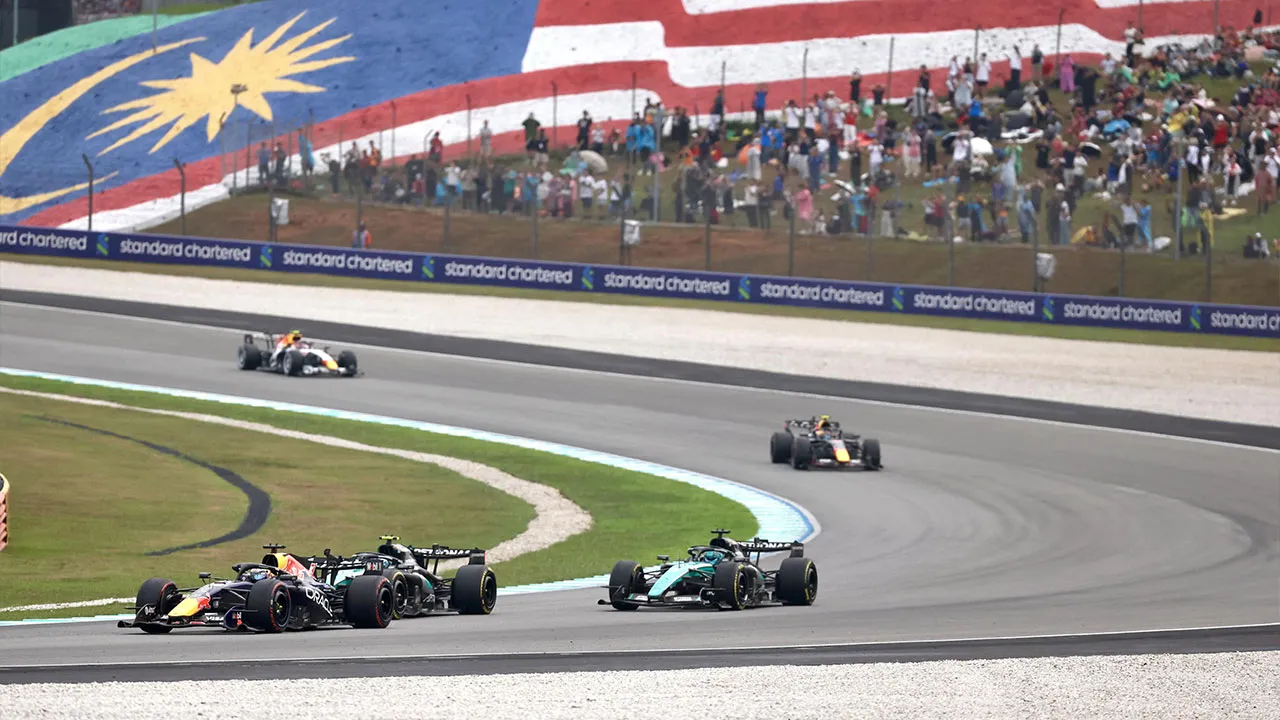
If FIFA demonstrates the domestic side of sports diplomacy, Formula 1 demonstrates its international dimension. Malaysia’s return to the Formula 1 calendar in 2026 came under extraordinary circumstances. The Bahrain Grand Prix could not proceed at its original venue because of geopolitical conditions in West Asia.
Through cooperation involving Formula 1, the FIA and the governments of Bahrain and Malaysia, Sepang International Circuit was selected to host the race from 2 to 4 October. Formula 1 itself described the arrangement as demonstrating the strength of international cooperation.
This is where the diplomatic significance becomes obvious. The arrangement was not simply a commercial transaction involving a racetrack. It was facilitated within the wider relationship between Malaysia and Bahrain, with the support of His Majesty Sultan Ibrahim and Bahrain’s King Hamad bin Isa Al Khalifa. Bahrain’s Crown Prince and Prime Minister, Prince Salman bin Hamad Al Khalifa, travelled to Malaysia for the event and met Anwar during the race weekend.
Anwar subsequently attended the qualifying session at Sepang, visited the Mercedes-AMG Petronas pit and joined a reception hosted by Prince Salman.
Sport had therefore created a diplomatic platform. Leaders met, bilateral relations were reinforced and Malaysia was placed before a global audience not through a formal summit, but through one of the world’s most recognisable sporting spectacles.
The public response has been equally striking. By late September, around 95,000 three-day tickets had already been sold, with Sepang expecting sales to reach about 100,000. SIC later described the figure as the highest ticket sales recorded for races held at the circuit.
The economic spillovers were visible almost immediately. Hotels around Sepang, Putrajaya and surrounding areas experienced sharp increases in demand, with some accommodation prices reportedly multiplying during the race weekend. MOTAC estimated that the event could draw around 300,000 tourists, including about 50,000 international visitors, while Hong Leong Bank Research projected an economic impact of approximately RM1.3 billion through sports tourism and foreign visitor spending.
These numbers explain why successful sporting events matter. Formula 1 does not benefit only the circuit. Visitors spend on hotels, restaurants, transport, retail and tourism. Television coverage carries images of Malaysia around the world. International teams, sponsors, journalists and corporate leaders arrive in the country. A sporting weekend becomes simultaneously a tourism campaign, business event and diplomatic gathering.
There is also something less measurable but equally important: national mood. The excitement surrounding F1’s return after nine years, coupled with accessible World Cup broadcasting, has created positive public sentiment at a time when citizens are often surrounded by arguments about politics, living costs and economic uncertainty.
Governments cannot manufacture unity permanently through sport, nor should sporting spectacles replace attention to bread-and-butter issues. But leadership also involves understanding moments that lift public confidence and create collective experiences.
This is where PMX’s approach deserves recognition. Securing major sporting access for Malaysians while positioning the country as a trusted international sporting partner shows an understanding that diplomacy today operates far beyond conference rooms.
Sometimes diplomacy happens through bilateral negotiations. Sometimes it happens through football. And sometimes, at 300 kilometres per hour around Sepang.
Through FIFA and Formula 1, Malaysia has shown that it can bring the world to its people — and bring Malaysia back onto the world’s sporting stage.
Professor Dr Mohd Mizan Mohammad Aslam is a Senior Fellow at the Global Peace Institute, London.
** The views and opinions expressed in this article are those of the author(s) and do not necessarily reflect the position of Astro AWANI.