AI Brief
- Federal judges issued rulings restricting the Trump administration's efforts to pressure state election officials over alleged noncitizen voting before the US midterm elections.
- Court decisions found the administration overstepped its authority, with inaccurate lists risking disenfranchisement of naturalized citizens, and reaffirmed state control over election administration.
- The Justice Department stated it will continue monitoring elections and pursue legal avenues, despite setbacks from the Supreme Court and federal appeals courts.
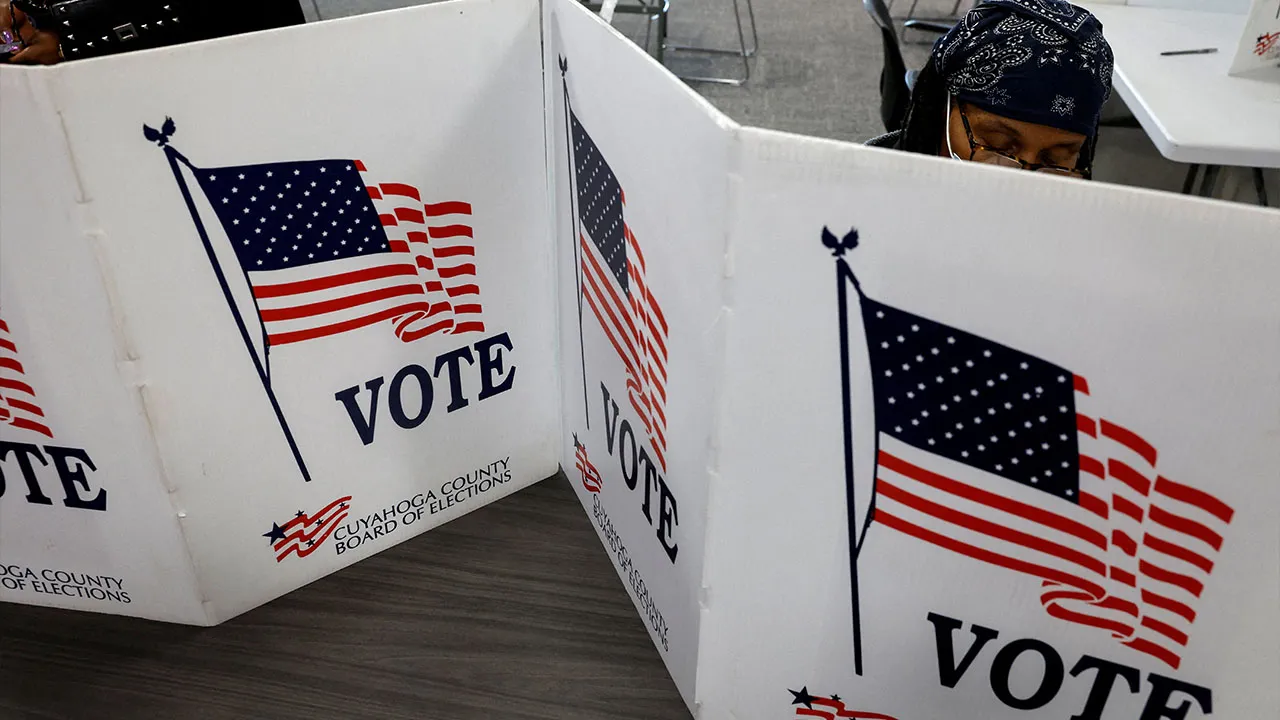
WASHINGTON: In the hours before polls opened for the US midterm elections on Tuesday, federal judges issued a series of rulings restricting the Trump administration's unprecedented efforts to pressure state election officials over alleged noncitizen voting.
Over the past several months, as President Donald Trump's fellow Republicans geared up to defend their majorities in both houses of Congress, the administration ramped up a crackdown on noncitizen voting, which Trump allies say is a major problem even though evidence suggests it is exceedingly rare.
That push has repeatedly encountered resistance in the courts. Federal judges have found that the Trump administration was overstepping its authority by wading into election administration, a responsibility that the US Constitution assigns to the states, and that lists it had generated of alleged noncitizens registered to vote were inaccurate and risked disenfranchising naturalized US citizens.
The administration's legal losing streak continued on Monday. In Washington, one federal judge blocked the administration from demanding officials in California not count any ballots received from people on a list of alleged noncitizens, while another judge prevented the administration from sending such lists to officials in any state. In San Francisco, the 9th US Circuit Court of Appeals upheld a lower court order for the administration to stop threatening election officials with prosecution if they did not comply with its demands over alleged noncitizen voters.
Those rulings all came after the US Supreme Court swiftly rejected the administration's request that it intervene in a Justice Department lawsuit seeking to order California election officials not to count any mail ballots received from more than 20,000 people it says may be noncitizens.
"The Supreme Court joined federal courts across the country in reaffirming state sovereignty," said David Becker, executive director of the Center for Election Innovation and Research, a nonpartisan group that advises election officials. "Every time the administration's claims regarding noncitizen voters have been subjected to any sort of scrutiny, they have immediately fallen apart."
Kiersten Pels, a Justice Department spokesperson, said the department was disappointed by the Supreme Court and 9th Circuit decisions.
“But this is not the end of our efforts," Pels said. "We are deploying election monitors in California and across the country to observe compliance with federal law, charging election fraudsters daily, and will pursue other legal avenues to ensure that only eligible American citizens vote.”
To be sure, not every court decision has gone against the administration. Late on Monday, a federal judge in Washington denied a request by the NAACP that he prevent the Justice Department from deploying federal law enforcement personnel as poll monitors. The judge cited the department's assurances that any monitors who worked for federal law enforcement agencies would be unarmed and dress in business-casual clothing.
Pels said any suggestion that federal law enforcement would be at the polls was "fearmongering."
In one major case that is still pending, the Justice Department has asked an appeals court to revive its lawsuit seeking to prevent certification of the Senate race in Alaska if the Republican incumbent Dan Sullivan loses by a slim margin. The department argues voters could be confused because another candidate on the ballot shares the senator's name.
Trump, who falsely asserts that his loss in the 2020 election was due to fraud, has long argued that state election officials are not doing enough to prevent voter fraud. His allies filed more than 60 lawsuits seeking to challenge his loss in 2020, all of which were unsuccessful.