AI Brief
- Exit polls from Israel’s 27 October election indicate no bloc has secured a parliamentary majority, leading to complex coalition negotiations.
- Smaller parties hold significant leverage in government formation, with coalition arrangements influenced by competing demands and policy priorities.
- A change in leadership or coalition offers no guarantee of major policy shifts, particularly regarding Palestinian statehood and settlement expansion.
An election without a governing majority
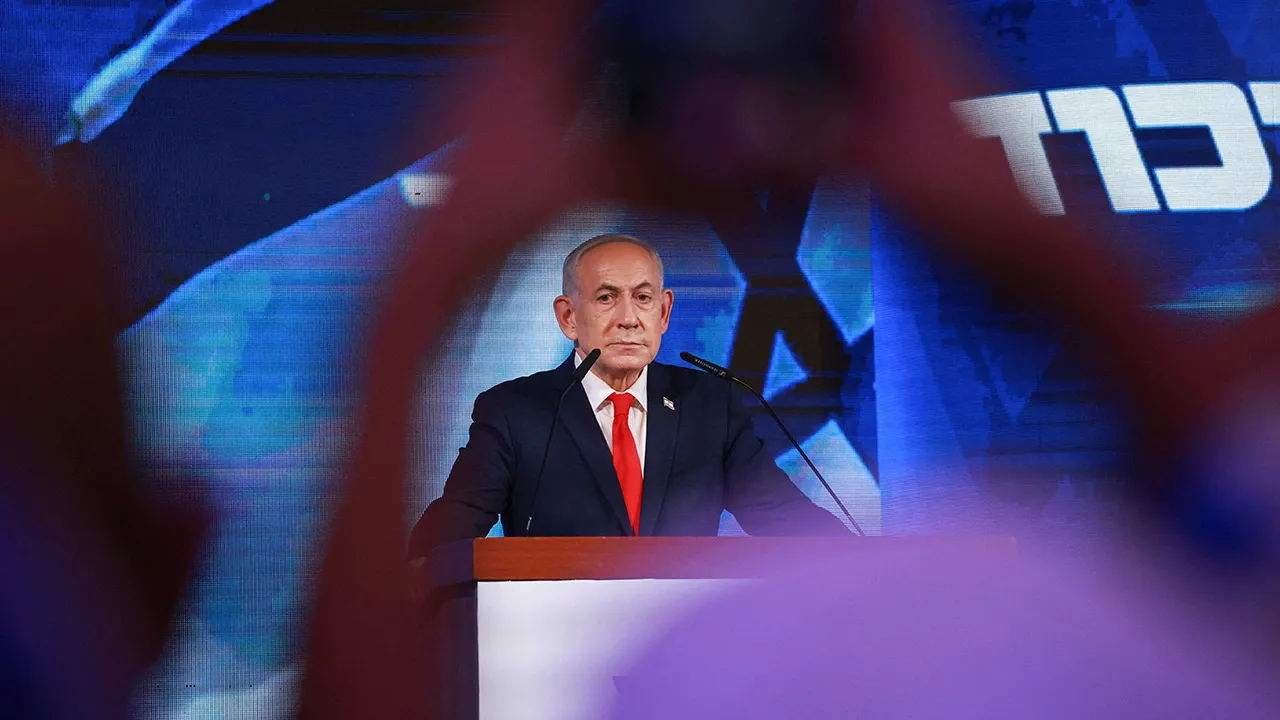
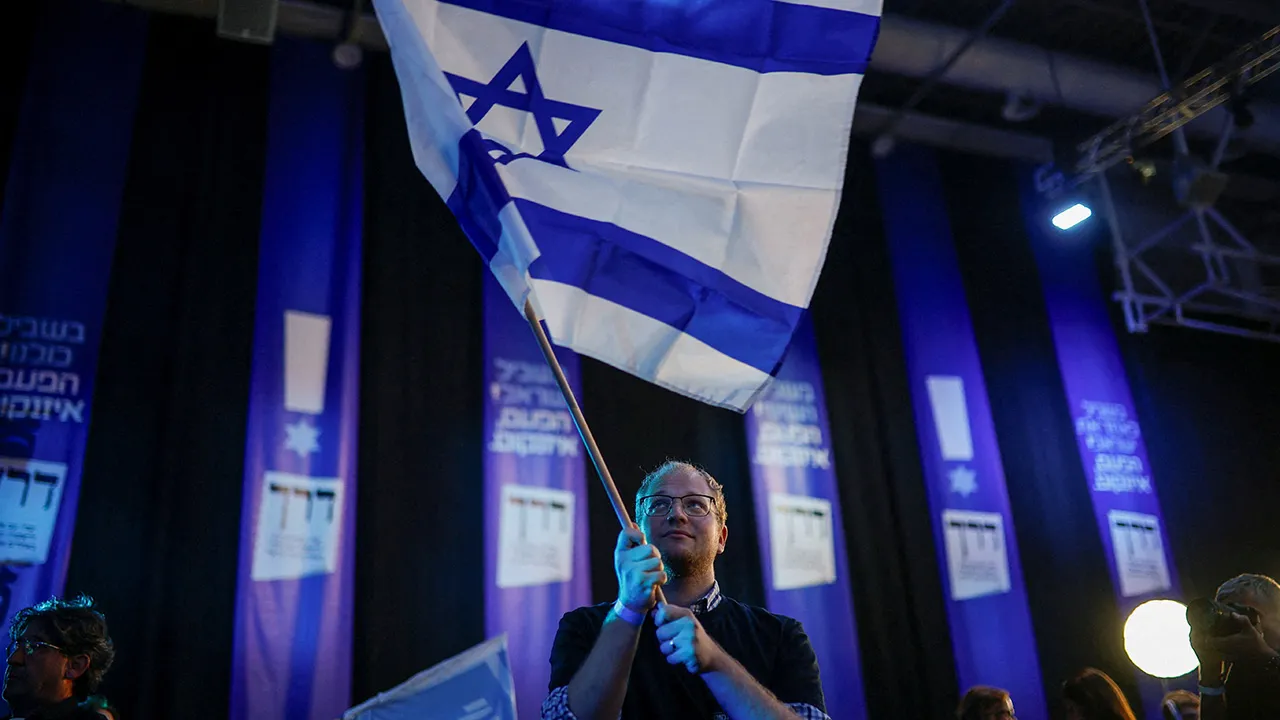
Exit polls from Israel’s 27 October election suggest that neither Benjamin Netanyahu’s bloc nor the opposition group led by Gadi Eisenkot secured a parliamentary majority. The contest now moves from the ballot box to negotiations over who can govern, with whose support, and at what political price.
The figures are provisional. Revised broadcaster projections reported on October 28 placed Netanyahu’s bloc at 51–52 seats, the opposition grouping at 49–51, and Arab-led parties at 18–19. Likud was projected to remain the largest party, ahead of Eisenkot’s Yashar Party. The final results could change the calculation, but electoral strength alone will not resolve government formation.
The price of coalition support
The anti-Netanyahu vote does not constitute a ready-made coalition. For the record, Naftali Bennett and Avigdor Lieberman oppose coalition arrangements dependent on Arab parties, while ultra-Orthodox demands over military conscription complicate another potential route to office. Therefore, the opposition bloc cannot by itself reconcile these competing commitments.
This gives smaller parties another source of leverage. Their bargaining power depends on whether larger parties have credible alternative partners. Support can come through joining a coalition, backing it from outside, or abstaining in a confidence vote. Each arrangement carries a price, although abstentions help only when supporters ultimately outnumber opponents.
Israel’s electoral system makes such negotiations unavoidable. The 120-member Knesset is elected through proportional representation in a single national constituency, with a minimum threshold of 3.25 per cent. Historically, no single party has won an outright majority in a general election. The Alignment’s 56 seats in 1969 remain the electoral record, despite its earlier parliamentary majority following a merger.
A coalition with 61 seats commands an absolute majority in the 120-member Knesset, but a proposed government can take office if it receives more votes in favour than against in its initial confidence vote. For instance, the Bennett-Lapid government was approved in June 2021 by 60 votes to 59, with one abstention. Small parties can therefore influence both the composition of the government and the conditions under which it survives.
The Dynamics of Ra’am and the far right parties
Ra’am, the United Arab List, demonstrated how an Arab party could use coalition participation to secure policy commitments. It negotiated a five-year economic development commitment of NIS 30 billion for Arab communities and pledged to recognise three Bedouin villages and the option to appoint a deputy minister in the Prime Minister’s Office. These demands focused primarily on improving the living conditions of Palestinian citizens of Israel, rather than securing fundamental changes in policy towards the occupied Palestinian territory.
Historically, the far right’s bargain in 2022 demonstrated a different use of parliamentary leverage. The joint list of Religious Zionism, Otzma Yehudit and Noam won 14 seats, making it indispensable to Netanyahu’s 64-seat majority. As a result, Bezalel Smotrich gained the finance ministry and extensive authority over West Bank civilian affairs, while Itamar Ben-Gvir took the national security portfolio overseeing Israel’s police.
These arrangements connect parliamentary bargaining directly to territorial policy. Smotrich’s administrative powers have accelerated settlement expansion. Removing him would not automatically undo those changes: reporting indicates that the Settlements Administration has become more firmly embedded within the defence ministry, making reversal dependent on sustained political will.
In reality, far-right nationalist, ultra-Orthodox, and Arab-led parties pursue different priorities. Treating them as interchangeable kingmakers obscures the substance of their demands and the consequences for people beyond their constituencies.
What a change of government would mean
Would a government outside Netanyahu’s bloc materially change Israel’s conduct? This evidence offers little reassurance regarding Palestinian statehood. Eisenkot dismissed the belief in a two-state solution after the October 2023 attacks as “delusional,” while criticising the East 1 (E1) settlement project, which threatens Palestinian territorial contiguity around East Jerusalem.
On Gaza, he pledged to end Hamas’s rule within 18 months of taking office through a US-backed agreement or military force. This leaves coercion at the centre of his approach to Gaza. A willingness to implement different administrative arrangements should not be confused with a commitment to Palestinian sovereignty. Meanwhile, UN reports describe the recovery in Gaza as far below the scale required a year after the ceasefire.
The West Bank offers a greater scope for specific changes. The United Nations Office for the Coordination of Humanitarian Affairs (OCHA) recorded 1,828 settler attacks causing casualties or property damage in 2025, the highest annual total since monitoring began in 2006.
Even if a new government curbs settlement expansion, protecting Palestinians would require effective action against settler violence and accountability for attacks. Such policy changes would also fall short of ending Israel’s continued presence in the occupied Palestinian territory, which the International Court of Justice found unlawful in its July 2024 advisory opinion on the matter.
On Iran, substantial security concerns would remain whoever governs. Yet, leadership choices still matter to the timing, objectives, and diplomatic management of military action. Regional risk cannot be inferred from the prime minister’s identity alone. Relations with Washington and the composition of the security cabinet would also shape decisions.
Scenario one: deadlock and a caretaker
Two plausible scenarios could emerge in the next six to twelve months. The first is prolonged deadlock, leaving Netanyahu in office as caretaker while negotiations continue or another election becomes necessary. An interim government retains substantial powers, including over military action, although legal expectations of restraint remain.
The risk is that political uncertainty coincides with renewed regional escalation while existing settlement policies continue. Caretaker status offers no guarantees of strategic caution. It is worth observing whether opposition leaders relax their coalition conditions over time and whether the security cabinet authorises significant operations before a successor government takes office. The parties’ declared positions make this a serious possibility, although the provisional results do not justify a confident probability ranking.
Scenario two: an Eisenkot-led government
The second scenario is, Eisenkot-led government assembled through negotiated external support and sufficient abstentions. This would require political concessions and a workable arrangement. If the two main camps each held 51 seats, even abstention by every Arab-led member would result in a tie. Thus, additional support, abstentions from Netanyahu’s camp, or defections would be necessary.
Any agreement would face competing demands over conscription, public spending, and cooperation with Arab parties. Its regional significance would depend on whether it changes ministerial authority and policy in practice.
An E1 freeze or reversal of Smotrich’s administrative arrangements could reduce the pressure on Palestinians without resolving the underlying occupation.
Furthermore, political fragility would remain the principal risk to this new government. Passing a budget by the statutory deadline would test the arrangement’s durability. Riyadh’s insistence on Palestinian statehood would also constrain expectations that a leadership change alone could unlock Saudi normalisation. Watch the commitments made ahead of the confidence vote and whether coalition guidelines provide for reversing the transfer of West Bank civilian powers to partisan control.
A change of leadership offers no guarantees
Although Israel’s 2026 elections determine parliamentary representation, coalition negotiations determine how this representation is translated into the governing authority. For Palestinians, the test will be whether the new government restrains settlement expansion, protects civilians, and changes the conditions that sustain occupation. Nevertheless, a change in the prime minister or governing coalition in Israel offers no assurance of such outcomes. Ultimately, increases in regional risks depend on the policies that follow once the new government takes over Tel Aviv.
Rizal Hamdan is a Senior Program Officer at Merdeka Centre. He writes about geopolitics and foreign affairs for RIMAU Geopolitical Insight on Substack. The views expressed here are his own.
** The views and opinions expressed in this article are those of the author(s) and do not necessarily reflect the position of Astro AWANI.