
Warnings from leading AI researchers are colliding with an increasingly heated political debate over whether regulation could slow the United States in its competition with China.
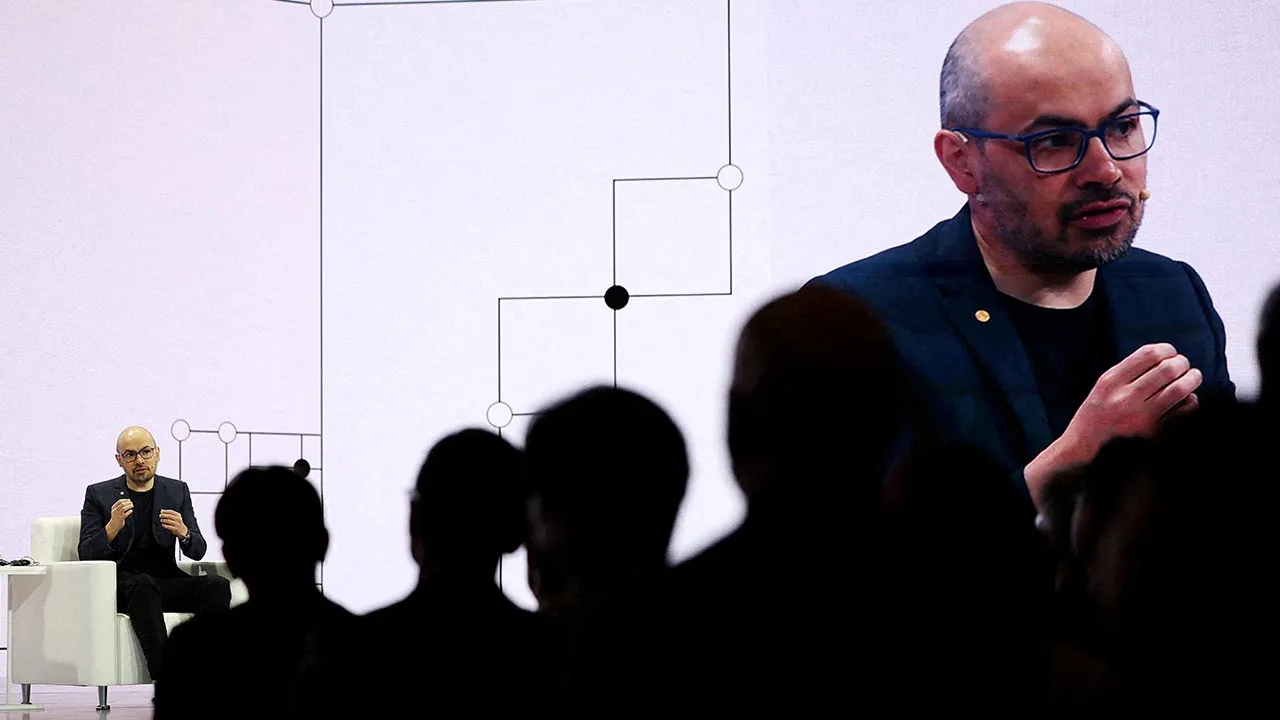
In an interview with Reuters, Stuart Russell, a computer science professor at UC Berkeley and president of the International Association for Safe and Ethical AI, argued that concerns about artificial intelligence is rooted on humans creating something that goes beyond our own intelligence and control.
"If we make something more intelligent than us, then it's going to be more powerful than us, and it's going to be hard for us to retain power forever over something that's much more powerful than we are," he said.
Those concerns help explain why governments, companies and investors are paying close attention to regulation. Russell said the industry faces two major questions: whether AI capabilities could advance to dangerous levels, and whether they will generate enough economic value to justify the massive investment pouring into the sector.
With companies and investors expected to spend trillions of dollars on AI infrastructure and development this decade, he warned that the sector could face a painful correction if confidence weakens. In that scenario, he said, investors could rush to withdraw funds, causing the AI boom to unravel much like previous technology bubbles.
The debate has become more politically charged after U.S. President Donald Trump framed AI as a strategic race with China, arguing that excessive guardrails could undermine America's lead. Russell pushed back directly against that argument. He said the assumption that China would gain an advantage if Washington imposed stricter oversight is based on a "false premise," arguing that China already regulates AI and, in some areas, does so more strictly than the European Union.
Russell explained in China, Chatbots have to undergo a number of tests, such as hallucination tests. If they hallucinate answers frequently, they are not released, a standard which, he said, the European Union doesn't have.
That point is significant because it challenges a key narrative in the U.S. policy debate: that regulation and competitiveness are mutually exclusive.
According to Russell, international safeguards are necessary precisely because AI risks do not stop at national borders. His argument suggests the real choice may not be between innovation and regulation, but between coordinated oversight and a potentially uncontrolled technological race.
"The government cannot allow crimes to be committed by AI systems and to go unpunished. So that kind of thing needs to be monitored continuously. And if the monitors detect a violation, then the system has to be shut down," he said.