
AI Brief
- US stock futures rebounded after last week's sharp declines in tech and chip stocks, which triggered significant losses in Asian markets, especially Taiwan and South Korea.
- Authorities in Taiwan and China introduced new market support measures, including tighter short-selling rules and eased margin financing requirements, to stabilise financial markets.
- Investor sentiment remains cautious amid concerns over AI-related investments, rising interest rates, and the absence of clear policy shifts from central banks.
SINGAPORE: US stock futures rose on Monday while authorities scrambled to shore up sliding stock markets in Asia, after a wipeout last week for the tech and chip stocks at the centre of the AI boom.
Investors are questioning whether vast sums of mostly borrowed money spent building data centres to power AI tools will generate returns fast enough to repay lenders or big enough to justify some of the high stock prices.
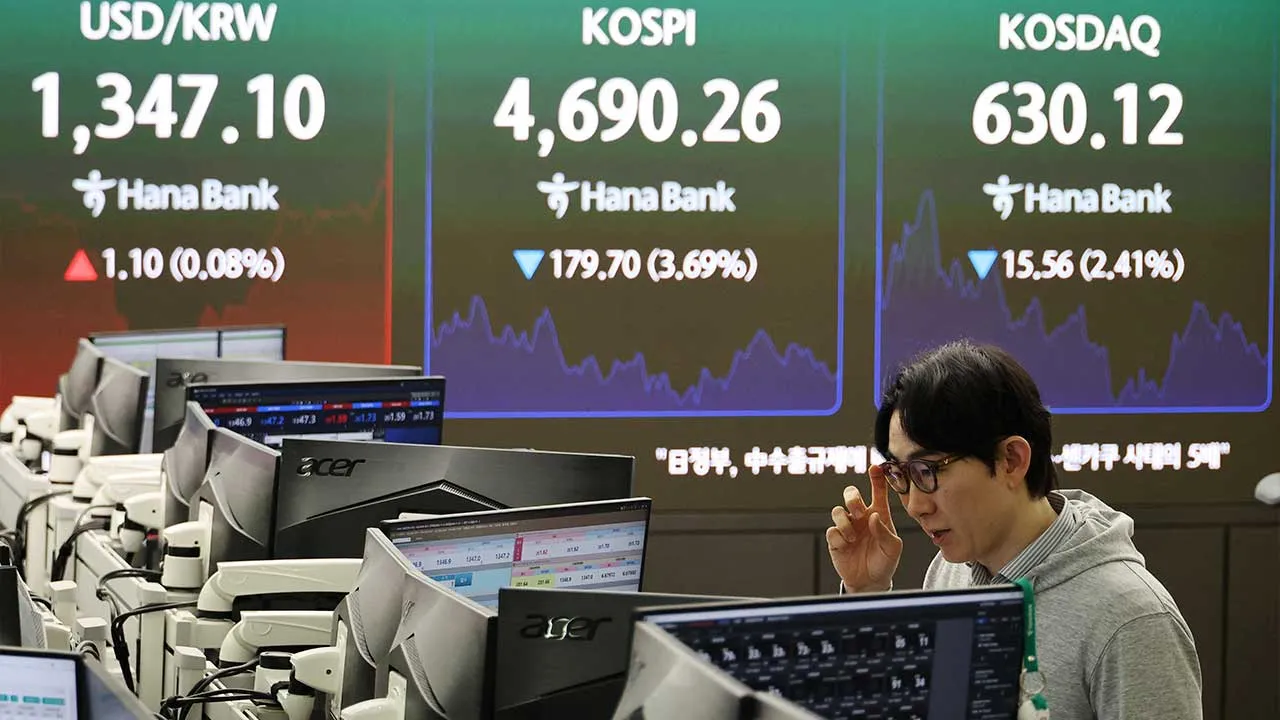
Last week's 10% drop in the Nasdaq was its largest weekly decline since pandemic panic gripped markets in March 2020 while the fall in Taiwan's benchmark was the biggest since 1990. Taiwan is home to the world's dominant advanced chipmakers and critical link in the AI supply chain.
On Monday, Nasdaq 100 futures NQc1 bounced nearly 3% in early trade and S&P 500 futures rose by 2%, while Taiwan stocks steadied and South Korean shares fell about 4% to a 10-month trough before finding support.
South Korea's finance minister is due to hold a press conference later on Monday about a potential market stabilisation fund, which was helping stave off further losses.
"We need to be a bit careful here," said portfolio strategist Damien Boey at Wilson Asset Management in Sydney.
A suite of mood indicators he tracks showed US markets spent three sessions in "panic" territory last week, he said. That can sometimes signal the worst is over, but in this case there might not be enough momentum for the tide to turn.
"If you don't have a policy pivot (at central banks) then there's no catalyst for a risk appetite panic to turn into a durable bounce," he said, leaving investors jumpy and unsure.
Japanese markets were closed for a holiday on Monday but futures indicated selling pressure, while markets in Hong Kong and China sank to new multi-month lows.
The "AI trade" has for years lifted a wide range of stocks, from switch and cable makers to electricity generators, but they have all been under pressure in recent months from rising interest rates.
AI-related shares took a particularly sharp downturn last week as the exit of Jensen Huang, the Nvidia CEO nicknamed the "godfather of AI", and the faltering debut of AI company Anthropic, which closed 8.5% lower on its first full day of trading, pointed to a souring mood.
Taiwan's financial regulator on Saturday ordered a further tightening of short-selling rules for stocks, while in China stock exchanges announced a batch of support measures such as easing requirements for margin financing.