FOR months, the world has watched what was meant to be a decisive US‑Israeli campaign against Iran. But instead of a quick, surgical victory, we are witnessing something far more instructive: the visible, irreversible deflation of American hegemony—delivered not through a single battlefield defeat, but through a slow‑motion implosion spanning military logistics, internal US political warfare, and the rise of a civilizational state that Washington never even understood.
As EMIR Research has documented since May 2024 (“Come Hell or High Water: Iran Has Topped the League”), Iran has consistently acted as the mature, rational actor in this conflict. But the past six weeks have revealed a deeper truth. Iran is emerging as a global level regional center of power while for US, its karma could not be more poetic.
Advertisement
Trump vs. the Military Industrial Cartel: The War Within
By now, this is an observable institutional war. As EMIR Research argued in “Endless Wars, Two Americas, One Failing Machine” (June 2025), the US has long been a split entity: a corrupt, inertia-driven military-industrial complex that has run American foreign policy on autopilot for decades versus a president who is openly trying to rein in. The war on Iran reveals this internal contradiction more clearly.
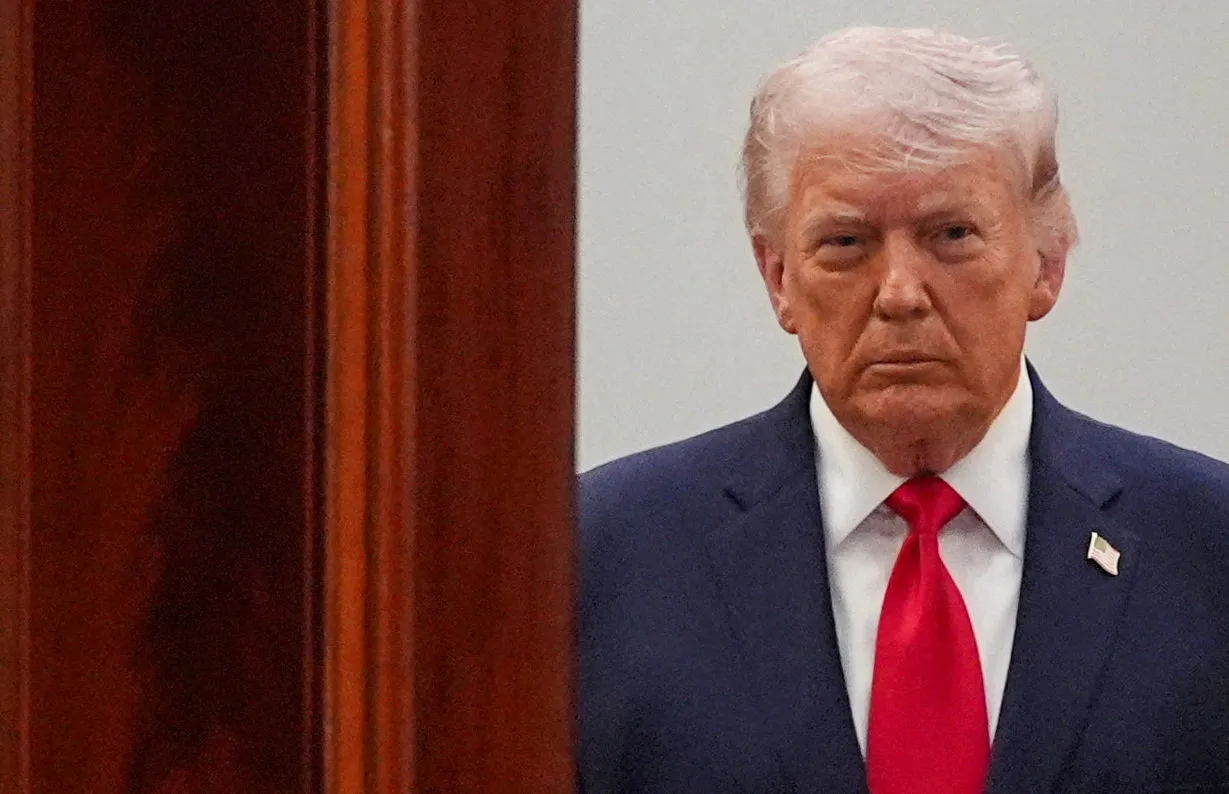
Donald Trump, for all his contradictions and antics, has consistently sought to disentangle the US from its endless wars and particularly one in Ukraine. His current strategy is brutal but logical, to him: use the war on Iran as leverage to exit the Ukraine quagmire. Any EU refusal to help the US in opening the Strait of Hormuz could create favorable conditions for exactly such a maneuver.
Secretary of State Marco Rubio has already signaled that Patriot missiles produced for Ukraine may need to be redirected to the Iran theatre. Trump also unambiguously hinted to EU allies that the war in Ukraine “theoretically, doesn’t concern us – we have an ocean, a big, wide, beautiful ocean”.
Within the US the deep state’s response has been to simply try to outlast Trump, just as it did during his first presidency. The anti Trump movement is growing, and the machinery of intelligence agencies, permanent bureaucracy, and defense contractors is using every tool to bring him down. Trump’s bet, too, is to let that machine drain itself—its munitions, its credibility, its political capital—on a war that cannot be won.
The logistical and military collapse of the US led coalition
EMIR Research had already flagged this trajectory years ago: in “De dollarisation: Elbowing USD in a Multipolar World” (2023). The war on Iran has simply confirmed that verdict in real time. Now, this is obviously not about narratives but about ships that do not sail, missiles that do not exist, and allies that have nothing to send.
Patriot missiles are catastrophically depleted. After four years of arming Ukraine, US-EU stocks cannot match Iran’s low cost drone warfare. Each Iranian drone costs a fraction of a Patriot interceptor. Even missiles newly produced for Ukraine are now being redirected to the Gulf. This is not a sustainable equation.
Carrier strike groups appear to have taken real damage. The USS Gerald R. Ford, the world’s largest aircraft carrier, suffered a fire on March 12 that reportedly could not be extinguished for up to 30 hours. Official narratives called it a “non combat related” blaze in laundry spaces. But the carrier then moved to Souda Bay, Greece, and then to Split, Croatia, for repairs. Experts estimate it may be out of service for 12 to 14 months.
The USS Abraham Lincoln has also appeared to suffer significant damage—the IRGC claimed a missile and drone attack on March 13 caused "significant damage," and a subsequent photo of sailors “welding rope” at sea (a repair always done in port) released by U.S. Central Command raised experts’ eyebrows, suggesting US officials are hiding the true extent.
In any case, by March 16, both the Lincoln and the Ford had moved more than 1,100 kilometers from Iranian shores—officially a “controlled reallocation,” in reality a strategic retreat.
The USS George H.W. Bush was announced for deployment from Norfolk a month ago. As of the latest updates, it is still crossing the Atlantic weeks away from the Middle East. In other words, the United States currently has no fully operational carrier strike group in the war zone.
America’s allies too have little to offer. The United Kingdom, currently chair of the NATO mission, has effectively no destroyers. It is borrowing a German frigate just to lead the mission—a state of the Royal Navy one MP called a “national embarrassment”. France, meanwhile, relies on a single aging aircraft carrier, a precarious position that experts warn leaves it with no backup.
This is the state of the “rules based order.” They can “show the flag” but they cannot fight.
Iran’s Rise as a global‑level regional center of power
Washington assumed that the February 28 strikes killing Ayatollah Ali Khamenei and other high rank officials would trigger systemic collapse. Instead, as EMIR Research detailed in “The Iran War Paradox” (March 2026), Iran’s pre‑planned succession mechanism worked perfectly. By March 9, Mojtaba Khamenei had been elevated as Supreme Leader, with the full blessing of the IRGC. The elite coalesced and the state did not fragment.
This is a fundamental conceptual error born of US cultural blindness. Iran has more than 6,000 years of continuous state civilization while the United States has 250 years and a cowboy‑town culture that mistakes shallow management for genuine statecraft. In a mature state, the death of first‑line leaders is not catastrophic. There is seamless substitution. And in wartime particularly, new leadership can be even more competent—because war acts as an x‑ray, highlighting professional capability as well as true loyalty and alignment with the state.
Iran’s military capabilities have been demonstrated beyond doubt. Using cheap drones and old missiles, Iran has methodically degraded US military infrastructure across the Gulf. And, if a ground invasion were attempted, Iran has even older stocks of drones and missiles specifically designed for front‑line combat.
Iran is now flexing economic power. With US carriers in retreat, the entrance to the Persian Gulf is effectively open for Iran to ship its oil now at $100 per barrel (market price), up from a significant previous discount. And it is being bought. And the United States cannot stop it because, as we now know, it lacks the forces. The world sees this.
On top of that, Iran has reportedly begun laying the groundwork to demand payment for passage through the Strait of Hormuz—its parliament has approved a new strait management plan, including passage approvals and fees—which would give Tehran not just a revenue stream but the ability to regulate commodity flows across the entire region.
All in all, the US is now reaping exactly what it sowed.
It asks for military help from nations it betrayed or insulted. The world knows how the United States has repeatedly abandoned allies—most recently the Kurds. Trump himself set the tone: the Saudi Crown Prince “didn’t think he would be kissing my ass.” The Gulf monarchies now live with that public humiliation—and with US bases that invite danger, not security.
It uses the most deplorable tactics (double-tapping) that violate the Geneva Conventions and is surprised when the world unites against it. The strike on the girls’ school in Minab—165 children aged 7 to 12, plus their teachers—was deliberately calculated. The school sits next to an IRGC base; children of IRGC officers attend. The 40 minute gap between missiles was cynically designed to kill parents and rescue workers. Thus, beyond Ayatollah’s assassination, Iran is now unified by a violation of the most sacred. And the world took note again.
Its sanctions exaggerate a global economic crisis. While stronger nations have long found ways around the US ban on Russian oil using transshipment and established smuggling networks, smaller nations, especially in Asia, have no such buffers. Absurdly, as sovereign states, they had to beg Washington’s permission to buy Russian oil.
And now the US has done what declining hegemons do: it “permitted” what it could not stop. Washington officially allowed the purchase of Iranian and Russian oil—not generosity, but face saving, as ships are already sailing.
The unipolar moment is over, and the nations that have long committed to what EMIR Research calls “narrative sovereignty”—building the capacity to frame their own stories—are on the right side of history.
Dr Rais Hussin is the President / CEO of EMIR Research, a think tank focused on strategic policy recommendations based on rigorous research.
** The views and opinions expressed in this article are those of the author(s) and do not necessarily reflect the position of Astro AWANI.