
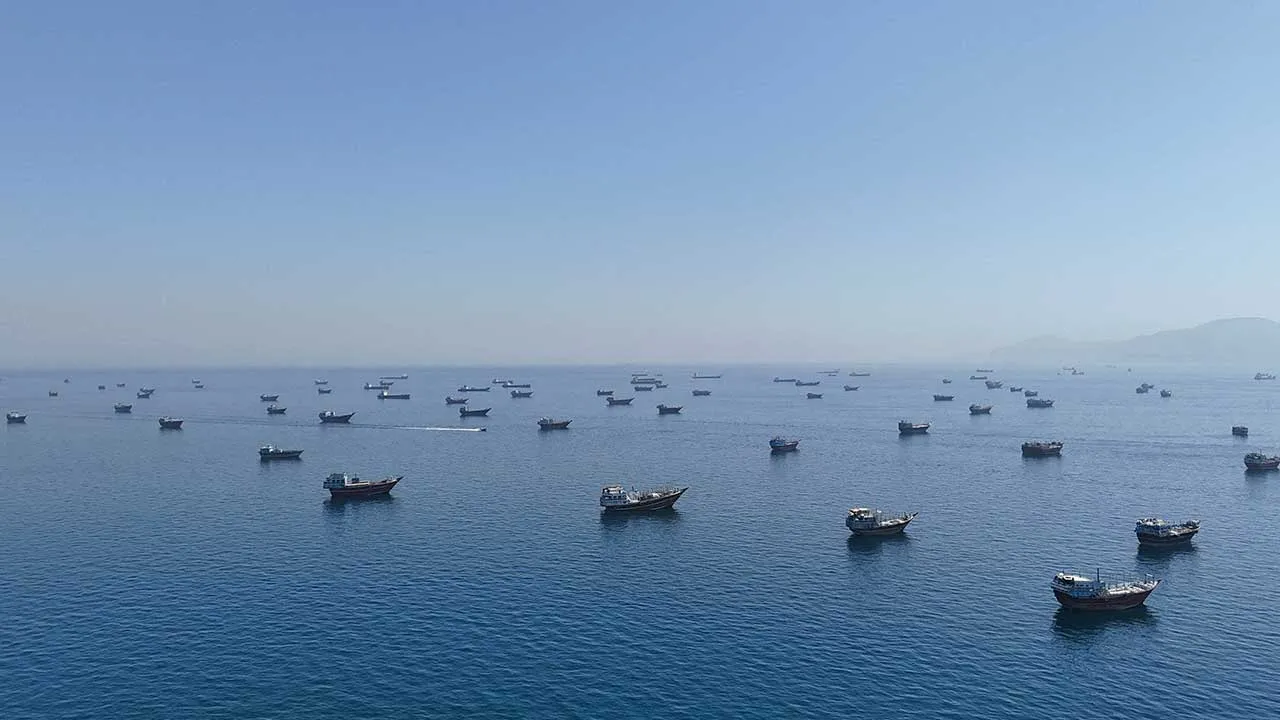
ONLY 80 merchant vessels transited the Strait of Hormuz under U.S.-led escort over the 72-hour period from Thursday to Saturday, according to data released by the United Kingdom Marine Trade Operations (UKMTO) on Sunday -- a figure far below the pre-conflict daily average of 138 ships.
The data, sourced from the U.S.-led Joint Maritime Information Center, showed a steady daily decline in U.S.-coordinated transits: 33 vessels on Thursday, 29 on Friday, and 18 on Saturday.
The Strait of Hormuz currently operates two shipping lanes: the southern route, which runs adjacent to Omani waters, is covered by U.S. escort operations; and the northern route, which falls under Iranian control. Traffic on the U.S.-escorted southern lane has shown no sustained increase, while the actual volume of vessels using the northern lane remains difficult to quantify accurately.
Iran's Islamic Revolutionary Guard Corps continued to conduct radio hails, drone close-range reconnaissance, and tracking surveillance on transiting commercial vessels, maintaining routine operational control over the waterway. Vessels that keep their automatic identification systems active may receive warning calls directing them to divert to the Iranian-controlled shipping lane.
The UKMTO also warned of persistent mine risks in the Strait's waters, with sweeping and survey operations ongoing across the area. Meanwhile, jamming and interference with global navigation satellite systems in the region have become commonplace, posing continued hazards to navigational safety.