AI Brief
- Asian shares surged, led by a 31.5% jump in Nvidia after Jensen Huang returned as CEO, sparking a broad AI sector rally.
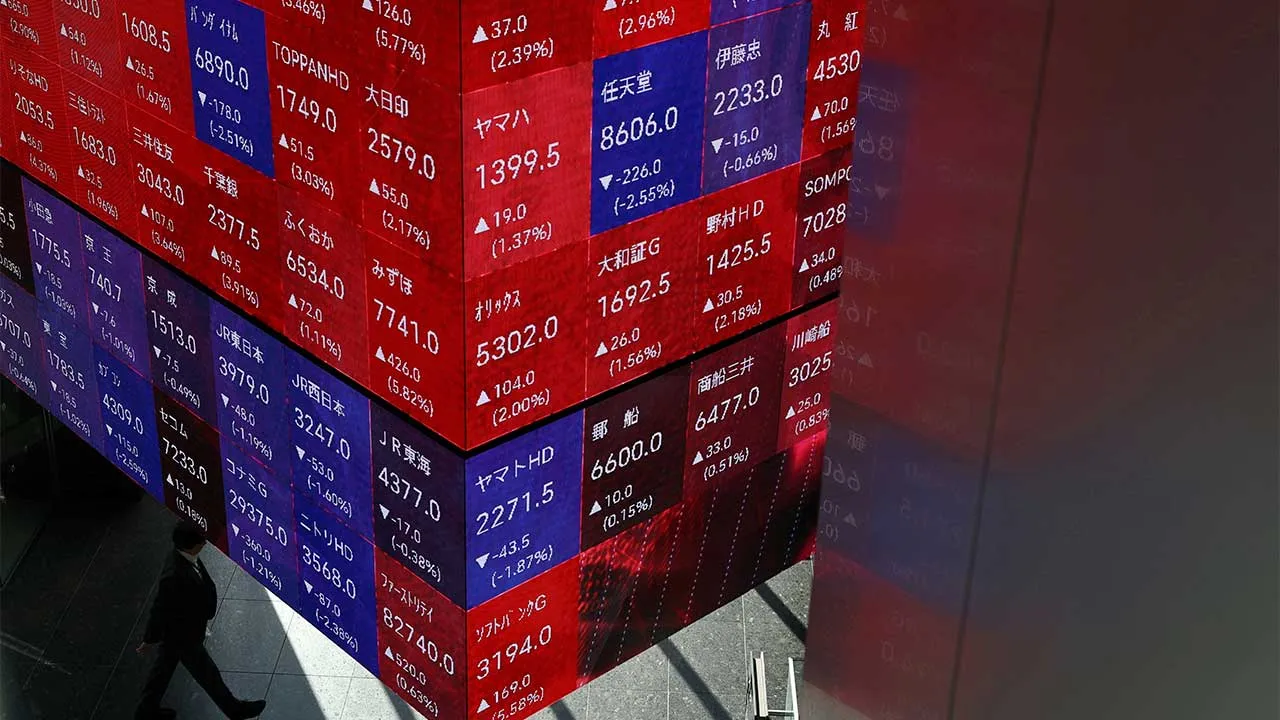
- Major indices in Taiwan, Japan, and South Korea posted significant gains, while Chinese shares lagged due to concerns over potential US chip export curbs.
- The AI-driven rebound eased growth concerns, increased bets on US Fed tightening, and lifted Treasury yields and the dollar.
HONG KONG: Asian shares leapt on Tuesday following a spectacular Wall Street surge, as Jensen Huang's return as Nvidia CEO sparked a relief rally in the battered AI trade.
Taiwanese shares shot up 9% from an eight-month low, with Nvidia's primary contract chip manufacturer TSMC and assembler Foxconn both nearly 10% higher at their daily limits.
MSCI's broadest index of Asia-Pacific shares outside Japan climbed 4%, bouncing back from an eight-month low and heading for its biggest single-day gain since July 31.
The euphoria looked set to ease later in the day, with pan-region Euro Stoxx 50 futures STXEc1 flat while FTSE futures FFIc1 edged just 0.2% higher. S&P 500 futures ESc1 and Nasdaq futures NQc1 added 0.25% each.
Over in Asia, however, Japan's Nikkei .N225 jumped as much as 5% as traders returned from a local holiday and South Korea's KOSPI surged more than 7%.
"Today's buyers are mixed, but institutions are setting the price. Foreign funds are rebuilding positions in TSMC, SK Hynix and Samsung, while Seoul retail investors sell into strength to lock in gains. Our clients are showing heavy two-way activity in Nvidia, TSMC and Asian indices, led by short-covering," said Eric Xiao, head of sales for Asia at CMC Markets.
Huang's comeback capped a whirlwind week of events that whipped markets and tore through the AI ecosystem, which has relied on Nvidia for everything from supplying chips to bankrolling the industry's massive buildout.
Shares of Nvidia rocketed 31.5% higher on Monday, marking their biggest daily percentage gain in 23 years and restoring nearly US$1 trillion in value to the company. Companies across the AI industry also rallied sharply, with the Nasdaq 100, which has many big-cap tech companies, jumping more than 6%.
"This removes an important source of uncertainty," said Charu Chanana, chief investment strategist at Saxo in Singapore. "His return restores strategic continuity at Nvidia and reduces the immediate risk of disruptions to its supply chain and technology roadmap."
However, turning the powerful relief rally into a sustainable recovery may prove difficult, as "the bigger questions around returns on AI investment, sustainability of hyperscaler spending and elevated valuations remain unanswered," she added.
Chinese shares were an exception to the relief rally, making only small gains due to concerns that tighter curbs on the exports of US chips are in the works. The blue-chip CSI 300 Index edged up 0.4%, and Hong Kong shares dipped 0.5%.
AI REBOUND LIFTS FED TIGHTENING BETS
The sharp AI rebound has also eased growth concerns and loosened financial conditions, reviving market bets for near-term Fed tightening and lifting front-end Treasury yields and the dollar.
Fed funds futures traders are now pricing in a hike at the Fed's December meeting as a certainty, compared with 89% odds on Friday, when stocks tumbled, according to CME Group's FedWatch tool. The market-implied chance of a supersized 50-basis-point increase is around 5%.
Investors are set to focus on Wednesday's PCE Index data USPCEY=ECI, the last key data set ahead of the Fed's final meeting of 2026.
The yield on the benchmark US 2-year Treasury note US2YT=RR rose for a second day and was last at 4.6767%, while the yield on the 10-year note US10YT=RR was flat at 4.9277%. The dollar, meanwhile, hovered near a more than 20-month high against the euro.
Brent crude futures LCOc1 fell 0.6% to US$88.80 a barrel after settling down 3.5% at US$89.37 a barrel on Monday, a three-month low, on rising supplies from the Middle East. O/R
Spot gold XAU= was flat at US$3,630.81 per ounce.