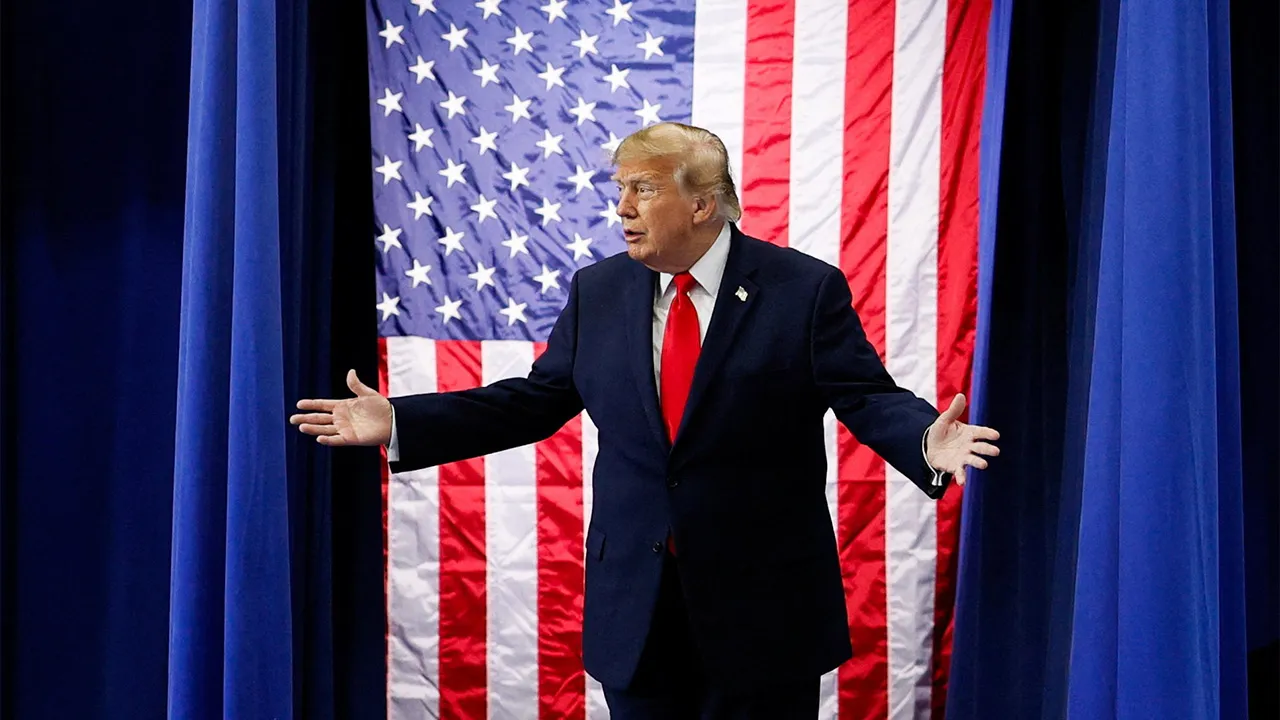
WASHINGTON: This week both the Republican-led U.S. House of Representatives and U.S. Senate passed a resolution directing President Donald Trump to withdraw U.S. forces from hostilities with Iran, reflecting growing concern among members of his party about the conflict that began on February 28.
The U.S. Senate passed the War Powers concurrent resolution on Tuesday directing President Trump to halt U.S. military activity against Iran, weeks after the measure was approved by the House.
It is the first time such a resolution has passed both chambers of Congress.
This is a look at the U.S. war powers law and what might happen next.
WHAT IS THE WAR POWERS RESOLUTION?
Congress passed the War Powers Resolution law, more commonly known as the War Powers Act, in 1973 as a check on presidential power in response to the unpopular Vietnam War. The Act requires the president to inform Congress within 48 hours of hostilities and says military action begun without Congress' approval must be terminated within 60 days, unless there is an emergency.
With Iran, the 60-day deadline was May 1, which Trump addressed by declaring that the hostilities had been "terminated" by a ceasefire, despite continuing attacks and a blockade of Iranian ports. Legal experts said that argument might not survive judicial scrutiny.
The 1973 law also established procedures for Congress to vote on war powers resolutions to end hostilities not authorized by lawmakers. These resolutions are privileged, meaning they can be brought up for votes even without the approval of House of Representatives and Senate leaders.
WHAT HURDLES DO RESOLUTIONS FACE?
Opponents of the concurrent resolution - defined as measures passed by both the House and Senate reflecting the sentiments of both chambers - say it does not have the force of law because it will not be sent to the White House for Trump to sign or veto.
However, legal experts said the issue is not settled law. No concurrent resolution under the 1973 war powers law had passed since the law was enacted.
"The executive branch will likely ignore it on constitutional grounds, and it’s not clear who might have standing to sue to enforce it," said Scott Anderson, a senior fellow at the Brookings Institution and senior editor of the online legal publication Lawfare, although he added that he expected someone would.
Democratic Representative Gregory Meeks of New York, who filed the House resolution, said his view is that the concurrent resolution is legally binding and said he would explore every legal avenue to ensure Trump complies with the will of Congress.
SO WHY BOTHER?
Sponsors of the war powers resolutions say the U.S. Constitution gives only Congress, not the president, the power to authorize the use of military force, although there is significant precedent for presidents ordering short-term operations to counter an immediate threat.
And even though multiple resolutions have been filed - and failed - in the Senate and House since the U.S. and Israel began firing on Iran, backers say the close votes send an important signal that lawmakers are trying to take back their power to declare war and rein in Trump's White House.
Senate Republicans narrowly blocked a resolution as recently as late Wednesday night, as two party members switched their votes after Trump berated them at an angry lunch meeting.
"The war powers resolution that was passed by the House sends a strong signal to the president that lawmakers across the aisle think that this war has gone on for too long and violates the war powers resolution as well as the Constitution," said Katherine Yon Ebright, a war powers expert at the Brennan Center for Justice at New York University.
Opponents call the resolutions political posturing that emboldens U.S. enemies and improperly impinges on the president's powers as commander in chief.
WHAT DO VOTERS THINK?
The unpopular Iran war could affect elections in November that will determine whether Trump's Republicans retain control of Congress. A Reuters/Ipsos poll released this week showed that just one in four Americans believe the war is worth its costs and a majority worry that a truce with Tehran is unlikely to last.
The poll also showed the war weighing heavily on Trump's popularity, with his approval rating dropping to 34%.