AI Brief
- Green Growth Asia Foundation highlighted Malaysia–Indonesia educational collaboration at COP31 to enhance student-led environmental projects in schools, universities and communities.
- GGAF emphasised the need for educator support, industry participation and international experience sharing to implement Eco-Schools, Eco-Campus and Young Reporters for the Environment programmes.
- Post-COP31 priorities include building educators’ capacity, exchanging best practices, and supporting measurable, student-led initiatives with involvement from foundations, companies and development partners.
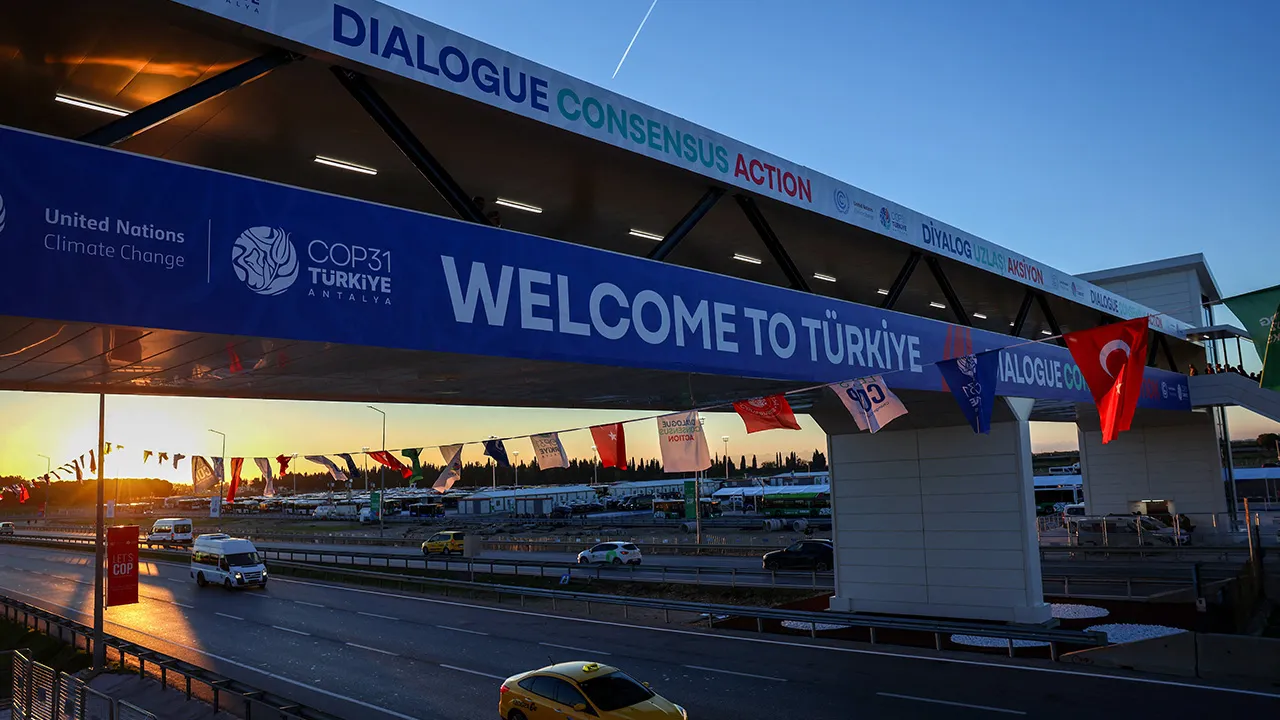
ANTALYA, TURKEY: The Green Growth Asia Foundation (GGAF) highlighted Malaysia–Indonesia educational collaboration at COP31 to expand opportunities for students to address environmental issues through projects in schools, universities and communities.
Its Chief Executive Officer, Dr Balamurugan Ratha Krishnan, said the initiative requires support from educators, industry participation and the sharing of international experiences.
“Students can begin with issues that are close to their daily lives, such as food waste, water and energy consumption, or waste management in schools and campuses.
“When they investigate problems, develop solutions and evaluate outcomes, they build the skills and confidence needed to drive change in society,” he said in a statement issued in conjunction with a dialogue organised by GGAF at the Malaysia Pavilion during COP31.
As the national operator of the Eco-Schools and Eco-Campus programmes in Malaysia and Indonesia, GGAF connects international education frameworks with local implementation needs.
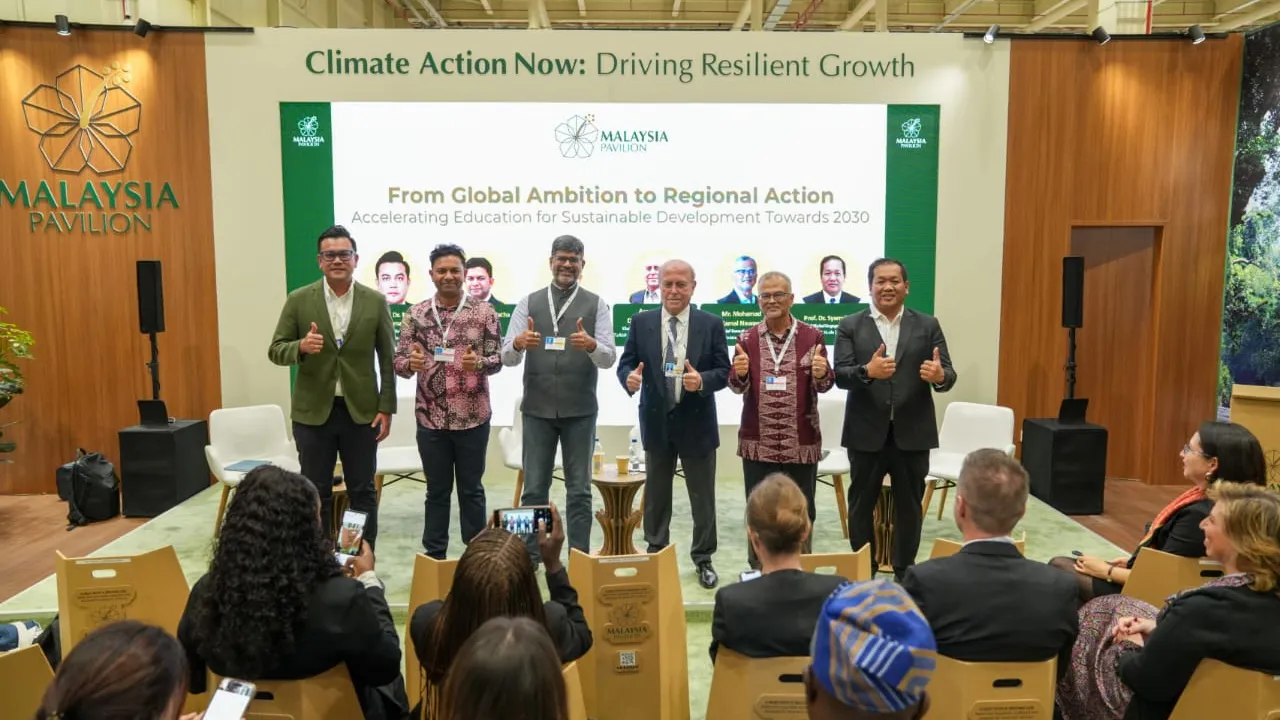
The dialogue, titled “From Global Ambition to Regional Action: Accelerating Education for Sustainable Development Towards 2030,” brought together representatives from international education networks as well as participants from Türkiye, Malaysia and Indonesia.
Dr Balamurugan said post-COP31 priorities include building educators’ capacity, promoting the exchange of best practices among institutions, and supporting student-led projects.
“International frameworks provide guidance, but implementation requires supported teachers, committed institutions and partners who understand local needs,” he said.
Meanwhile, GGAF Executive Director Datuk Ir. Ts. Dr. Mahadi Mohamad said cross-sector collaboration must deliver measurable benefits.
“Beyond funding, partners can contribute expertise, mentorship and opportunities for students to undertake real-world projects.
“We want every contribution to help educators and students implement tangible initiatives, with progress that can be monitored and benefits that can be clearly communicated to the community,” he said.
Datuk Mahadi, who also served as the moderator, said the dialogue created opportunities to identify collaborations that could continue beyond the conference.
GGAF welcomes the involvement of foundations, companies and development partners to support educator training and programme implementation in schools and universities across both countries.
Among the approaches highlighted were Eco-Schools, Eco-Campus and Young Reporters for the Environment (YRE), which connect learning with action, investigation and environmental communication.
Axiata Foundation supports the Eco-Schools programme, in addition to collaborations related to Eco-Campus and the responsible use of artificial intelligence (AI) in learning as part of broader youth development efforts.
In addition to Dr Balamurugan, the panel featured Dr Pramod Kumar Sharma, Senior Director of Education, Foundation for Environmental Education (FEE); Associate Professor Dr Abdulkadir Ateş, Chairman of the Board of Directors, Turkish Environmental Education Foundation (TÜRÇEV); Mohamad Kamal Nawawi, Chief Executive Officer of Axiata Foundation; and Prof. Dr. Syamsidik, ST, M.Sc., Head of the Global Engagement Office, Universitas Syiah Kuala, representing IMT-GT UNINET.
The press statement is issued by Green Growth Asia Foundation