AI Brief
- Delhi surpassed Lahore to become the world's most polluted city, with air quality reaching hazardous levels and visibility significantly reduced by smog.
- Delhi's AQI was recorded at 334 by IQAir and 403 by India's Central Pollution Control Board, both indicating severe pollution.
- Seasonal factors, including trapped emissions and agricultural burning, contribute to recurring severe pollution in northern India and neighbouring Pakistan.
NEW DELHI: India's capital Delhi overtook Lahore in Pakistan to become the world's most polluted city on Friday, with air quality reaching hazardous levels and visibility dropping as smog blanketed the city of 20 million people.
- Air quality index (AQI) in Delhi was "hazardous" at 334, making it the most polluted global major city, according to Swiss group IQAir, which measures air quality levels based on the concentration of toxins.
- An AQI reading up to 50 is considered good with little or no health risk
India's official Central Pollution Control Board pegged the AQI higher at 403 and rated it "severe".
- The Swiss and Indian readings vary due to the different AQI scales and methodologies used to calculate and classify air pollution levels.
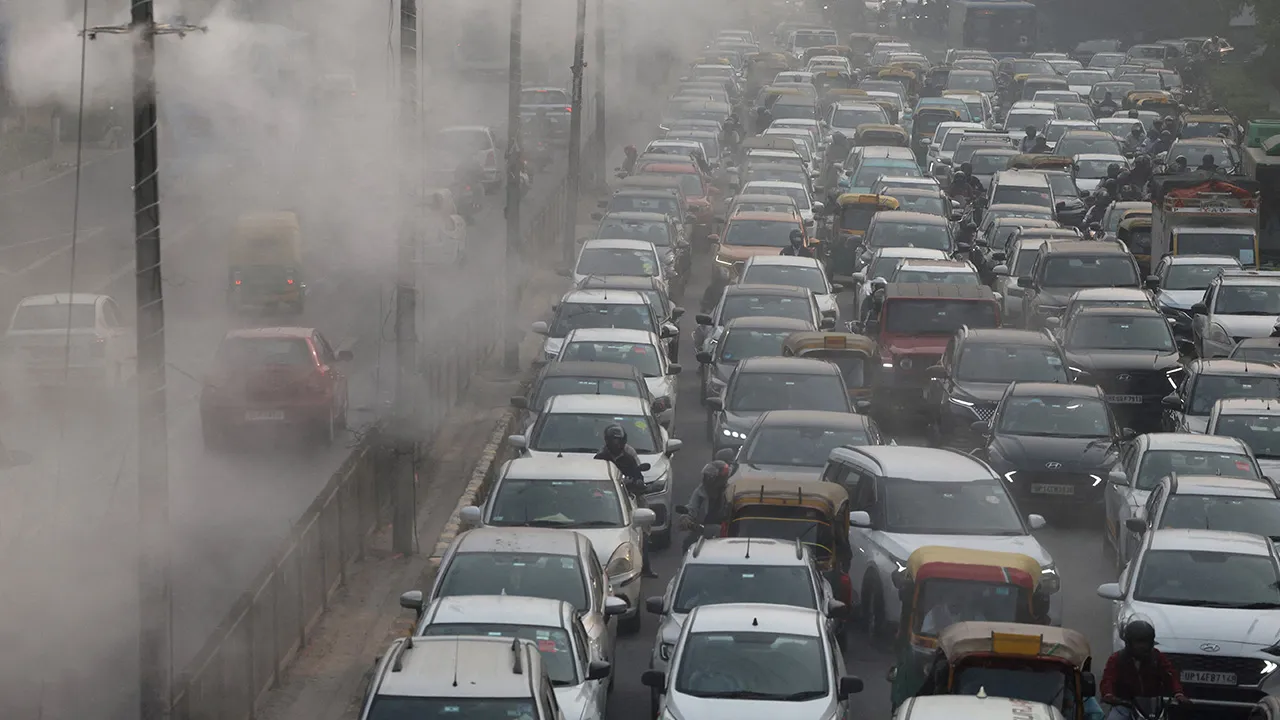
- Cars and motorcycles emerged from dense smog, which also appeared to obscure street lights on the city's main roads, videos from news agency ANI showed.
- Pollution is a seasonal problem in many parts of northern India and neighbouring Pakistan, as the cold, heavy air of winter traps vehicle emissions, construction dust and smoke from agricultural burning.