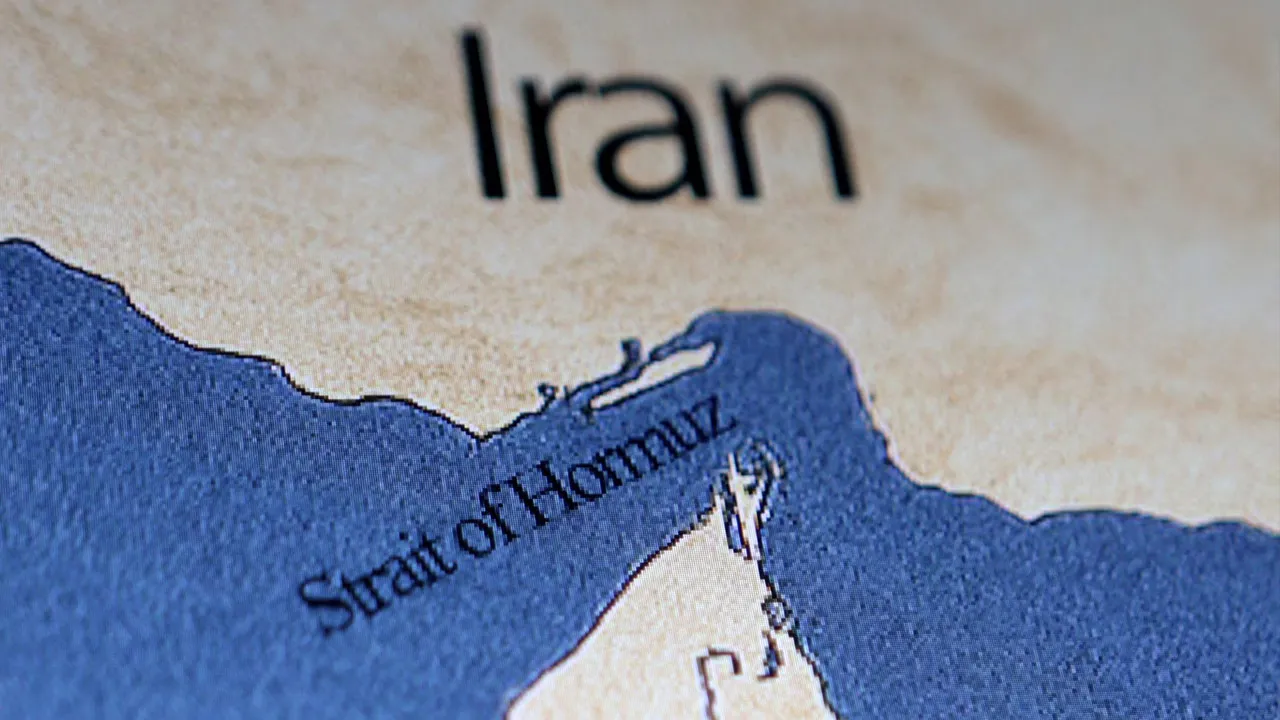
THE 60-day U.S.-Iran negotiating window expired on August 17 without producing the comprehensive settlement it was meant to deliver. Donald Trump has said the Strait of Hormuz is open; Tehran has said it remains closed; commercial traffic has fallen far below normal. The contradiction matters because control of a waterway is not the same as confidence in it. Shipowners, insurers and refiners make decisions on a simpler test: can the route be relied upon tomorrow, next week and next month?
The same distinction helps make sense of Trump. His Iran policy looks erratic from one headline to the next, but the underlying objective has been much steadier. Trump wants Iran denied a nuclear weapon, Hormuz usable and any eventual agreement capable of being sold as an American win. He would argue, with some justification, that changing tactics is not the same as changing strategy.
For decades, Trump has believed that the United States possesses enormous advantages but often gives them away too cheaply. Allies should contribute more; trading partners should concede more; access to the American market, dollar, technology and security umbrella should produce an American return. Iran is now testing how far that logic can travel when the instrument is no longer a tariff or deadline, but war.
The United States can strike military targets, restrict oil sales and squeeze financial networks. Iran cannot match those capabilities symmetrically, but it does not need to. Geography allows Tehran to keep uncertainty alive around one of the world’s most important energy corridors. Until commercial confidence returns, part of the cost travels outward through oil, freight, insurance and inflation.
Washington can dominate escalation more effectively than Tehran. What it cannot dictate is how markets price risk, how long shipowners stay away, or how voters react when an overseas conflict reaches the petrol station and household budget.
That domestic clock is becoming harder to ignore. A Reuters/Ipsos poll released on August 17 put Trump’s approval at 33%, the lowest of his presidency, while eight in ten Americans expected the Iran war to last a long time.
The United States is also carrying federal debt that has now crossed US$40 trillion, with long-term borrowing costs still near multi-decade highs. The war did not create America’s fiscal problem; deficits, heavy borrowing and inflation risks were already there. Another energy shock simply lands on pressures already present.
None of this means Trump must retreat. It means the price of each instrument matters more over time.
The useful question is not whether he will “back down”, but what outcome becomes inexpensive enough for America, painful enough for Iran and visible enough for Trump to call a victory. A pause can serve that objective. Renewed pressure can too. So can another deal. What matters is whether the objective changes, not whether the instrument does.
China makes the calculation more complicated.
Washington has repeatedly targeted Chinese refiners and networks involved in Iranian oil. Yet Trump has also discussed with Xi Jinping whether sanctions on Chinese companies buying Iranian crude could be lifted.
The sanctions are therefore not sacred. They are leverage, and leverage is valuable because it can be exchanged.
Beijing is not standing still. China began reducing vulnerabilities in energy, finance and technology long before this conflict. American pressure did not create that strategy, but it can accelerate it. Chinese state shippers are already changing how they move Middle Eastern oil to reduce exposure to Hormuz and Bab al-Mandeb.
Here lies the longer-term risk for Washington: pressure may win a concession today while encouraging adaptation that makes the same pressure less effective tomorrow.
For Malaysia, that matters more than guessing where oil trades next week. Nearly 40% of Malaysia’s crude oil requirements transit Hormuz, according to PETRONAS.
Yet our exposure extends well beyond energy. Chinese trade, American technology and finance, Gulf energy, open shipping lanes, foreign capital and global supply chains all matter. The deeper vulnerability is not simply supply concentration. It is leverage concentration — the point at which one decision made elsewhere on energy, sanctions, payments, technology or shipping suddenly becomes a Malaysian domestic problem.
Malaysia should therefore avoid building policy around one forecast of how this crisis ends.
If Hormuz stabilises, use the breathing space to rebuild buffers. If disruption returns, alternatives should already exist. If U.S.-China restrictions widen, companies need a clear view of their exposure. Any new U.S.-Iran agreement should also be used as breathing space rather than mistaken for a durable resolution.
The aim is not to outguess Trump but to remain workable across several outcomes.
Trump may escalate, pause, negotiate and later reopen the same dispute under another instrument. That does not necessarily mean there is no strategy. It is precisely why Malaysia needs room to manoeuvre.
The safest response to an unpredictable great power is not a better prediction of its next move, but to make sure that no single external lever can become a Malaysian choke point.
Sim Chiun Wee is the Chief Strategic Advisor on Greater China, Strategic Pan Indo-Pacific Asia (SPIPA)
** The views and opinions expressed in this article are those of the author(s) and do not necessarily reflect the position of Astro AWANI.