AI Brief
- President Donald Trump will meet Chinese President Xi Jinping and Russian President Vladimir Putin at the APEC forum amid heightened US-China tensions.
- Allegations involving Chinese espionage and semiconductor diversion have intensified US scrutiny, with Congress considering further restrictions on Chinese access to advanced chips.
- Both the US and China aim to maintain a fragile trade truce, while Trump seeks legacy-building opportunities and China hopes to delay more confrontational US policies.
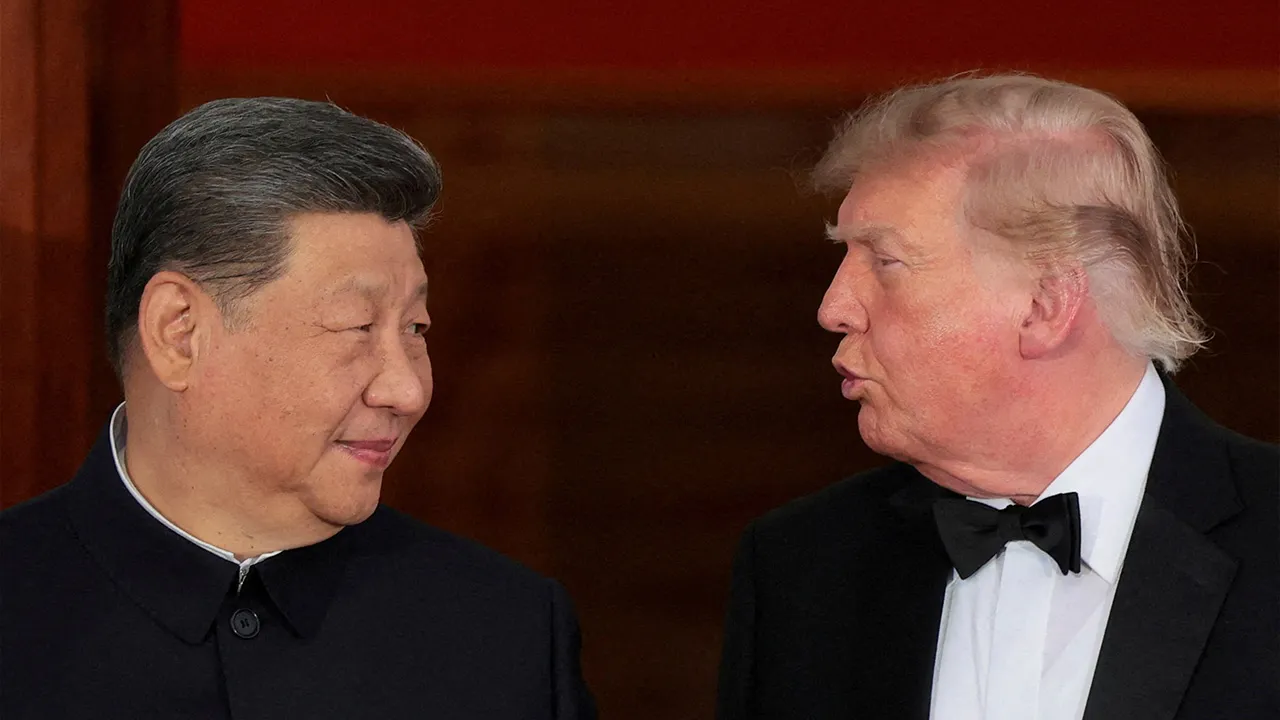
BEIJING/WASHINGTON: US President Donald Trump heads to Asia this week, reeling from a midterm election drubbing and Chinese spy allegations that have raised the stakes for his latest face-to-face with Beijing's powerful leader, Xi Jinping.
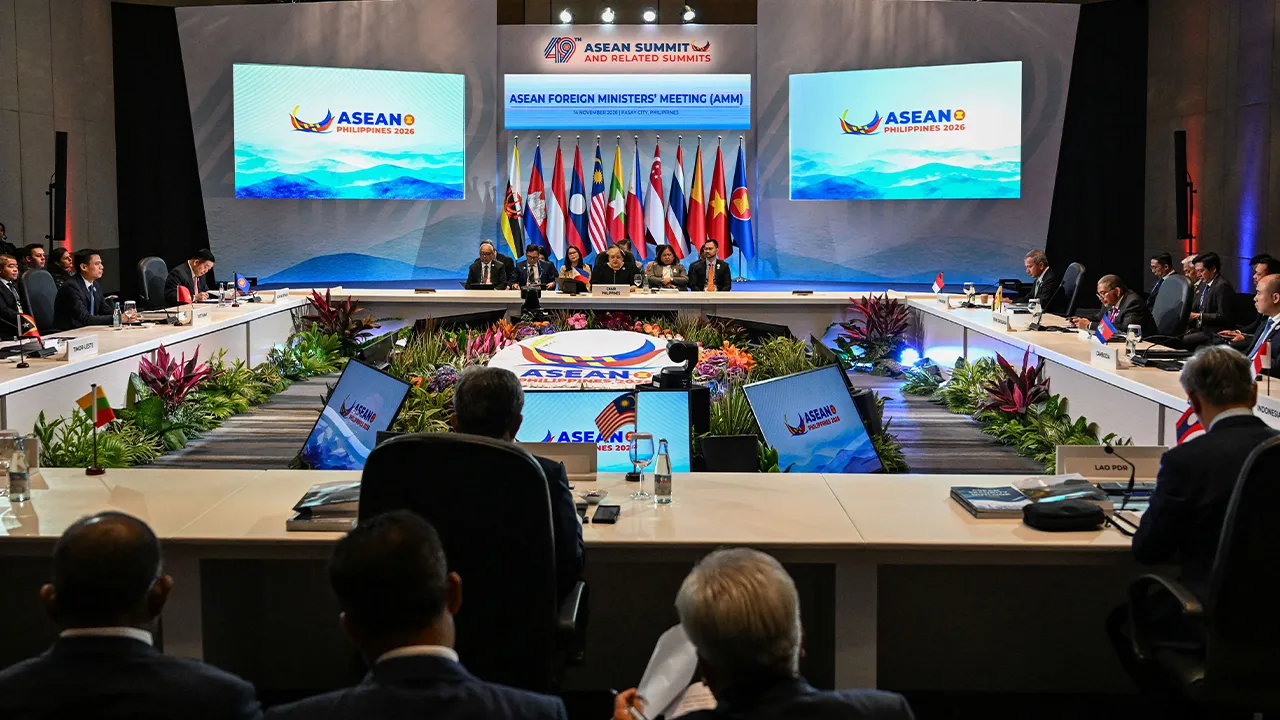
Trump will first visit Manila for meetings with Southeast Asian and other regional leaders on Tuesday before jetting to Shenzhen for the Asia-Pacific Economic Cooperation (APEC) forum, where he will meet the Chinese president and hold three-way discussions with Xi and Russia's Vladimir Putin.
With a fragile trade-war truce between the US and China extended to early next year, and more Trump-Xi talks due in December at the G20 in Miami, some analysts had initially billed the Shenzhen meeting as a low-stakes summit.
But a backlash against Trump's Republican Party in this month's midterms and criticism that his administration failed to act on intelligence that Nvidia CEO Jensen Huang, who has close ties to Trump, had an affair with a suspected Chinese spy, have muddied those expectations.
"With less reason to worry about market reactions or electoral fallout, (Trump) may be more willing to consider disruptive measures," said Ruby Osman, a senior policy adviser on China at the Tony Blair Institute, a London-based think tank.
Washington has already signaled such willingness ahead of the meeting, urging China to live up to its commitments made under the truce agreed between Trump and Xi a year ago.
Chinese analysts say they are particularly concerned that the Nvidia saga, including allegations that restricted semiconductors were diverted to Chinese customers, will now harden US attitudes towards China.
US House Speaker Mike Johnson said last week there was growing consensus in Congress on further limiting Chinese access to advanced chips after the scandal, and Democrats are expected to press hard on the issue when they take over the House and Senate majorities in January.
China has said the United States has fabricated the spy narrative to justify a technological blockade.
Zhu Feng, director of the Institute of International Studies at Nanjing University, said the spat could also speed up "the decoupling of AI" between the world's two superpowers even as they try to cooperate on mitigating the technology's risks.
Trump is not expected to directly raise the spy allegations with Xi, one senior US administration said on condition of anonymity, adding that the Nvidia situation "should not really have any bearing on the trip".
TRUMP'S LEGACY
Rather than picking fresh fights with China, Trump may want to focus on legacy-building endeavours such as denuclearisation agreements with Beijing and Moscow, or securing another meeting with North Korea's secretive leader, Kim Jong Un.
Trump sees the unprecedented summit with Xi and Putin as possibly providing movement towards an agreement on nuclear arms control. But that is a non-starter for China, which has far fewer warheads than the others, Chinese analysts said.
Trump may also seek to enlist Putin and Xi's support in setting up a future meeting with Kim, who has close ties to the Chinese and Russian leaders.
The president will be focused on "building his legacy," said Victor Cha at the Center for Strategic and International Studies, a US think tank. A big part of that is his North Korea diplomacy, which he has devoted a lot of time to over his two terms, Cha added.
The proposed three-way meeting has drawn comparisons, particularly in Russia, with the 1945 Yalta Conference between the US, Britain and the Soviet Union that formalized spheres of influence, set the stage for the post-World War Two order and became shorthand for great-power deals imposed on smaller countries.
Such a framing is particularly worrisome for Ukraine, engaged in a four-year war with Russia. Trump is not expected to raise Ukraine at the meeting, the senior US official said.
'A LOT TO LOSE'
Xi could also seek to take advantage of Trump's political weakness after his election humbling, analysts say.
Top of Beijing's wish list is ensuring that the US president doesn't approve a $14 billion arms package to Taiwan, which China claims as its own. Trump has said he is holding the arms back as a "negotiating chip" with China.
But with China's export engine humming, simply buying time may be enough for Beijing, said Jonathan Czin, a foreign policy analyst at the Brookings Institution, a US-based think tank.
"Xi just needs Trump to remain reluctant to revert toward a more competitive posture toward China for as long as possible. China will take whatever time it can get to fortify itself for the next round in the contest," said Czin, who formerly worked at the Central Intelligence Agency and as director for China at the US National Security Council.
Beijing will be acutely aware that whoever succeeds Trump when his term ends in two years time, may be less accommodating, said Czin and Osman.
Trump's Democratic predecessor, Joe Biden, repeatedly angered China with comments over human rights issues and a pledge that the US would defend Taiwan if Beijing attacked. Many of Trump's potential Republican successors, such as Secretary of State Marco Rubio, are also seen as more hawkish on China.
Both leaders will also be wary of reigniting a trade row that threatened to tank the global economy and financial markets last year, said Kurt Tong, a former senior State Department official now with the Asia Group think tank.
Despite the frustration the US has voiced on Chinese implementation of the terms of the truce, Tong expects it will be further extended beyond its January 10 expiration.
"The two sides are quite incentivized to maintain this fragile stability ... despite also having some disagreements," added senior China analyst Chim Lee at the Economist Intelligence Unit.
"They both have quite a lot to lose."