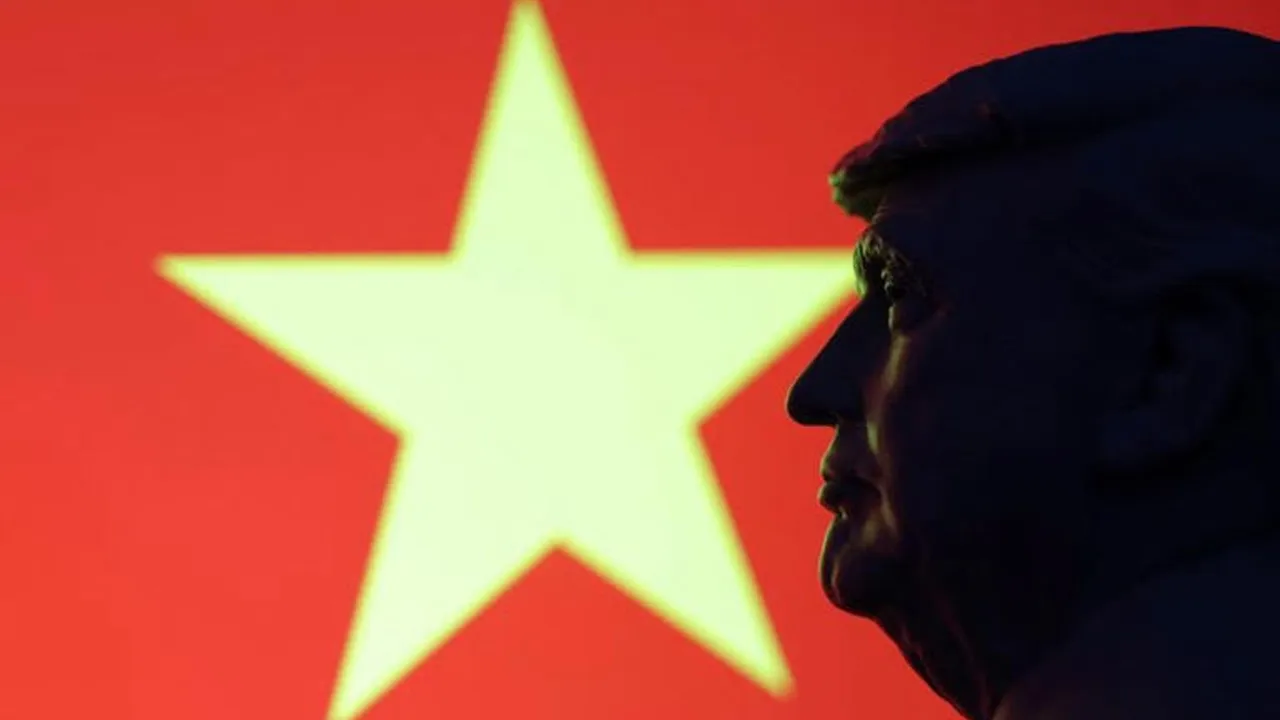

AS the U.S.-China trade war enters a new technological phase under President Donald Trump’s second administration, the language of diplomacy is increasingly replaced by the blunt instrument of tariffs.
AI Brief
Trump’s economic nationalism—once dismissed as campaign bluster—has re-emerged with full force, but this time with surgical precision aimed at China's high-tech ambitions even compelling Malaysia to stall any plans to work with Huawei.
Yet, while Beijing remains the primary target, the ripple effects are reverberating across Southeast Asia, especially in the export-heavy economies of Malaysia, Vietnam, and Singapore.
This time, the trade war isn't just about steel or soybeans. It's about semiconductors, integrated circuits, artificial intelligence, and the technologies underpinning 21st-century strategic supremacy. And it’s here that ASEAN nations, particularly Malaysia, find themselves caught between confrontation and opportunity.
Trump’s Tariff Matrix 2.0
In May 2025, Trump announced a fresh round of tariffs on Chinese goods, including a steep 100% tariff on Chinese electric vehicles, 50% on solar panels; not excluding a ban on semiconductors and advanced machinery.
This follows earlier rounds dating back to 2018, which cumulatively imposed tariffs on more than USD 550 billion worth of Chinese exports. Project Clean Network of Trump remains in the toolkit of Trump's statecraft.
The rationale? The Trump administration claims these measures counter China’s state subsidies, forced technology transfers, and the overarching ambition of the “Made in China 2025” policy. However, while tariffs seek to choke China's tech rise, they inadvertently open a corridor of economic reconfiguration where ASEAN states are rapidly repositioning themselves as safe intermediaries in the global supply chain.
Malaysia’s Semiconductor Exemptions: A Calculated Carve-Out
Unlike China, Malaysia has emerged as a quiet beneficiary in Washington's updated tariff calculus. Malaysian-made semiconductors and integrated circuits—key components in global electronic supply chains—have been granted exemptions from the latest U.S. tariffs.
According to U.S. Trade Representative (USTR) data released in April 2025, over 122 product categories originating from Malaysia, including NAND flash memory components, passive electronic elements, and automotive-grade semiconductors, are now exempted from the Section 301 tariffs. These exemptions reflect not only Malaysia’s neutral diplomatic stance, but its deep integration into the U.S. and global tech ecosystem.
In 2023, Malaysia exported USD 45.6 billion worth of electronics to the U.S., representing nearly 58% of its total exports to America. In 2024, the numbers have increased to 67 percent.
Integrated circuits alone accounted for USD 24.3 billion of this figure. In contrast, Chinese semiconductor exports to the U.S. have dropped by 61% between 2018 and 2024, as reported by the Semiconductor Industry Association (SIA).
These shifts underscore the emerging logic of “de-risking” without full decoupling. Washington views Malaysia as a reliable node within the “Chip 4” plus ASEAN configuration, implicitly supporting Malaysia’s move to attract new investments from Taiwan, Japan, and the U.S., including major players such as Intel, AMD, and Infineon.
ASEAN’s Role: Balancing Without Alignment
While Malaysia enjoys an edge, the broader ASEAN region is navigating a complex terrain. Vietnam has absorbed much of the low-end manufacturing fleeing China, while Singapore’s role as a financial and logistics hub has grown. But these benefits come with volatility.
According to the ASEAN+3 Macroeconomic Research Office (AMRO), intra-ASEAN trade has grown by 4.5% annually since 2020, driven largely by supply chain relocations; although overall intra regional trade in ASEAN remains low at 21 percent as compared to the 60 percent already achieved by the European Union.
However, AMRO also warns that global uncertainty from tariff escalations could shave off 0.9–1.5 percentage points from ASEAN’s collective GDP growth if the U.S. imposes blanket tariffs on Chinese consumer electronics and intermediate goods in Q3 2025.
For Malaysia specifically, Bank Negara projects a baseline GDP growth of 4.4% in 2025, which could increase to 5.1% if semiconductor demand surges due to global “China+1” sourcing. This scenario involves one where there is no major war in US and Iran. But if tariffs expand to cover raw materials and subcomponents routed through ASEAN, the growth could fall below 3.8%.
Strategic Policy Levers for Malaysia
Malaysia’s long-standing policy of being “omni-directional” in its economic diplomacy is paying off. Rather than aligning exclusively with any great power bloc, Kuala Lumpur is maintaining open and constructive relations with both Washington and Beijing while pursuing diversified supply chain opportunities.
Malaysia has also actively negotiated Rules of Origin (ROO) flexibility under the Regional Comprehensive Economic Partnership (RCEP) and Comprehensive and Progressive Agreement for Trans-Pacific Partnership (CPTPP) to avoid being classified as a tariff-circumvention zone. This ensures that semiconductor goods with minimal Chinese input remain eligible for U.S. import.
Geopolitics Behind the Tariffs
It’s critical to remember that tariffs are not just economic tools—they are geopolitical messages. Trump’s tariff barrage is as much about curbing China’s global ambitions as it is about winning domestic political points. With the 2026 midterms looming in November of that year, tariffs provide a nationalist rallying cry.
But the longer this tariff regime persists, the more pressure it exerts on ASEAN to recalibrate. For instance, Thailand’s automotive sector, heavily linked to Chinese EV supply chains, faces downstream risks. Indonesia’s nickel industry, crucial for battery manufacturing, may suffer if U.S. tariffs expand to critical minerals processed in China.
Even Singapore, with its heavy financial interdependence on China, may find itself caught in a bifurcated global order.
Conclusion: Caught in the Circuit, Not the Crossfire
For ASEAN—and Malaysia in particular—the current phase of U.S.-China tariff warfare presents both perils and prospects. The exemption of Malaysian semiconductors offers a fleeting advantage, but it is no substitute for a coherent long-term strategy.
Malaysia must continue upskilling its labor force, deepening its ESG credentials, and investing in strategic technology diplomacy to remain indispensable to both East and West. As tariffs become the weapon of choice in an era of geo-economic rivalry, neutrality alone is not enough—ASEAN must prove it is not just a buffer, but a builder of global value.
Your gateway to global news, insights, and stories that matter.

AI Brief
- The US imposed heavy tariffs on Chinese high-tech goods, impacting global supply chains and pressuring ASEAN economies.
- Malaysia's chips are exempt from US tariffs, boosting exports and positioning it as a key player in tech supply diversification.
- ASEAN nations like Vietnam and Singapore see gains but face GDP risks if tariffs widen; Malaysia pursues strategic neutrality.
Trump’s economic nationalism—once dismissed as campaign bluster—has re-emerged with full force, but this time with surgical precision aimed at China's high-tech ambitions even compelling Malaysia to stall any plans to work with Huawei.
Yet, while Beijing remains the primary target, the ripple effects are reverberating across Southeast Asia, especially in the export-heavy economies of Malaysia, Vietnam, and Singapore.
This time, the trade war isn't just about steel or soybeans. It's about semiconductors, integrated circuits, artificial intelligence, and the technologies underpinning 21st-century strategic supremacy. And it’s here that ASEAN nations, particularly Malaysia, find themselves caught between confrontation and opportunity.
Trump’s Tariff Matrix 2.0
In May 2025, Trump announced a fresh round of tariffs on Chinese goods, including a steep 100% tariff on Chinese electric vehicles, 50% on solar panels; not excluding a ban on semiconductors and advanced machinery.
This follows earlier rounds dating back to 2018, which cumulatively imposed tariffs on more than USD 550 billion worth of Chinese exports. Project Clean Network of Trump remains in the toolkit of Trump's statecraft.
The rationale? The Trump administration claims these measures counter China’s state subsidies, forced technology transfers, and the overarching ambition of the “Made in China 2025” policy. However, while tariffs seek to choke China's tech rise, they inadvertently open a corridor of economic reconfiguration where ASEAN states are rapidly repositioning themselves as safe intermediaries in the global supply chain.
Malaysia’s Semiconductor Exemptions: A Calculated Carve-Out
Unlike China, Malaysia has emerged as a quiet beneficiary in Washington's updated tariff calculus. Malaysian-made semiconductors and integrated circuits—key components in global electronic supply chains—have been granted exemptions from the latest U.S. tariffs.
According to U.S. Trade Representative (USTR) data released in April 2025, over 122 product categories originating from Malaysia, including NAND flash memory components, passive electronic elements, and automotive-grade semiconductors, are now exempted from the Section 301 tariffs. These exemptions reflect not only Malaysia’s neutral diplomatic stance, but its deep integration into the U.S. and global tech ecosystem.
In 2023, Malaysia exported USD 45.6 billion worth of electronics to the U.S., representing nearly 58% of its total exports to America. In 2024, the numbers have increased to 67 percent.
Integrated circuits alone accounted for USD 24.3 billion of this figure. In contrast, Chinese semiconductor exports to the U.S. have dropped by 61% between 2018 and 2024, as reported by the Semiconductor Industry Association (SIA).
These shifts underscore the emerging logic of “de-risking” without full decoupling. Washington views Malaysia as a reliable node within the “Chip 4” plus ASEAN configuration, implicitly supporting Malaysia’s move to attract new investments from Taiwan, Japan, and the U.S., including major players such as Intel, AMD, and Infineon.
ASEAN’s Role: Balancing Without Alignment
While Malaysia enjoys an edge, the broader ASEAN region is navigating a complex terrain. Vietnam has absorbed much of the low-end manufacturing fleeing China, while Singapore’s role as a financial and logistics hub has grown. But these benefits come with volatility.
According to the ASEAN+3 Macroeconomic Research Office (AMRO), intra-ASEAN trade has grown by 4.5% annually since 2020, driven largely by supply chain relocations; although overall intra regional trade in ASEAN remains low at 21 percent as compared to the 60 percent already achieved by the European Union.
However, AMRO also warns that global uncertainty from tariff escalations could shave off 0.9–1.5 percentage points from ASEAN’s collective GDP growth if the U.S. imposes blanket tariffs on Chinese consumer electronics and intermediate goods in Q3 2025.
For Malaysia specifically, Bank Negara projects a baseline GDP growth of 4.4% in 2025, which could increase to 5.1% if semiconductor demand surges due to global “China+1” sourcing. This scenario involves one where there is no major war in US and Iran. But if tariffs expand to cover raw materials and subcomponents routed through ASEAN, the growth could fall below 3.8%.
Strategic Policy Levers for Malaysia
Malaysia’s long-standing policy of being “omni-directional” in its economic diplomacy is paying off. Rather than aligning exclusively with any great power bloc, Kuala Lumpur is maintaining open and constructive relations with both Washington and Beijing while pursuing diversified supply chain opportunities.
Malaysia has also actively negotiated Rules of Origin (ROO) flexibility under the Regional Comprehensive Economic Partnership (RCEP) and Comprehensive and Progressive Agreement for Trans-Pacific Partnership (CPTPP) to avoid being classified as a tariff-circumvention zone. This ensures that semiconductor goods with minimal Chinese input remain eligible for U.S. import.
Geopolitics Behind the Tariffs
It’s critical to remember that tariffs are not just economic tools—they are geopolitical messages. Trump’s tariff barrage is as much about curbing China’s global ambitions as it is about winning domestic political points. With the 2026 midterms looming in November of that year, tariffs provide a nationalist rallying cry.
But the longer this tariff regime persists, the more pressure it exerts on ASEAN to recalibrate. For instance, Thailand’s automotive sector, heavily linked to Chinese EV supply chains, faces downstream risks. Indonesia’s nickel industry, crucial for battery manufacturing, may suffer if U.S. tariffs expand to critical minerals processed in China.
Even Singapore, with its heavy financial interdependence on China, may find itself caught in a bifurcated global order.
Conclusion: Caught in the Circuit, Not the Crossfire
For ASEAN—and Malaysia in particular—the current phase of U.S.-China tariff warfare presents both perils and prospects. The exemption of Malaysian semiconductors offers a fleeting advantage, but it is no substitute for a coherent long-term strategy.
Malaysia must continue upskilling its labor force, deepening its ESG credentials, and investing in strategic technology diplomacy to remain indispensable to both East and West. As tariffs become the weapon of choice in an era of geo-economic rivalry, neutrality alone is not enough—ASEAN must prove it is not just a buffer, but a builder of global value.
Phar Kim Beng, PhD, is Professor of ASEAN Studies at the International Islamic University Malaysia. He was formerly the Head Teaching Fellow at Harvard University and a Cambridge Commonwealth Scholar.
** The views and opinions expressed in this article are those of the author(s) and do not necessarily reflect the position of Astro AWANI.