AI Brief
- The International Court of Justice ruled Myanmar committed genocide against the Rohingya, marking the first time a state was held responsible for committing genocide.
- The judgment strengthens the 1948 Genocide Convention by clarifying proof of intent, expanding state standing, and linking state responsibility to individual criminal liability.
- The ruling is binding but enforcement depends on international pressure, as the ICJ lacks mechanisms to compel Myanmar to comply with reparations or refugee return.
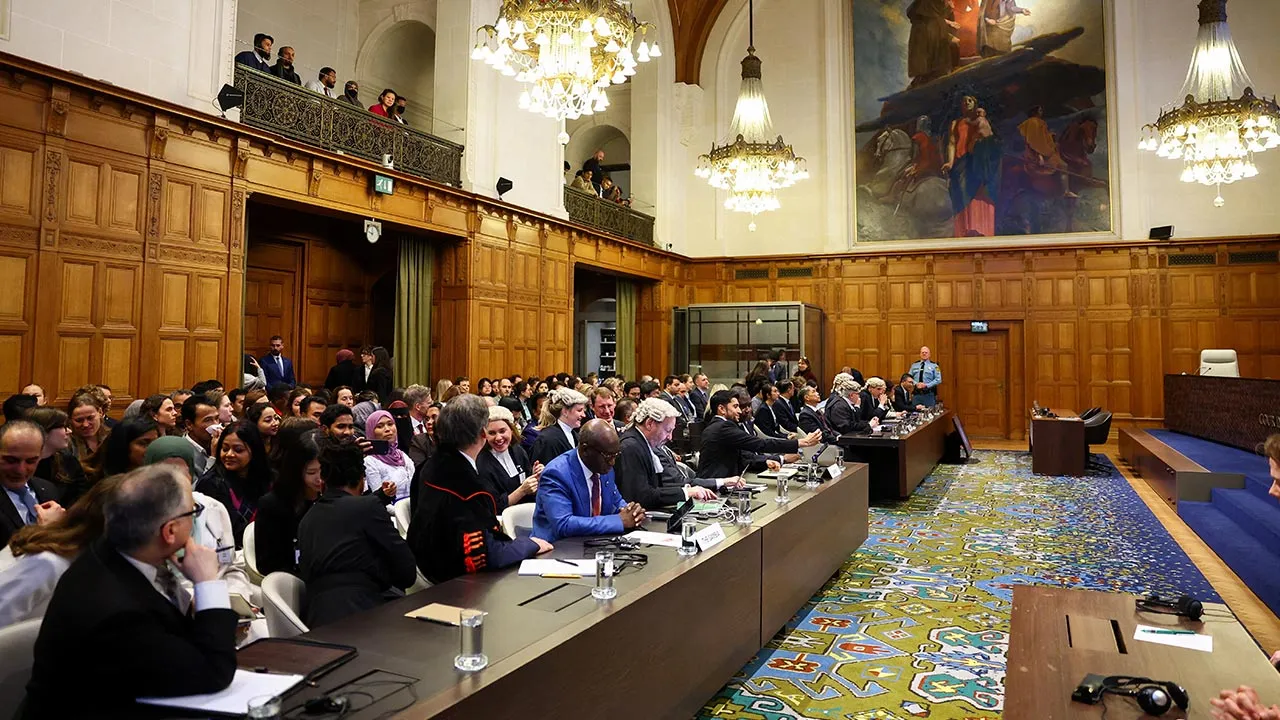
WHEN International Court of Justice President Iwasawa Yuji read the judgment in The Hague on November 19, 2026, the question on many minds — including, apparently, headline writers — was whether this watershed ruling strengthened "the Genocide Convention or the Geneva Convention." The question contains its own answer, and the confusion itself is worth unpacking. Because the ICJ's landmark verdict in The Gambia v. Myanmar was, from first word to last, a victory for one treaty only: the 1948 Convention on the Prevention and Punishment of the Crime of Genocide. The Geneva Conventions, namely the four 1949 treaties governing the conduct of war, never entered the courtroom.
A First in Seventy-Eight Years
By nine votes to six, the Court found that Myanmar committed genocide against the Rohingya in northern Rakhine State during the military's 2017 "clearance operations", which is the first time in history that a state has been held responsible for committing genocide, not merely failing to prevent it. The Court found Myanmar responsible for killing, serious bodily and mental harm, and measures intended to prevent Rohingya births, all of which are acts prohibited under Articles II(a), (b) and (d) of the Genocide Convention. The distinction matters. In 2007, in Bosnia v. Serbia, the ICJ could only find that Serbia had failed in its duty to prevent genocide at Srebrenica. Here, for the first time, the Court crossed the threshold of "special intent" — the notoriously demanding requirement to prove that a state acted with the specific purpose of destroying a group, in whole or in part. That the judges managed it, in a case built on pattern and inference rather than a smoking gun, is precisely why the ruling is being called a watershed.
What the Ruling Ordered and Why It's Genocide Law, Not Humanitarian Law
The remedies the Court imposed flow directly from the Genocide Convention's architecture. Myanmar must cease ongoing violations and enact legislation giving full effect to its obligations; investigate, prosecute and punish perpetrators; provide guarantees of nonrepetition; and adopt restitution measures which include the safe, voluntary and dignified return of displaced Rohingya, restoration of property, and compensation for damage caused, with a report due within two years. Had this been a Geneva Convention case, the legal landscape would look entirely different. The Geneva Conventions regulate how warring parties treat civilians and prisoners during armed conflict — they speak of "grave breaches," war crimes, and protected persons. The Rohingya case was not framed as a war-crimes question. It was framed as the ultimate question of the Genocide Convention: did a state intend to destroy a people? The Court answered yes. The Geneva Conventions were, in effect, bystanders to this verdict.
So Which Convention Was Strengthened?
The Genocide Convention — emphatically, and in three ways. First, standing. The Court endorsed Gambia's erga omnes partes argument: because genocide obligations are so fundamental, any signatory state, even one with no connection to the atrocities, may sue a violator. Gambia, a small West African nation 10,000 kilometres from Rakhine State, proved the point. The barrier to future genocide litigation has just collapsed. Second, proof of intent. The judgment reasserted and clarified the standard of evidence needed to prove genocidal intent — holding that a pattern of selective targeting and lethality that cannot plausibly be explained as counterinsurgency permits the inference of destructive purpose. This is the ruling's most consequential export. Third, accountability. The Court explicitly linked state responsibility to individual criminal liability, ordering Myanmar to investigate suspects — a bridge to the ICC's arrest warrant for junta chief Min Aung Hlaing and to universal-jurisdiction prosecutions in national courts.
The Shadow Over Gaza
None of this is abstract. The most immediate beneficiary may be South Africa v. Israel, the pending genocide case over Gaza. South Africa has already called for full implementation of the Myanmar judgment and is studying its implications for its own case. Legal analysts note the ruling's approach to proving intent "in high intensity armed conflict situations" — where displacement, deprivation and loss touch nearly an entire population — could reshape how the Court assesses Gaza. The United States, visibly uneasy, says it is "studying the decision" while stressing the need to prevent "politicization of the ICJ" — a phrase that tells you exactly which capitals found the precedent uncomfortable.
The Honest Caveat
Strengthening a convention is not the same as enforcing it. The ICJ has no police force. Myanmar cannot be compelled to pay reparations, restore citizenship stripped by its 1982 nationality law, or readmit a million refugees. Compliance will depend on pressure through sanctions, arms embargoes and financial restrictions that only states can impose. The judgment is binding, final, and without appeal; whether it is honoured is another matter entirely.
The Verdict
So, did the ICJ's verdict strengthen the Genocide Convention or the Geneva Convention? It strengthened the Genocide Convention and it did so by proving that a treaty once dismissed as a "dead letter," whose drafters in 1948 never imagined a court would ever enforce it, could convict a state of humanity's gravest crime. The Geneva Conventions govern how wars are fought; the Genocide Convention, as this ruling demonstrates, now governs the consequences of trying to erase a people. For the Rohingya gathered in Bangladeshi camps chanting "Thank you, Gambia," and for every group whose destruction is still being planned, that distinction is the whole story.
Phar Kim Beng, PhD, is Professor of ASEAN Studies and Director of the Institute of Internationaliation and ASEAN Studies (IINTAS) at the International Islamic University Malaysia.
Shahiran Kamaruzaman is an Independent Legal Researcher
** The views and opinions expressed in this article are those of the author(s) and do not necessarily reflect the position of Astro AWANI.