FOUR tankers changed course in the Red Sea on Wednesday (July 22), with two signalling the Suez Canal as their new destination after Yemen's Houthi militia warned ships to avoid sailing to Saudi Arabian ports, ship-tracking data showed.
The Iran-aligned Houthis on Monday (July 20) declared a naval blockade against Saudi Arabia, opening a potential new front against the United States in its war with Iran and raising the threat to global energy supplies and trade beyond the Gulf.
This is why it matters and what it means for the Iran war and the global energy crisis:
HOW BIG IS THE RISK TO GLOBAL ENERGY MARKETS?
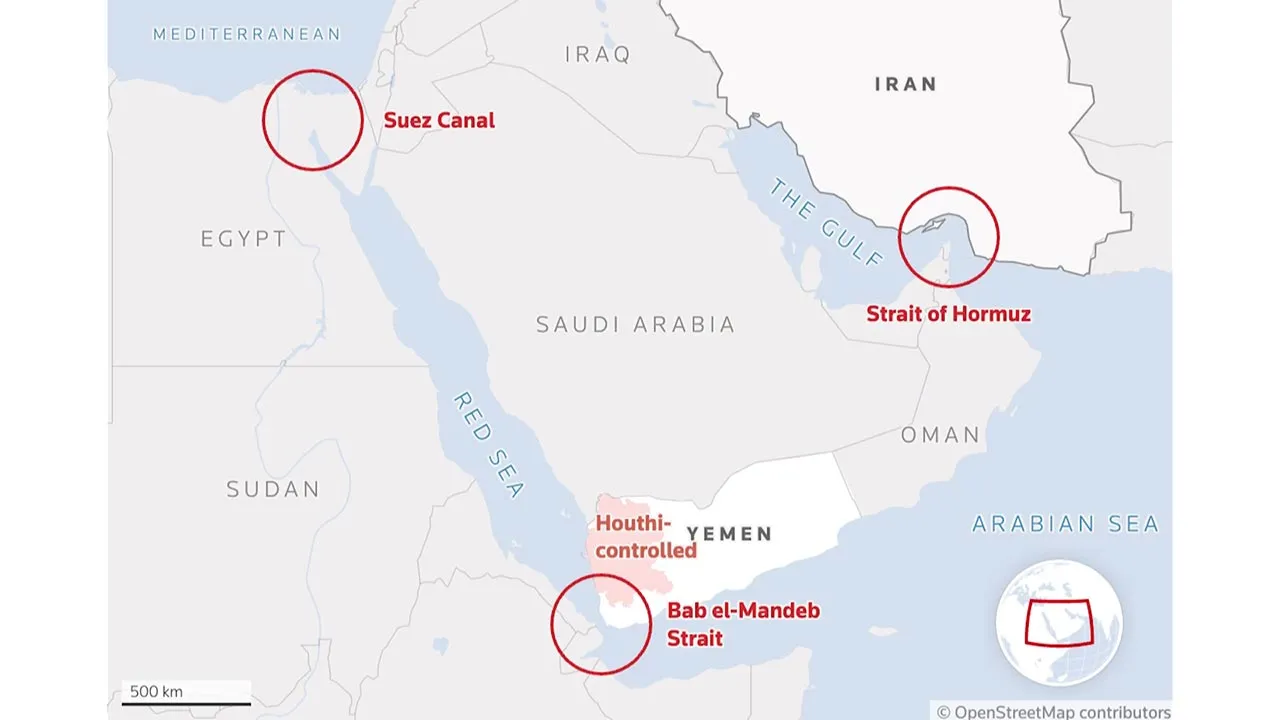
Yemen sits on the Bab el-Mandeb strait – the southern gateway to the Red Sea – and closing that would open up a new front in the energy crisis and Iran's overarching conflict with the U.S.
With Hormuz already disrupted, the Red Sea has become a critical alternative outlet for Gulf oil and other products. A serious disruption would mean both of the Middle East's major oil export routes are shut simultaneously.
"The knock-on implications are huge," said Senior Analyst at data and analytics platform Kpler, Naveen Das.
"Energy prices, food prices, cost of transport, inflation in general, the same as what we had at the beginning, but maybe just adding a little bit on because we've blocked another escape valve for energy."
Iran's partial blockade of the Strait of Hormuz after Israel and the U.S. attacked it on February 28 disrupted most oil and other exports from the Gulf, raising prices and delivering a global energy shock.
Saudi Arabia responded by diverting more than 70% of its normal daily crude exports to the Red Sea port of Yanbu. Ships from Yanbu bound for Europe go north through the Suez Canal. Those heading to Asia go south through Bab el-Mandeb.
Shipments from Yanbu averaged 4 million barrels per day in recent weeks according to data from Kpler and Signal Ocean, up from around 973,000 bpd a year earlier.
Total petroleum volumes transiting Bab el-Mandeb amounted to 7.4 million bpd in June, or about 7% of global oil output, according to Kpler data, up from 4.2 million bpd last year.
That has provided a lifeline for the energy market, helping to keep down global oil prices. Saudi Arabia is considering an expansion of its crude oil pipeline to the Red Sea coast, Reuters reported last week.
When the Houthis launched attacks on Red Sea shipping in November 2023, Gulf oil exports were flowing freely.
ARE THERE ALTERNATIVE ROUTES?
Four tankers changed their navigational course in the Red Sea on Wednesday (July 22) with two signalling the Suez Canal as their new destination after Yemen's Houthi militia warned ships to avoid sailing to Saudi Arabian ports, ship tracking data showed.
The vessels all changed their direction, with the other two signalling their destination as open waters in the Red Sea, according to LSEG and MarineTraffic ship tracking data and analysis from British maritime risk management group Vanguard.
A fifth ship — a vehicle carrier — appeared to have turned away in the Gulf of Aden on Wednesday after signalling the Saudi port of Jeddah as its next destination, according to shipping data.
"Some of the more risk-tolerant shippers may continue to go via the Bab el-Mandeb and take the risk, but more likely is we'll see shipments rerouted north through the Suez Canal," Das said, adding that this route leads to longer journey times, as well as smaller cargo transported.
"Smaller shipments mean lower load rates, extra costs, and longer shipping times," he said. "
WHAT WILL CONSUMERS FEEL?
As with the blockade of the Strait of Hormuz, a closure of the Red Sea gateway will lead to a rise in costs for consumers.
Das said that the global economy may be able to weather a closure of week or two, but anything more long term could cause problems.
"Ultimately, the costs will be passed on to consumers," he said. "Anything around three weeks to a month, we'll start feeling those pinches."
WHO ARE THE HOUTHIS AND ARE THEY CLOSING RED SEA ENERGY ROUTES ON BEHALF OF IRAN?
The Houthis emerged as a military, political and religious movement in north Yemen in the 1990s, fighting guerrilla wars against the government in Sanaa.
They have been in a civil war against the Saudi-backed, internationally recognised, government for more than a decade and have attacked Gulf neighbours with missiles and drones.
However, a 2022 truce between the country's warring sides largely held until last week, when Yemen's internationally recognised government said it had struck Sanaa airport to stop an Iranian plane landing.
The Houthis said Saudi Arabia was responsible and in response fired missiles at Abha airport in the kingdom's mountainous southwest.
A senior Houthi official, politburo member Mohammad al-Farah, then warned in an interview on Iran's Press TV website that if the situation kept escalating, Bab el-Mandeb would be closed.
Iran champions the Houthis as part of its regional "Axis of Resistance", which includes Lebanon's Hezbollah and Iraqi Shi'ite militias, though its ties with the Yemeni movement are less clear than with those other groups.
The Houthis do not recognise Iran's supreme leader as their ultimate religious authority in the same way Hezbollah and the Iraqi groups do. Their motivations are mainly domestic, though the group is ideologically aligned with Iran.
The U.S. says Iran has armed, funded and trained the Houthis with help from Hezbollah. The Houthis deny being an Iranian proxy and say they develop their own weapons. It is not clear how far the group's stance on Bab el-Mandeb and the Red Sea stems from its own strategic priorities or is being made on Iran's behalf.
WHAT HAPPENED WHEN THE HOUTHIS ATTACKED RED SEA SHIPS BEFORE?
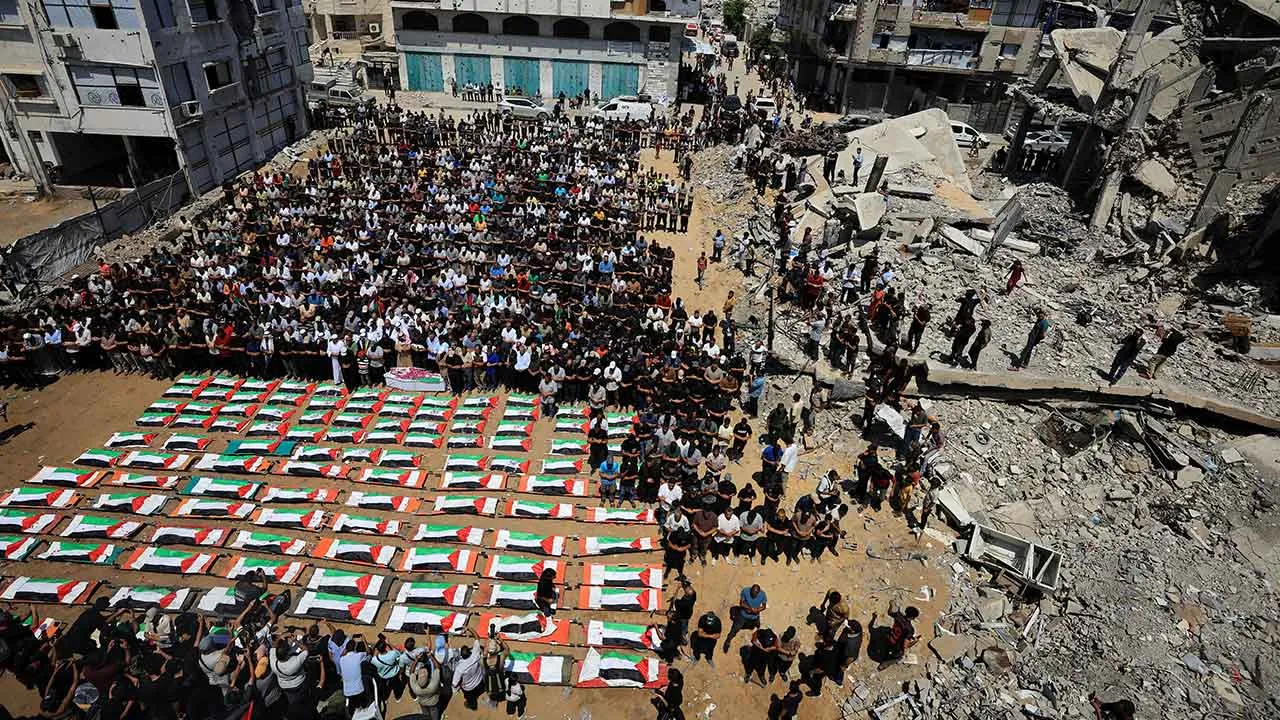
After the October 7, 2023, Hamas attack on Israel, and Israel's devastating campaign in Gaza, the Houthis began firing at Israel and on shipping in the Red Sea, saying they were doing so in support of Palestinians.
The attacks severely disrupted global shipping, prompting Maersk, Hapag-Lloyd and other major companies to divert around Africa — a far longer, more expensive route.
Red Sea traffic has not recovered since, with traffic through the Suez Canal down 52% in 2025 versus 2023 levels and at its lowest in at least 50 years, Suez Canal Authority data shows.
A U.S.-led mission to restore free navigation in the Red Sea involved repeated strikes on Houthi targets and a defensive campaign that shot down hundreds of drones and missiles.
But some Houthi attacks continued until last summer, only ending completely with the Gaza ceasefire in October.
Last month the Houthis said they would ban ships linked to Israel from the Red Sea after Israel renewed military attacks on Iran.
However, that threat was never acted on and shipping groups Maersk and Hapag-Lloyd are resuming some Red Sea routes that they had abandoned during the Houthi attacks last year, Maersk said this month.