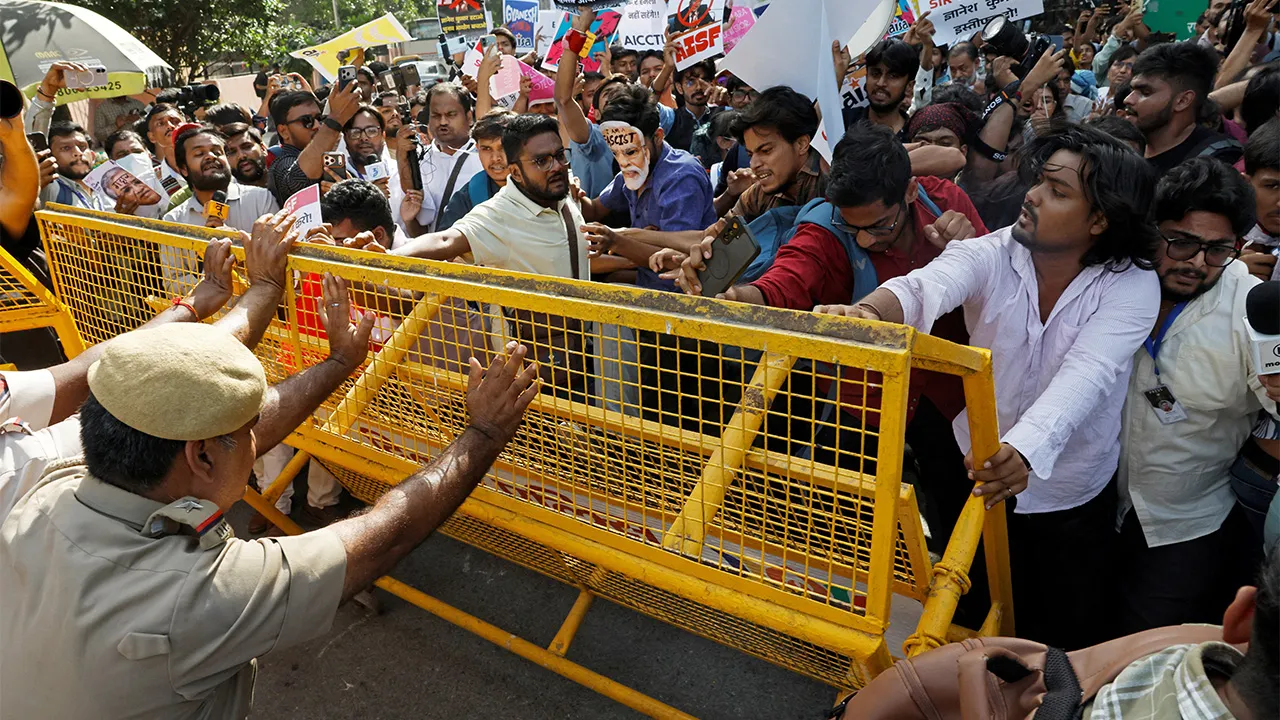

INDONESIA is once again in the grip of unrest. What began as anger over the fatal crushing of 21-year-old delivery rider Affan Kurniawan by a police armored vehicle has spiraled into a nationwide expression of rage.
AI Brief
His tragic death did not emerge in a vacuum; rather, it became the spark that lit a fire already fueled by economic hardship, political detachment, and institutional weakness.
At the heart of the discontent lies the jarring contrast between elite privilege and public austerity. Members of Parliament recently received a housing allowance of 50 million rupiah (USD 3050) at a time when ordinary Indonesians struggle with rising costs, stagnant wages, and job scarcity. Such conspicuous rewards to lawmakers reinforce the perception of a ruling class oblivious to the realities faced by the people. In the midst of austerity, the symbolism of privilege is combustible.
President Prabowo Subianto’s response has done little to contain the flames. His calls for calm and a government inquiry appear perfunctory, leaving many Indonesians convinced that the leadership is detached from the suffering on the ground.
Worse, the absence of effective oversight in parliament—where the ruling coalition controls more than four-fifths of the seats—has stripped citizens of confidence in political institutions. When parliament becomes a rubber stamp, the streets become the only space for accountability.
Instead of calming tempers, some officials have made matters worse.
One lawmaker branded protesters “the dumbest people in the world,” a remark that spread virally and transformed public frustration into outrage. Insult layered atop injury crystallizes movements. And Indonesians remember history.
The Reformasi of 1998 that ended Suharto’s rule began with small student protests but grew into an unstoppable wave once the grievances multiplied and overlapped. Today’s protests may not yet carry the same magnitude, but the echoes are unmistakable.
The fury directed at the police is especially dangerous. Civil society groups have long decried the force’s culture of impunity, and Affan’s death has only intensified calls for systemic reform. Many now demand the dismissal of the national police chief, a move they see as essential for rebuilding trust.
Without such a gesture, the perception that Indonesia’s police are unaccountable and violent will continue to erode legitimacy.
Economic discontent magnifies the crisis. Austerity measures, mass layoffs, and sudden property tax hikes have combined with inflation to create a suffocating climate for the average Indonesian family.
In such conditions, even symbolic slights take on explosive power. Economic anxiety ensures that anger is not confined to a single incident but becomes a rolling grievance capable of sustaining demonstrations.
The generational dimension adds further volatility. Young Indonesians, digitally connected and politically restless, are adept at transforming hashtags into mass mobilization.
Campaigns such as #Bubarkan DPR(parliament) resonate with a demographic that feels locked out of economic opportunity yet endowed with new tools to organize dissent. Digital rage becomes street power in hours, not weeks.
Already the protests have spread beyond Jakarta to Surabaya, Bandung, Makassar, and beyond, disrupting transportation networks and government offices.
When demonstrations metastasize geographically and disrupt daily life, they develop momentum of their own. What began with a single tragedy now ripples across the archipelago, unsettling investors, paralyzing infrastructure, and raising doubts about the resilience of the Indonesian model of governance.
Indonesia’s leaders must recognize that this crisis is not about a single allowance or one tragic death. It is the convergence of multiple grievances—economic, institutional, and generational—that is propelling Indonesians into the streets. Dismissing the protests as episodic risks repeating history. Only genuine reform—rescinding controversial allowances, restructuring police accountability, and restoring parliamentary oversight—can begin to restore faith.
For now, Indonesia teeters at an inflection point. The question is not whether protests will continue, but whether the government has the will and wisdom to act before anger hardens into a movement as historic as the Reformasi. The world is watching, and Indonesians themselves are reminding their leaders that democracy without accountability is merely a façade.
Phar Kim Beng, PhD, is Professor of ASEAN Studies and Director of the Institute of Internationaliation and ASEAN Studies (IINTAS) at the International Islamic University Malaysia.
** The views and opinions expressed in this article are those of the author(s) and do not necessarily reflect the position of Astro AWANI.
Your gateway to global news, insights, and stories that matter.

AI Brief
- Protests erupted after a police killing, fueled by economic hardship and elite privilege, sparking nationwide unrest.
- Public outrage intensified over lawmakers perks and police impunity, with demands for reform and accountability.
- Youth-led digital activism spreads, echoing past movements and challenging the governments response to the crisis.
His tragic death did not emerge in a vacuum; rather, it became the spark that lit a fire already fueled by economic hardship, political detachment, and institutional weakness.
At the heart of the discontent lies the jarring contrast between elite privilege and public austerity. Members of Parliament recently received a housing allowance of 50 million rupiah (USD 3050) at a time when ordinary Indonesians struggle with rising costs, stagnant wages, and job scarcity. Such conspicuous rewards to lawmakers reinforce the perception of a ruling class oblivious to the realities faced by the people. In the midst of austerity, the symbolism of privilege is combustible.
President Prabowo Subianto’s response has done little to contain the flames. His calls for calm and a government inquiry appear perfunctory, leaving many Indonesians convinced that the leadership is detached from the suffering on the ground.
Worse, the absence of effective oversight in parliament—where the ruling coalition controls more than four-fifths of the seats—has stripped citizens of confidence in political institutions. When parliament becomes a rubber stamp, the streets become the only space for accountability.
Instead of calming tempers, some officials have made matters worse.
One lawmaker branded protesters “the dumbest people in the world,” a remark that spread virally and transformed public frustration into outrage. Insult layered atop injury crystallizes movements. And Indonesians remember history.
The Reformasi of 1998 that ended Suharto’s rule began with small student protests but grew into an unstoppable wave once the grievances multiplied and overlapped. Today’s protests may not yet carry the same magnitude, but the echoes are unmistakable.
The fury directed at the police is especially dangerous. Civil society groups have long decried the force’s culture of impunity, and Affan’s death has only intensified calls for systemic reform. Many now demand the dismissal of the national police chief, a move they see as essential for rebuilding trust.
Without such a gesture, the perception that Indonesia’s police are unaccountable and violent will continue to erode legitimacy.
Economic discontent magnifies the crisis. Austerity measures, mass layoffs, and sudden property tax hikes have combined with inflation to create a suffocating climate for the average Indonesian family.
In such conditions, even symbolic slights take on explosive power. Economic anxiety ensures that anger is not confined to a single incident but becomes a rolling grievance capable of sustaining demonstrations.
The generational dimension adds further volatility. Young Indonesians, digitally connected and politically restless, are adept at transforming hashtags into mass mobilization.
Campaigns such as #Bubarkan DPR(parliament) resonate with a demographic that feels locked out of economic opportunity yet endowed with new tools to organize dissent. Digital rage becomes street power in hours, not weeks.
Already the protests have spread beyond Jakarta to Surabaya, Bandung, Makassar, and beyond, disrupting transportation networks and government offices.
When demonstrations metastasize geographically and disrupt daily life, they develop momentum of their own. What began with a single tragedy now ripples across the archipelago, unsettling investors, paralyzing infrastructure, and raising doubts about the resilience of the Indonesian model of governance.
Indonesia’s leaders must recognize that this crisis is not about a single allowance or one tragic death. It is the convergence of multiple grievances—economic, institutional, and generational—that is propelling Indonesians into the streets. Dismissing the protests as episodic risks repeating history. Only genuine reform—rescinding controversial allowances, restructuring police accountability, and restoring parliamentary oversight—can begin to restore faith.
For now, Indonesia teeters at an inflection point. The question is not whether protests will continue, but whether the government has the will and wisdom to act before anger hardens into a movement as historic as the Reformasi. The world is watching, and Indonesians themselves are reminding their leaders that democracy without accountability is merely a façade.
Phar Kim Beng, PhD, is Professor of ASEAN Studies and Director of the Institute of Internationaliation and ASEAN Studies (IINTAS) at the International Islamic University Malaysia.
** The views and opinions expressed in this article are those of the author(s) and do not necessarily reflect the position of Astro AWANI.