AI Brief
- The Xi-Trump-Putin meeting was not a new Yalta and did not seek to divide the world into spheres of influence.
- ASEAN, the East Asia Summit and APEC were praised for promoting dialogue, stability and regional cooperation.
- Malaysia and Anwar Ibrahim were highlighted for strengthening ties with major powers while upholding ASEAN centrality.
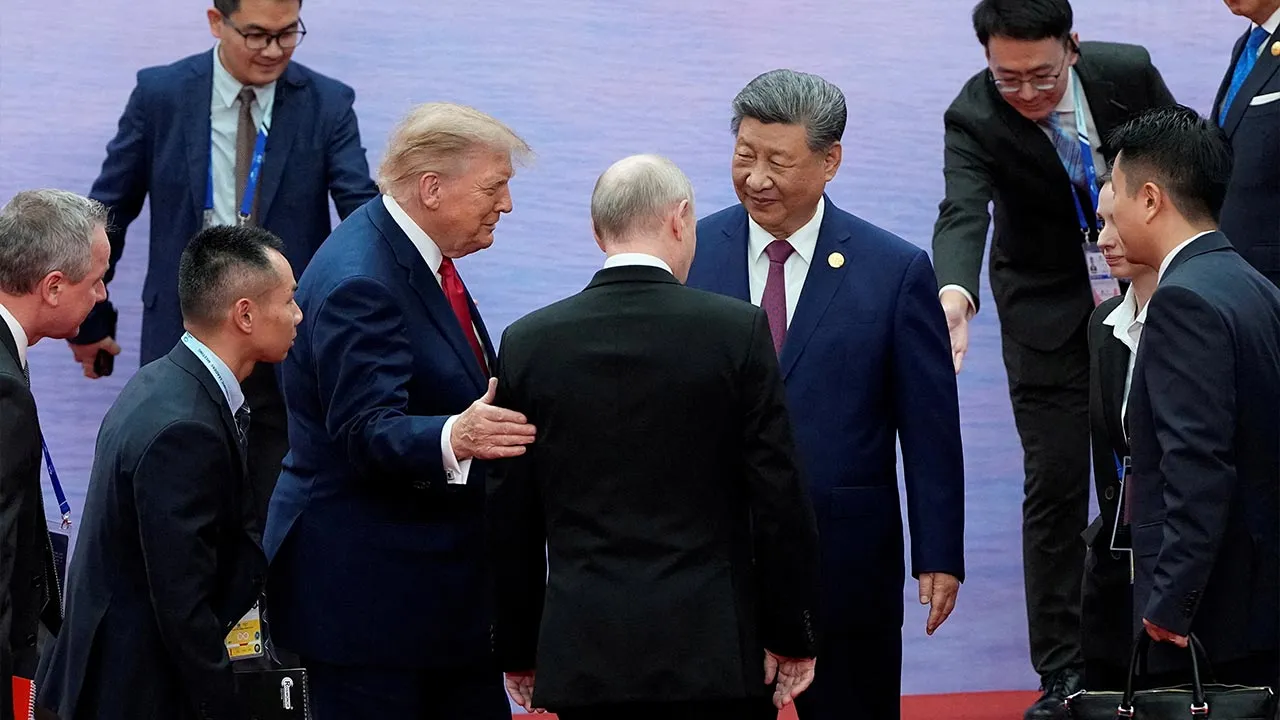
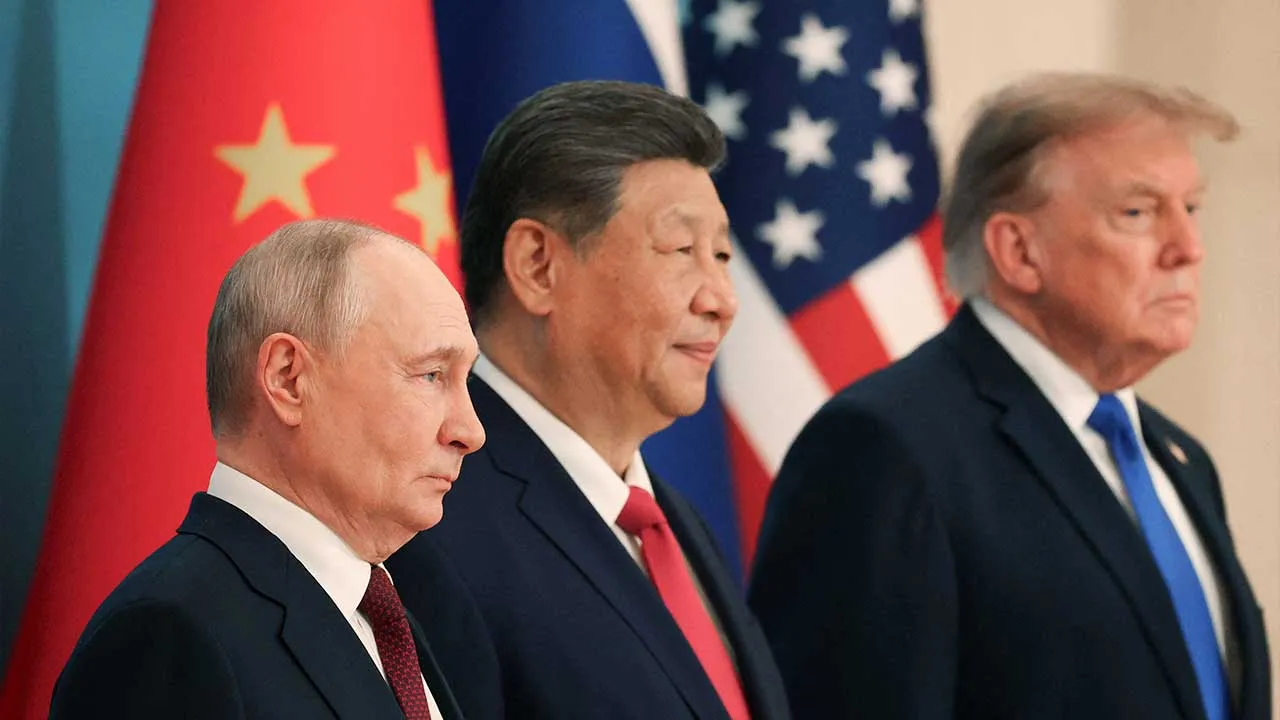
THE historic meeting between Chinese President Xi Jinping, American President Donald Trump and Russian President Vladimir Putin in Shenzhen on November 19, 2026, was undoubtedly significant. Yet it was not Yalta 2.0.
Nor should the world have wanted it to be.
The original Yalta Conference in February 1945 brought together Franklin D. Roosevelt, Winston Churchill and Joseph Stalin to discuss the future of Europe as the Second World War approached its conclusion.
Although Yalta helped establish the foundations of the postwar international order, it also became associated with the division of Europe into competing spheres of influence.
The world of 2026 is fundamentally different.
There are now far more independent countries, stronger regional organisations and medium sized powers capable of exercising their own diplomatic influence.
Above all, the Association of Southeast Asian Nations (ASEAN), the East Asia Summit (EAS) and the Asia-Pacific Economic Cooperation (APEC) forum have become indispensable components of the diplomatic architecture of the Indo-Pacific.
The meeting in Shenzhen should therefore be understood not as an attempt to divide the world among three great powers, but as an opportunity to broaden and deepen the foundations of international stability.
The importance of what was not mentioned
The joint declaration issued by Xi, Trump and Putin was remarkable for what it deliberately left out.
It did not explicitly mention the war in Ukraine or the conflict involving Iran.
Instead, the three leaders concentrated on four areas: reform of the United Nations, stability of petroleum supplies, the jurisdiction of international courts and the reduction of nuclear risks.
At first glance, critics might interpret these omissions as evidence that the meeting produced little substance.
Such an interpretation would be premature.
In diplomacy, what is deliberately excluded from a joint declaration can sometimes be as important as what is included.
By not insisting on a common position on Ukraine and Iran, the three leaders avoided forcing their governments into positions that could immediately undermine subsequent negotiations.
Russia and Ukraine remain locked in a conflict involving territorial sovereignty, national security and competing interpretations of European security.
Iran, meanwhile, remains central to the geopolitical turbulence affecting the Persian Gulf, the Strait of Hormuz and the wider Middle East.
Neither conflict can be settled through a declaration drafted by three leaders in Shenzhen.
Indeed, any attempt to impose a settlement without the participation of Ukraine, Iran and the other directly affected parties would have risked reproducing precisely the defects associated with Yalta.
The omission of both wars therefore creates diplomatic space.
It allows Washington, Moscow and Beijing to pursue different negotiating channels without being immediately constrained by a trilateral statement that none could fully implement.
This does not mean that peace has been achieved.
It means that diplomacy has not been prematurely foreclosed.
That distinction is critical.
Berlin was equally important
While the world's attention was concentrated on Shenzhen, European leaders were also engaged in their own diplomatic consultations in Berlin.
Their concerns were understandable.
Europe cannot afford to have the future of Ukraine determined through an understanding between Washington and Moscow, even with Beijing playing the role of convener.
Ukraine's sovereignty and Europe's security architecture are inseparable.
European leaders therefore had every reason to ensure that developments at APEC would not undermine their own diplomatic efforts or weaken Ukraine's negotiating position.
The Berlin consultations should not be interpreted as an attempt to sabotage Shenzhen.
Rather, they reflected the increasingly complex character of contemporary diplomacy.
Different diplomatic platforms can operate simultaneously, even when their participants disagree on fundamental questions.
Indeed, the United States can engage Russia and China in Shenzhen while continuing to consult Ukraine and European governments in Berlin.
Such parallel diplomacy may appear untidy.
But international relations have never depended on perfectly synchronised negotiations.
They depend on the ability of governments to maintain communication even when agreement remains elusive.
The essential condition is that these diplomatic channels must complement rather than contradict one another.
Most importantly, no great power should presume that its discussions with another great power automatically confer the authority to determine the future of smaller countries.
ASEAN, the East Asia Summit and APEC deserve recognition
One of the most encouraging developments in contemporary international relations is the growing importance of regional institutions.
ASEAN, the East Asia Summit and APEC are not identical organisations.
Each performs a different function.
ASEAN provides the political and diplomatic foundations of Southeast Asian regional cooperation.
The East Asia Summit brings together ASEAN and major regional powers, including China, Japan, India, Australia, Russia and the United States, to discuss strategic issues.
APEC concentrates on economic integration, trade, investment, technological innovation and sustainable development.
Yet all three are closely connected.
Their overlapping memberships and diplomatic agendas ensure that developments in one forum inevitably influence the others.
Indeed, ASEAN's ability to engage major powers through its own institutions has helped prevent the Indo-Pacific from becoming an exclusive arena for great-power competition.
This deserves considerable recognition.
ASEAN and the East Asia Summit should be commended for sustaining a regional diplomatic architecture in which the United States, China and Russia can remain engaged without requiring Southeast Asian countries to choose sides.
The Philippines, as ASEAN Chair in 2026, has an important responsibility to preserve this continuity, just as Malaysia did during its chairmanship in 2025.
The larger objective must be to strengthen the ASEAN Will: the collective determination to maintain regional peace, economic integration and diplomatic independence.
The meeting in Shenzhen reinforces the importance of this approach.
Great powers may possess the military capabilities to shape international security.
But they do not possess a monopoly over the diplomatic processes needed to sustain peace.
Anwar Ibrahim's diplomacy deserves kudos
Prime Minister Anwar Ibrahim's participation in this intensive period of regional diplomacy deserves particular recognition.
Malaysia has consistently demonstrated that active participation in ASEAN, the East Asia Summit and APEC is compatible with maintaining strong bilateral relations with major powers.
Anwar's demanding diplomatic schedule in November 2026 illustrates this principle.
In Kuala Lumpur, he hosted French President Emmanuel Macron during the latter's official visit on November 16–17, immediately before travelling to Shenzhen for APEC from November 18–20.
The significance of Macron's visit should not be underestimated.
France is both a European power and an Indo-Pacific power, with substantial interests in maritime security, defence, trade and regional stability.
Its engagement with Malaysia demonstrates that Southeast Asia is increasingly important to European strategic thinking.
The elevation of Malaysia-France relations to a strategic partnership, accompanied by cooperation in defence, critical minerals, semiconductors, artificial intelligence and energy transition, strengthens Malaysia's ability to broaden and deepen its international relationships.
This is precisely the kind of diplomacy that Malaysia should pursue.
It allows Malaysia to engage China without alienating Europe, strengthen ties with the United States without abandoning ASEAN centrality, and maintain productive relations with Russia without endorsing its military actions in Ukraine.
It also demonstrates that diplomacy cannot be confined to a single summit or geopolitical grouping.
Anwar's engagement across these forums reflects an understanding that Malaysia's strategic interests extend from the Strait of Malacca and South China Sea to the wider Indo-Pacific and Europe.
Malaysia's international standing is enhanced when it can engage all these partners confidently.
No peace can be imposed by three leaders
The most important lesson from Shenzhen is that the world has moved beyond the conditions that produced Yalta in 1945.
Ukraine cannot be treated as an object of negotiation between Washington and Moscow.
Iran cannot be reduced to a bargaining instrument among the United States, China and Russia.
Likewise, ASEAN cannot be expected to accept a regional order designed exclusively by external powers.
The sovereignty of smaller and medium sized powers must remain central to international diplomacy.
This is where the ASEAN-led regional architecture becomes indispensable.
ASEAN has repeatedly demonstrated that dialogue is possible even among governments with profound strategic disagreements.
The East Asia Summit extends that practice to the major powers.
APEC reinforces it through economic interdependence.
Together, these institutions provide an alternative to a world divided into rigid spheres of influence.
Their contribution may be gradual rather than spectacular.
But sustainable international order is rarely constructed through dramatic declarations alone.
It emerges through repeated engagement, mutual restraint and the willingness to preserve diplomatic channels even when conflicts remain unresolved.
The Shenzhen declaration must now be judged against these standards.
Its commitment to reducing nuclear risks is welcome. Its recognition of stable energy supplies is important, especially after the severe disruptions associated with the Iran conflict.
However, its language concerning international courts must not become an excuse for weakening accountability under international law.
Peace and justice cannot be permanently separated.
From Shenzhen to a more stable international order
The world should neither exaggerate nor dismiss the significance of the meeting between Xi, Trump and Putin.
It was not Yalta 2.0.
There was no comprehensive agreement dividing the world into spheres of influence.
Nor was there a binding settlement of the wars in Ukraine and Iran.
Instead, the three leaders established a limited framework for continued communication.
That may prove more useful than an ambitious declaration that cannot be implemented.
By leaving Ukraine and Iran outside the formal statement, the leaders preserved the possibility of separate negotiations involving the parties directly concerned.
European diplomacy in Berlin can continue.
Regional diplomacy in the Middle East can proceed through its own channels.
ASEAN and the East Asia Summit can maintain their wider engagement with all major powers.
APEC can concentrate on restoring economic confidence, strengthening trade and managing technological transformation.
These diplomatic efforts should be mutually reinforcing.
Prime Minister Anwar Ibrahim's engagement with ASEAN, the East Asia Summit, APEC and President Macron demonstrates how a medium sized power can contribute to this increasingly interconnected international order.
The future of international relations should not be determined by three leaders meeting behind closed doors.
It should be shaped through an expanding network of regional and international institutions capable of accommodating the interests of all countries.
The ultimate achievement of Shenzhen may therefore lie not in creating another Yalta, but in demonstrating why the world no longer needs one.
ASEAN, the East Asia Summit and APEC deserve kudos for helping to make such an international order possible.
And Malaysia, through its active diplomacy under Anwar Ibrahim, has every reason to continue strengthening these institutions.
The world does not need another division into competing spheres of influence.
It needs a more inclusive architecture of peace, cooperation and shared prosperity.
Phar Kim Beng, PhD, is Professor of ASEAN Studies and Director of the Institute of Internationaliation and ASEAN Studies (IINTAS) at the International Islamic University Malaysia.
** The views and opinions expressed in this article are those of the author(s) and do not necessarily reflect the position of Astro AWANI.