
Can the grieving process begin when one does not know what happened? How does one seek closure realising the fate of their loved ones might never be known, and their bodies never found?
Perhaps one of the reasons as to why the loss of Flight MH370 and its 239 souls on board is so heartbreaking is because ‘not knowing’ is the hardest thing for us human beings to deal with.
In the case of MH370 – whereby a gigantic search is still underway to locate the first piece from the missing plane – families are left with little to nothing to help with the grieving process.
When Prime Minister Datuk Seri Najib Tun Razak announced the fate of MH370 on the 17th day of its disappearance – that it had ended at a remote area of the southern Indian Ocean – it came as a blow to family members still clinging on thinnest sliver of hope in finding their loved ones alive.

But it also did not help bring closure as many continue to demand for evidence, for something more concrete, for answers.
“Closure is very subjective and different from one person to another,” according to criminologist and psychologist at Universiti Sains Malaysia Dr Geshina Ayu Mat Saat.
“Some of the relatives of passengers on MH370 accepted the fate of their loved ones even before the announcement. Some accepted it after. For some family members, they need to see the evidence or the body first,” said Geshina.
The Kübler-Ross model outlines the five emotional stages of grief: denial, anger, bargaining, depression and acceptance, or better known by its acronym, DABDA.
Geshina said that not knowing what happened is probably the hardest part of it all.
“Not knowing what happened - the feeling of doubt, anger, guilt, dismay and being in denial are all emotions part of the grieving process.”
As the search and rescue drags on, with no clue or debris surfacing, grief and loss had manifested into anger as family members lashed out at the Malaysian authorities with the belief that they are withholding information on the plane’s disappearance.
Angry relatives of the Chinese passengers on board MH370 took to the streets in protest, demanding the ‘truth’ and accusing the Malaysian government of being ‘murderers”.

Negative sentiments towards Malaysia reached a point where even Chinese celebrities too joined in the barrage of condemnation, calling the public to stop visiting the country and boycott its products.
According to Dr Geshina, different communities react differently to death. Nevertheless, it is normal to be angry and to pick someone to blame.
“DABDA does not necessarily work in a chronological order. Sometimes the emotion goes back and forth. Some will blame first, which is an emotion closely related to anger,” she said.
The unexplainable circumstances surrounding the disappearance of MH370, which has spawned unending conspiracy theories, at this point of time has left relatives questioning the narrative offered by the Malaysian government.
“The main difference in the case of MH370 is visual evidence. The situation is similar to soldiers who die at war, whereby they can’t find the body or are in a situation where they can’t bring the body home.”
“In a normal grieving process, relatives may have had a chance to anticipate the death (like old age or disease). In cases like war, disaster or accident, the loss is so sudden, shocking and totally unexpected. The flow of grief becomes different and more difficult for them to cope,” she added.
While some families are taking their hurt and grief loudly to the streets, others may be trying to rebuild the lives again quietly. However, will they ever able to grasp the finality of the situation? If they do, how will they deal with the trauma and depression that might set in later?
“The thing with trauma it can either build family for the better, whereby they get closer or it could worsen the situation.”
“Especially for surviving relatives who feel responsible for having encouraged their loved ones to get on that ill-fated flight. For those who missed that flight, or had made a last minute decision to not get on it, might suffer from survivor’s guilt too. It is not a sudden emotion but very much a progressive one.”
At the time of publishing, search and rescue members work tirelessly in a race against time to locate the plane wreckage and its black box – the key to ‘unpuzzle’ the mystery of MH370.
But even if the black box is found and the contents made known, people who lost their loved ones on that flight may take years to find closure, and some may never will.
“The black box can only answer some questions. Beyond the sounds and conversations captured in the cockpit voice recorder, families can’t see what really went on in the plane. It might be enough closure for some, it might take years for others, and it might never be enough at all.”
Perhaps one of the reasons as to why the loss of Flight MH370 and its 239 souls on board is so heartbreaking is because ‘not knowing’ is the hardest thing for us human beings to deal with.
In the case of MH370 – whereby a gigantic search is still underway to locate the first piece from the missing plane – families are left with little to nothing to help with the grieving process.
When Prime Minister Datuk Seri Najib Tun Razak announced the fate of MH370 on the 17th day of its disappearance – that it had ended at a remote area of the southern Indian Ocean – it came as a blow to family members still clinging on thinnest sliver of hope in finding their loved ones alive.
Prime Minister Datuk Seri Najib Tun Razak announced on March 24, 2014 that a new analysis of satellite data indicates that MH370 crashed into a remote corner of the Indian Ocean. -AP Photo/Joshua Paul
But it also did not help bring closure as many continue to demand for evidence, for something more concrete, for answers.
“Closure is very subjective and different from one person to another,” according to criminologist and psychologist at Universiti Sains Malaysia Dr Geshina Ayu Mat Saat.
“Some of the relatives of passengers on MH370 accepted the fate of their loved ones even before the announcement. Some accepted it after. For some family members, they need to see the evidence or the body first,” said Geshina.
The Kübler-Ross model outlines the five emotional stages of grief: denial, anger, bargaining, depression and acceptance, or better known by its acronym, DABDA.
Geshina said that not knowing what happened is probably the hardest part of it all.
“Not knowing what happened - the feeling of doubt, anger, guilt, dismay and being in denial are all emotions part of the grieving process.”
As the search and rescue drags on, with no clue or debris surfacing, grief and loss had manifested into anger as family members lashed out at the Malaysian authorities with the belief that they are withholding information on the plane’s disappearance.
Angry relatives of the Chinese passengers on board MH370 took to the streets in protest, demanding the ‘truth’ and accusing the Malaysian government of being ‘murderers”.
Chinese relatives of passengers on flight MH370 display banners and the Chinese flag at a hotel in Subang Jaya on March 30, 2014. --AFP Photo
Negative sentiments towards Malaysia reached a point where even Chinese celebrities too joined in the barrage of condemnation, calling the public to stop visiting the country and boycott its products.
According to Dr Geshina, different communities react differently to death. Nevertheless, it is normal to be angry and to pick someone to blame.
“DABDA does not necessarily work in a chronological order. Sometimes the emotion goes back and forth. Some will blame first, which is an emotion closely related to anger,” she said.
The unexplainable circumstances surrounding the disappearance of MH370, which has spawned unending conspiracy theories, at this point of time has left relatives questioning the narrative offered by the Malaysian government.
“The main difference in the case of MH370 is visual evidence. The situation is similar to soldiers who die at war, whereby they can’t find the body or are in a situation where they can’t bring the body home.”
“In a normal grieving process, relatives may have had a chance to anticipate the death (like old age or disease). In cases like war, disaster or accident, the loss is so sudden, shocking and totally unexpected. The flow of grief becomes different and more difficult for them to cope,” she added.
While some families are taking their hurt and grief loudly to the streets, others may be trying to rebuild the lives again quietly. However, will they ever able to grasp the finality of the situation? If they do, how will they deal with the trauma and depression that might set in later?
“The thing with trauma it can either build family for the better, whereby they get closer or it could worsen the situation.”
“Especially for surviving relatives who feel responsible for having encouraged their loved ones to get on that ill-fated flight. For those who missed that flight, or had made a last minute decision to not get on it, might suffer from survivor’s guilt too. It is not a sudden emotion but very much a progressive one.”
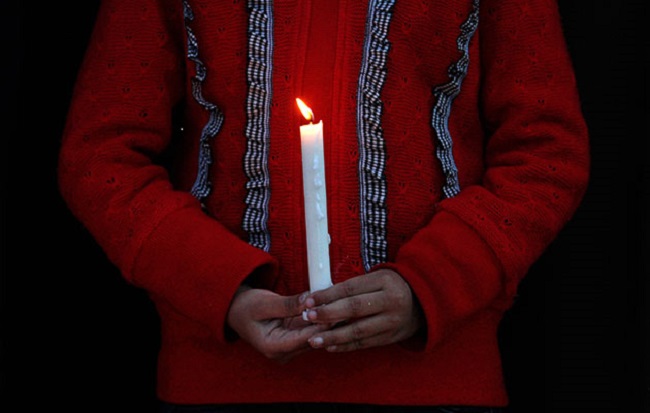
A girl takes part in a candlelight vigil organized by a social group, the Christian Muslim Alliance Pakistan, for passengers that were aboard a missing Malaysia Airlines plane. --AP Photo
At the time of publishing, search and rescue members work tirelessly in a race against time to locate the plane wreckage and its black box – the key to ‘unpuzzle’ the mystery of MH370.
But even if the black box is found and the contents made known, people who lost their loved ones on that flight may take years to find closure, and some may never will.
“The black box can only answer some questions. Beyond the sounds and conversations captured in the cockpit voice recorder, families can’t see what really went on in the plane. It might be enough closure for some, it might take years for others, and it might never be enough at all.”