AI Brief
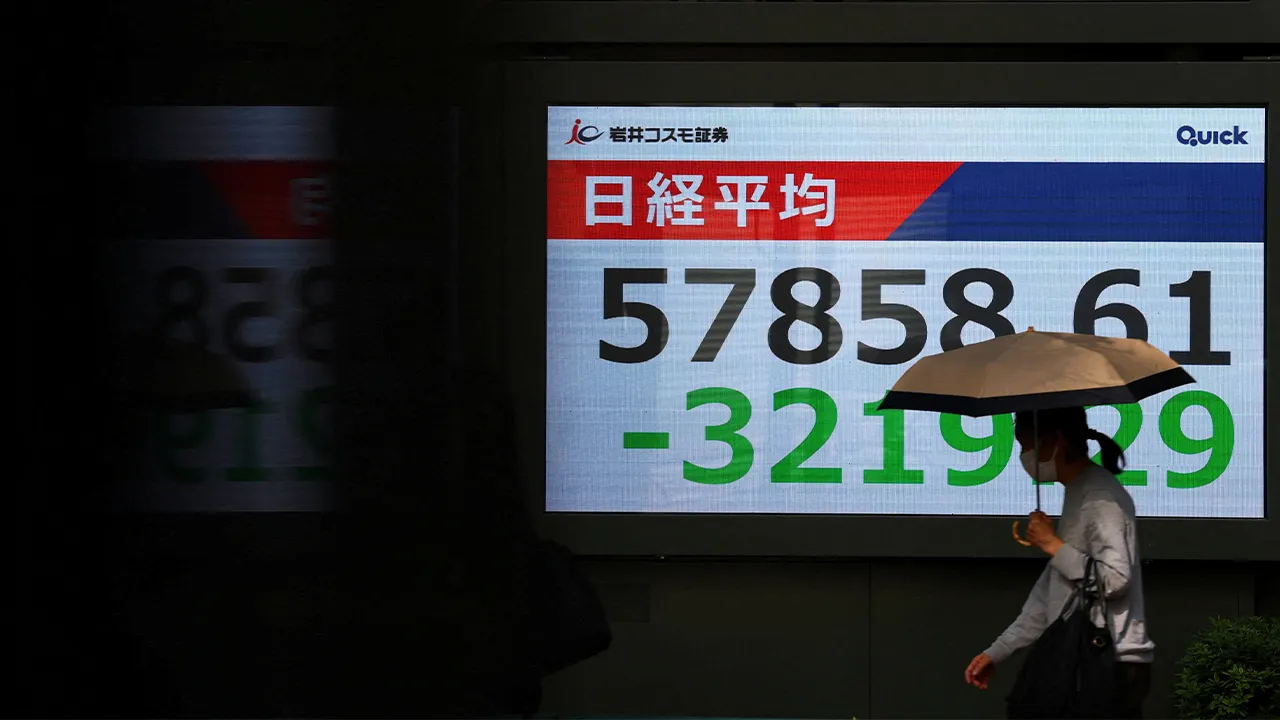
- Asian tech-heavy markets experienced sharp declines, with Japan's Nikkei dropping 7% and South Korea and Taiwan indices falling over 8% amid AI sector concerns.
- US stocks saw US$3 trillion wiped from S&P 500 firms as fears of increased regulation and slowing AI investment triggered widespread selloffs and heightened market volatility.
- Investors sought safety in bonds and haven currencies, while major AI chipmakers and related firms suffered significant share price losses across the region.
SINGAPORE: A rout in Asia's tech-heavy markets deepened on Friday as fear of increased regulatory scrutiny and a slowdown in AI build-out precipitated the steepest decline in US stocks since the tariff-triggered "Liberation Day" selloff in April 2025.
Japan's Nikkei .N225 slumped 7% immediately after the opening bell while benchmark share price indices in South Korea .KS11 and Taiwan .TWII dropped more than 8%. Stocks across the region then appeared to stabilise as dip buyers emerged.
European stock futures STXEc1 also cut initial loss and were last down 0.6%. Nasdaq futures were up 1.4% though sentiment remained fragile.
Wall Street's volatility "fear gauge" soared .VIX, the Nasdaq .IXIC sank 5.5% and US$3 trillion was wiped off S&P 500 firms, with investors worried Democrats, who dominated midterm elections this week, will apply brakes to the AI boom.
The political jitters are hitting an AI trade already on shaky footing due to worry about return on companies' enormous investment in artificial intelligence-related infrastructure.
"There is also clearly an element of panic in the selling, and positioning is making the adjustment much more violent," said Charu Chanana, chief investment strategist at Saxo.
"When investors begin unwinding these positions simultaneously, the selling can become self-reinforcing, particularly if leverage and forced liquidations are involved."
The meltdown spooked retail investors and hedge funds alike, while policymakers and regulators scrambled to stem the selling.
AI chipmakers Samsung Electronics and SK Hynix fell nearly 10% and 12% respectively in South Korea. Kioxia plunged 14% in Japan while TSMC fell as much 8.5% in Taiwan.
AI investor SoftBank Group slid 11%, while the cost of insuring against the Japanese firm defaulting on debt jumped to its highest in four years.
"The selloff shows that AI stock prices had been built on rosy illusions about the future, and now that illusion is gone," said Dong Baozhen, chairman of asset manager Lingtong Shengtai.
"The US stock market has been the standard-bearer and backbone of the global AI bull run. Now that backbone has snapped. Can AI bull markets elsewhere hold up on their own?"
SENTIMENT SHIFTS, CRACKS EMERGE
Investor fear also centred on whether a stalling AI infrastructure expansion could hurt smaller firms whose capacity to raise funds has already been limited by higher interest rates and tighter financial conditions.
Neocloud firm CoreWeave, which has become a barometer of investor anxiety over heavy AI spending and borrowing, slumped 10%, while its five-year credit default swap spreads widened to a record level.
"It's pretty clear there's been a real shift in sentiment," said Michael McCarthy, chief executive for Australia and New Zealand at brokerage Moomoo.
The selling indicates investors are starting to factor in increased local opposition to data centres, with analysts saying markets have yet to fully consider the cost such building has imposed on communities.
The Philadelphia Semiconductor Index slumped 12.2% overnight and the Nasdaq, which reversed an initial swing higher after the midterms before dropping, has now shed 12% from its record close a month ago.
Still, some analysts said the selloff was overdone and the bottom was not far off.
"Today we are bound to see further liquidation of margin accounts, which suggests we are likely in the final stage of capitulation," said Allen Huang, a vice president of Mega Financial Holding's equities trading department.
"Even TSMC hit its daily limit down circuit breaker at one point, which typically marks the tail end of a downturn. When TSMC gets sold off, that means all stocks have been thoroughly dumped," Huang said.
FINDING REFUGE IN BONDS AND YEN
Bonds gained in Asia, with US Treasuries as well as government bonds in Japan and China rising, while the US dollar slipped against haven currencies such as the yen JPY= and Swiss franc CHF=.
"Treasuries can probably rally a lot further," said Nick Ferres, chief investment officer at Vantage Point Asset Management.
The yield on the benchmark US 10-year Treasury note US10YT=RR was at 4.838%, hovering near the lowest level since September 9. The 10-year JGB yield JP10YTN=JBTC dropped as much as 9 bps to 1.795%, the lowest since June 30.