AI Brief
- US economic growth reached 4.3 per cent in the third quarter of 2026, demonstrating resilience despite trade tensions and global uncertainties.
- Strong investment in artificial intelligence and advanced technologies underpins US economic expansion, though inflation and potential interest rate hikes remain key risks.
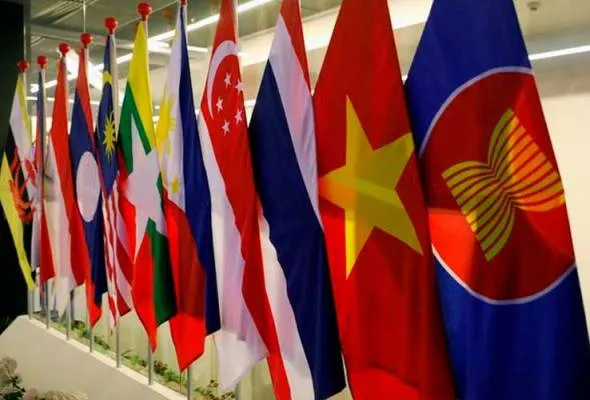
- Malaysia and ASEAN must maintain constructive engagement with the US while diversifying economic partnerships to safeguard against overdependence on any single market.
THE continued strength of the United States economy is a phenomenon that policymakers across Asia and Europe should neither underestimate nor dismiss, regardless of their reservations about the trade policies of President Donald Trump.
Despite Washington's persistent attempts to impose unilateral tariffs on friends, allies and strategic competitors alike, the American economy continues to demonstrate remarkable resilience.
As reported by Neil Irwin in Axios on November 25, 2026, US economic growth reached an annualised rate of 4.3 per cent in the third quarter of 2026, compared with the initial estimate of 3.4 per cent.
Such an expansion is particularly impressive given the uncertainties surrounding international trade, the protracted conflict in West Asia and the financial market volatility associated with artificial intelligence (AI).
Yet the strength of the American economy should not be interpreted as an outright vindication of Trump's tariff policies. There is an important distinction between an economy growing because of tariffs and one continuing to grow despite them.
The structural strength of America
The United States possesses several economic advantages that many countries would struggle to replicate.
Its deep capital markets, technological sophistication, entrepreneurial culture, extensive domestic consumer market and the international predominance of the US dollar provide the American economy with considerable capacity to absorb external shocks.
The latest economic figures reinforce this observation.
Personal incomes increased by 0.7 per cent in October, while orders for core capital goods expanded by 1.2 per cent. Weekly initial unemployment claims stood at just 189,000.
These figures suggest that American businesses remain willing to invest, even as uncertainty surrounding tariffs and the future direction of monetary policy persists.
The American economy is, therefore, considerably more robust than the political turbulence emanating from Washington might suggest.
Countries that assume the United States is on the verge of economic decline merely because of Trump's confrontational trade policies risk making a serious strategic miscalculation.
Artificial intelligence as an economic accelerator
One of the most important factors underpinning American economic expansion is the enormous volume of investment flowing into AI and its supporting infrastructure.
Data centres, advanced semiconductors, software development, cloud computing and sophisticated digital networks have collectively become important sources of capital formation.
Non-residential fixed investment alone accounted for 2.2 percentage points of third-quarter economic growth.
The American economy has benefited enormously from its ability to mobilise private capital on an unprecedented scale to finance emerging technologies.
Nevertheless, this strength is not without vulnerabilities.
Should the AI industry fail to generate sufficient commercial returns to justify its enormous expenditures, the consequences could reverberate throughout the American economy.
The recent volatility on Wall Street serves as a reminder that technological excellence does not automatically guarantee sustainable corporate valuations.
Moreover, tariffs on imported equipment, electronic components and industrial materials could eventually increase the cost of sustaining America's technological predominance.
American technological supremacy depends, in no small measure, on international supply chains involving Taiwan, South Korea, Japan, the Netherlands, Malaysia and other economies.
Inflation remains America's Achilles' heel
For all the encouraging economic indicators, inflation remains a serious concern.
The Personal Consumption Expenditures price index, the Federal Reserve's preferred inflation indicator, rose by 3.8 per cent year-on-year in October. Core inflation stood at 3.3 per cent.
Both remain considerably above the Federal Reserve's target of 2 per cent.
Consequently, the Federal Reserve could raise interest rates at its December 9 meeting, notwithstanding the uncertainties confronting financial markets.
Herein lies the paradox of American economic resilience.
The stronger the economy becomes while inflation remains elevated, the greater the justification for restrictive monetary policies.
Higher interest rates could eventually undermine household consumption, increase corporate borrowing costs and complicate the financing of AI infrastructure.
Additional tariffs could further aggravate inflationary pressures by making imported goods more expensive, notwithstanding the potential benefits of protecting selected domestic industries.
Trump should recognise that tariffs are not costless instruments of economic statecraft.
Implications for Malaysia and ASEAN
For Malaysia and the Association of Southeast Asian Nations (ASEAN), the implications are straightforward.
The United States remains too economically and technologically important to be sidelined, irrespective of the political temperament of its president.
Malaysia must continue to engage Washington constructively, especially in semiconductors, advanced manufacturing, digital technologies, aerospace and higher education.
Simultaneously, Malaysia must broaden and deepen its economic relationships through the Regional Comprehensive Economic Partnership (RCEP), the Comprehensive and Progressive Agreement for Trans-Pacific Partnership (CPTPP) and closer commercial engagement with the European Union.
Such diversification should not be interpreted as an attempt to abandon America.
Rather, it is a prudent economic strategy to safeguard Malaysia against excessive dependence on any single market.
China, Japan, South Korea, India, the European Union and the United States all remain indispensable components of an increasingly interconnected global economy.
America remains indispensable
The American economy's continued dynamism should remind the international community that political disagreements with Washington need not translate into economic estrangement.
Indeed, the United States would arguably be even stronger if its economic relationships with friends and competitors were governed by greater predictability and mutual respect.
Tariffs may provide Washington with negotiating leverage, but they cannot substitute for sustained innovation, international cooperation and economic interdependence.
For Malaysia and ASEAN, the imperative is to remain engaged with a robust America while strengthening other economic partnerships.
With or without Trump's tariffs, the United States will remain a consequential economic power for decades to come.
The challenge is to ensure that American economic strength becomes a source of global prosperity rather than an instrument of perpetual commercial confrontation.
Phar Kim Beng, PhD, is Professor of ASEAN Studies and Director of the Institute of Internationaliation and ASEAN Studies (IINTAS) at the International Islamic University Malaysia.
Luthfy Hamzah is Senior Research Fellow at IINTAS and a specialist in trade, political economy, and strategic diplomacy in Northeast Asia
** The views and opinions expressed in this article are those of the author(s) and do not necessarily reflect the position of Astro AWANI.