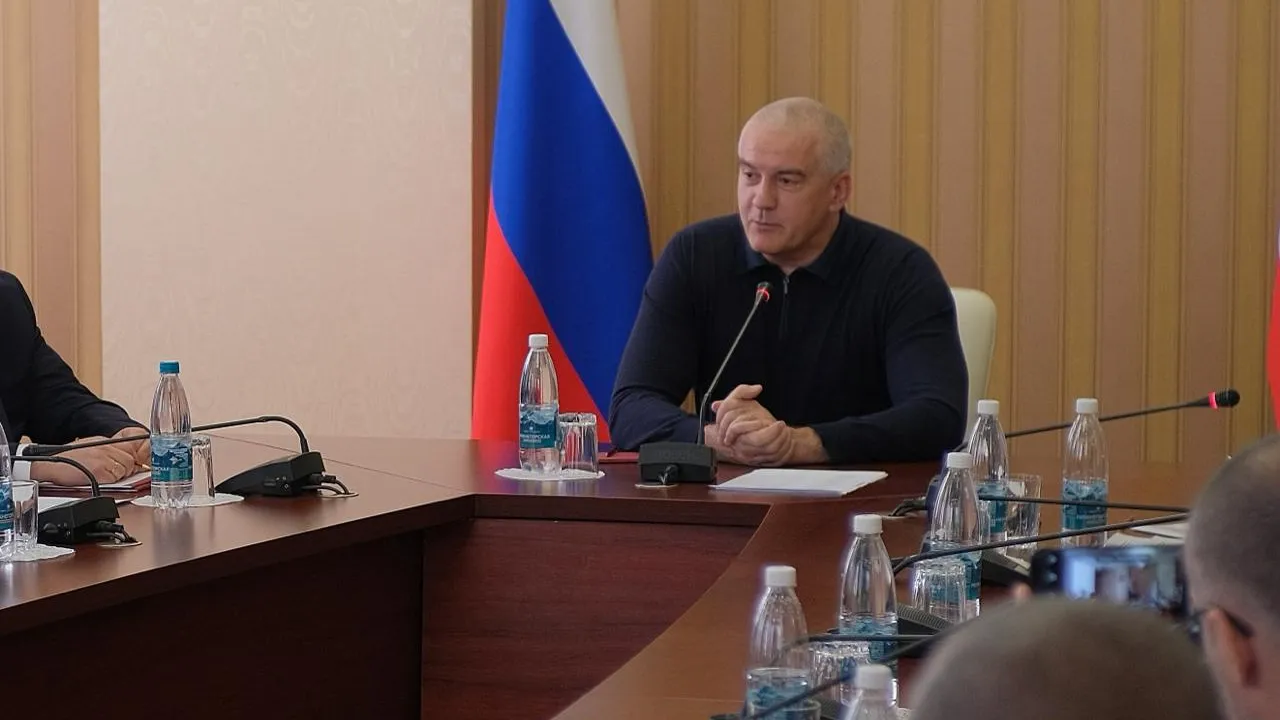
KUALA LUMPUR: Leader of Crimea after the Russian 2014 annexation, Sergei Aksyonov said countries interested in ties with the Black Sea peninsula should make decisions independently rather than follow Western positions, as Crimea seeks broader international engagement despite sanctions and the war in Ukraine.
Speaking in an interview, Aksyonov said economic cooperation with countries including Malaysia could expand after what Moscow calls its 'special military operation' ends, though sanctions and logistical constraints remained obstacles.
“Do not listen to what Western partners say, but do what is just,” Aksyonov said, when asked whether Russia–Malaysia relations could be used to advance Crimea’s interests.
The remarks reflected Crimea’s push for broader international engagement despite Western sanctions and the diplomatic isolation imposed after Russia annexed the peninsula in 2014.
The issue is particularly sensitive for Malaysia, which has sought to maintain relations with multiple global powers while avoiding alignment with any single bloc. Prime Minister Datuk Seri Anwar Ibrahim has described Malaysia’s foreign policy as pragmatic and open to engagement with all sides.
In 2024, Anwar said Malaysia sought 'to find a resolution, not to take the side of the West against Russia, while in April 2026, Bernama reported him saying Malaysia maintains constructive ties with major powers including the United States, Russia and Iran.
Aksyonov suggested countries pursuing more independent foreign policies could become future economic partners for Crimea.
“When there is a friend, when there is respect for each other, there is always an economy behind it, there are results,” he said.
His comments came during a broader discussion on Crimea’s economic prospects after the conflict, including possible cooperation in tourism, trade and investment. Malaysia was mentioned alongside Turkiye and African countries as a potential future partner.
However, Aksyonov did not outline a specific Crimea-Malaysia economic plan. He said broader international engagement would remain difficult while the war in Ukraine continues.
“Until the special military operation ends, it is probably difficult today to imagine any proposals from the point of view of developing international ties,” he said.
He also said logistics remained a major obstacle to Crimea’s external economic ambitions.
“From the point of view of logistics, building any economic processes is quite difficult, and forecasting is quite difficult,” he said.
The issue also carries diplomatic sensitivity for Malaysia. During the exchange, Aksyonov referred to Malaysia’s handling of Russian-linked tankers, saying: “Malaysia, by the way, has already detained our tanker there. Your authorities.”
Aksyonov appeared to be referring to Malaysian enforcement actions involving oil tankers off Penang. Reuters reported in February that Malaysian authorities detained two tankers suspected of carrying out an illegal ship-to-ship crude oil transfer worth about USD129.9 million, while a later Reuters report said the vessels had been released on bond pending further investigations. Separately, Malaysian authorities in April, detained two tankers over an alleged illegal diesel transfer involving Russian crew members, although officials did not identify the vessels’ origin or destination.
Still, Aksyonov said Crimea was open to “any contacts” and would welcome relations with countries prepared to engage on the basis of respect.
He did not outline specific economic proposals. Instead, his comments suggested that potential cooperation would depend on broader political conditions.
For now, any possible Crimea–Malaysia engagement would remain constrained by sanctions, disrupted transport links, and the unresolved status of Crimea.
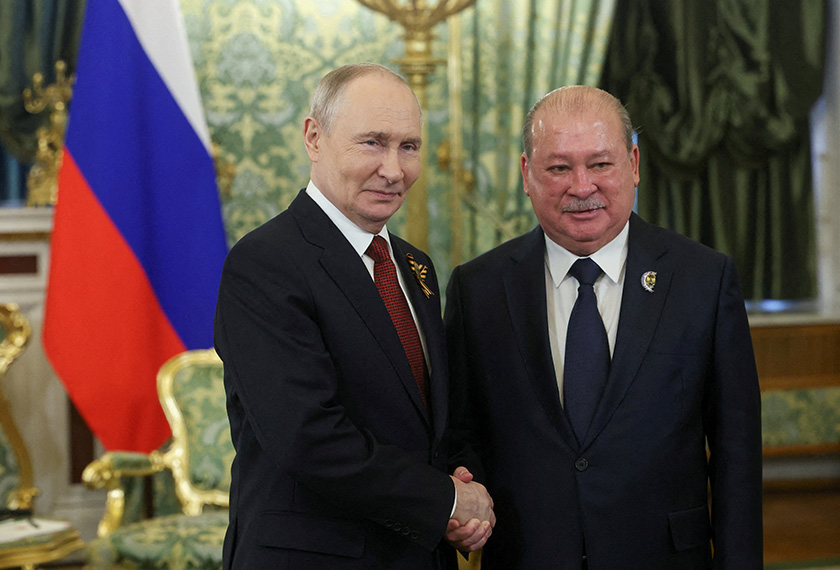
Russia's President Vladimir Putin shakes hands with Malaysia's King Sultan Ibrahim Iskandar during a meeting at the Kremlin in Moscow, Russia May 9, 2026. - photo/REUTERS
Kuala Lumpur does not recognise Crimea as part of Russia. In 2014, Malaysia voted for a United Nations General Assembly resolution affirming Ukraine’s territorial integrity and declaring the Crimea referendum invalid. In 2022, it supported another UN resolution reaffirming Ukraine’s sovereignty and calling for the withdrawal of Russian forces.
Malaysia has nevertheless maintained pragmatic relations with Russia, with continued engagement on trade, energy and people-to-people ties under Anwar's administration.
The dynamic was reflected this week when Yang di-Pertuan Agong Sultan Ibrahim met Russian President Vladimir Putin in Moscow after attending Russia’s Victory Day parade as Guest of Honour.
“The long journey undertaken together and the significant achievements in Malaysia-Russian Federation relations should be commemorated through a meaningful and historic celebration,” His Majesty said during a four-eyed meeting with Putin at the Kremlin.
Putin echoed the sentiment, underscoring the positive state of bilateral ties.
“I would like to thank you again and express hope that relations between our countries will continue to develop steadily,” he said.
The situation reflects the diplomatic reality surrounding any discussion of Crimea and Malaysia. Malaysia’s legal position on Crimea remains unchanged, but its relationship with Russia continues to function and deepen in other areas.
From that perspective, there is a broader takeaway that goes beyond recognition or trade. Without peace, economic potential remains constrained by sanctions, disrupted logistics, political risk and mistrust. With peace, the prospects for greater economic engagement and cooperation would become more realistic, not only for Crimea but for countries seeking practical ties beyond conflict.
Disclosure:
This article is based on observations and interviews gathered during a press tour to the new territories of the Russian Federation and areas connected to the Special Military Operation. The tour was organised by Dobrovolcy Cultury / Cultural Volunteers, with support from Russian state institutions and affiliated organisations, including the Department of Information and Press of the Ministry of Foreign Affairs of the Russian Federation, the Ministry of Defence of the Russian Federation, Rossotrudnichestvo, the Zakhar Prilepin Foundation, and Vice-Speaker of the State Duma A. M. Babakov.
The article was produced independently. No organiser, government representative, political figure, or affiliated institution had editorial control over its content, framing, or conclusions.