AI Brief
- Andy Burnham has reopened the Brexit debate, advocating for closer UK-EU ties, but faces significant political and public obstacles to rejoining the bloc.
- The UK government is considering easing EU customs barriers and adopting EU food regulations, but faces criticism over concerns about sovereignty and rule alignment.
- Any major shift in the UK-EU relationship would likely require a new referendum, a general election, and extensive negotiations over several years.
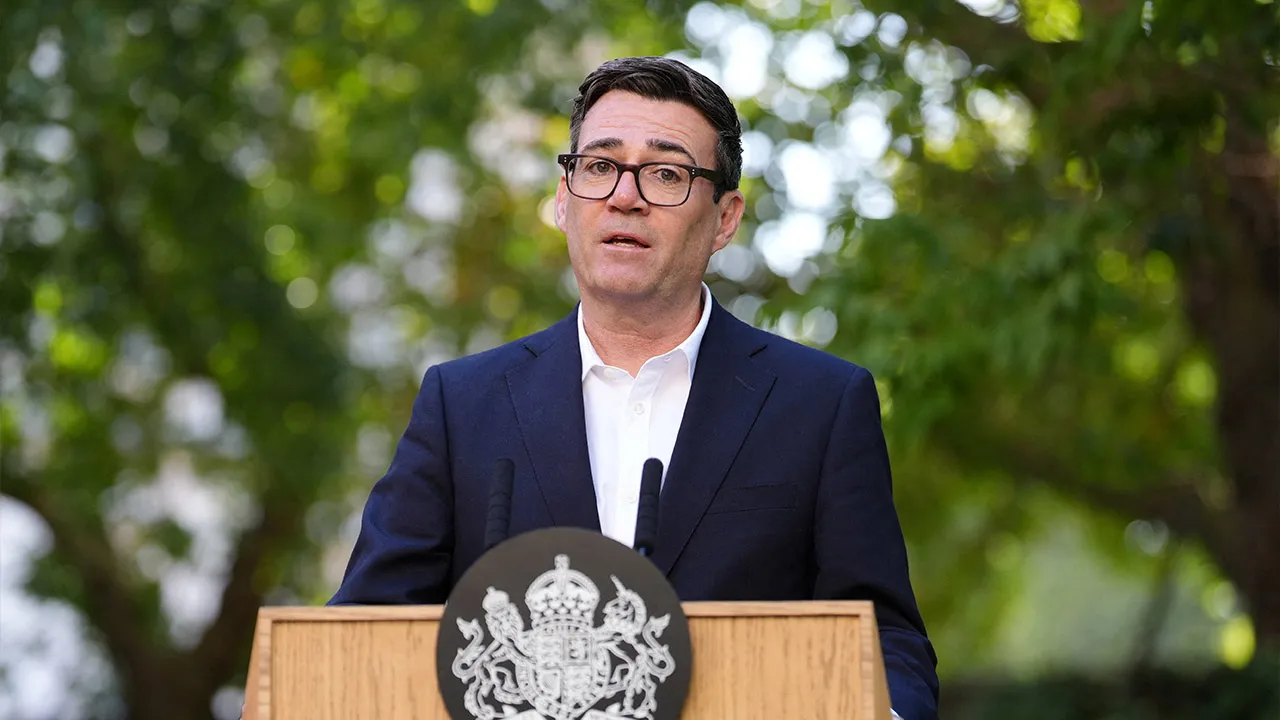
LONDON: Britain’s Andy Burnham has blasted open the Brexit debate, but Brits hoping for closer ties with the European Union face a long uphill battle no matter which road they take, and there is a question whether the prime minister will stay the course.
Britain has every incentive to move closer to Europe. In a world dominated by the US and China, the economics of belonging to a huge trading bloc are compelling, and the EU remains the UK’s biggest trading partner by a wide margin.
Burnham has said EU membership is a question to tussle with after the next election, due by 2029, and that he would like to see Britain return to the bloc in his lifetime. He is 56.
He will get the chance to start a few balls rolling at an EU-UK summit on November 20. The meeting may offer an early test of just how far Britain is willing to go in signing up to EU rules once more.
Britain is making tentative moves toward the continent. The government has indicated that it wants to remove EU customs barriers for British agricultural goods and is willing to adopt EU food regulations to facilitate this. Burnham is also keen to ensure British manufacturers are not shut out by the bloc's "Made in Europe" rules, which will direct public procurement toward domestic industries.
But even these cautious steps have prompted fierce criticism from Burnham’s political opponents, who claim he is relinquishing the “sovereignty” that the 2016 referendum secured.
The UK government faces a stark reality. If it wants freer trade, it will need to accept many of the EU rules voters rejected 10 years ago. The question is how much the economic damage caused by Brexit and the shifting geopolitical landscape have changed this calculus.
CHOICES AND TRADE-OFFS
If the UK does want a closer relationship with the EU, it has three main long-term options — all of which come with significant trade-offs.
First is a customs union. This would eliminate EU tariffs on UK goods and could allow Britain access to the "Made in Europe" structure, while enabling Britain to avoid having to accept the free movement of labour. Estimates vary, but economists think this could boost UK gross domestic product by a modest 1% or less. The cost would be losing the ability to strike trade deals elsewhere.
Single market membership is another option. This would likely deliver a bigger economic dividend but would also mean greater alignment with EU rules, without the ability to shape them. The Bank of England has consistently expressed concern, since Brexit, about being unable to set the rules for Britain's outsized financial sector.
The biggest economic prize would likely come from full EU membership. The cost of Brexit is estimated at 4% to 8% of GDP, based on various models. A return to the union, therefore, would be expected to have a similarly large impact on the upside, particularly if it helps the UK close its investment gap with other wealthy countries.
In this scenario, Britain would be able to help shape EU rules, but it would also have to accept free movement of EU citizens and, in theory, commit to membership in the euro and the border-free Schengen Agreement. Burnham says he cannot imagine signing up to either.
The UK public seems to be on the same page. A YouGov poll taken over the summer found that 55% of Britons now support rejoining the EU, but that falls to 35% if its prior opt-outs — such as maintaining the pound and an EU budget rebate — are not available.
There are examples of countries that have received the benefits of EU membership without having to accept all its strictures. For example, Poland, Sweden, the Czech Republic, Hungary and Romania joined the EU in the 1990s and 2000s but have never adopted the euro.
However, the EU may be wary of agreeing to any bespoke deal because of its own politics. A new accord with plenty of carve-outs could set a precedent that the far-right Alternative for Germany (AfD) and French presidential hopeful Marine Le Pen could use to demand their own concessions.
EU leaders may also need convincing that the UK would not simply change its mind again under a different government. Britain's Conservative and Reform parties both implacably oppose rejoining, particularly because of immigration control issues, a position that has proven popular with voters.
PLAYING POLITICS?
Ultimately, any significant shift in the EU-UK relationship would likely require another referendum, a subsequent general election, and years of detailed negotiations.
Could Burnham’s comments about Brexit have more to do with electoral manoeuvring?
A pro-EU stance could help unite Britain’s centre-left vote, which heavily favours closer EU ties.
At the same time, focusing on the status of the UK-EU relationship could give Burnham an opportunity to exploit his opponents' vulnerabilities. The Reform and Conservative parties have stated that they want to leave the European Convention on Human Rights. However, this agreement is written into the current UK-EU trade deal and is fundamental to Northern Ireland’s Good Friday peace agreement that has been in place since 1998.
Any move to break with the convention could therefore lead to the dissolution of the current UK-EU agreement, which almost all experts agree would be the worst possible economic outcome for Britain. By forcing the issue, Burnham could push the right into a tricky corner, helping to further strengthen his own position.
So is the UK likely to see a shift toward Bre-union before Burnham leaves office? Probably not, but if he can skilfully navigate the domestic political scene, he might yet set the stage for that outcome in his lifetime.
The views expressed here are those of Mike Peacock, the former head of communications at the Bank of England and a former senior editor at Reuters.