
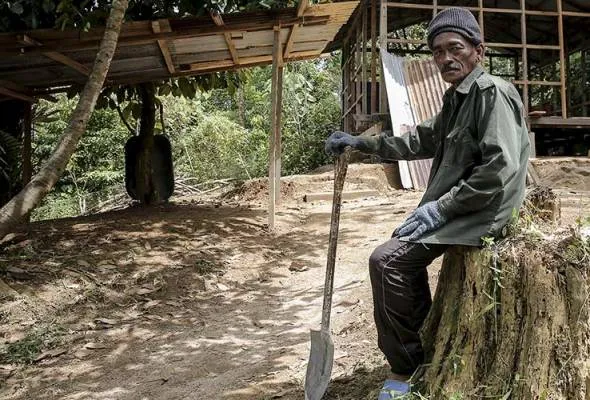
Rosli Ab Ghalib is confident he can do it.
He is building a hut on the small hill behind his house, and wants to have it ready before the monsoon rains come once again.
It's early November when we visit his home in Kampung Jelawang, Dabong. The hut, which measures 16x20 feet, is half-way done.
His experience from the 2014 floods that hit the east coast of the Peninsular, which many say was the worst in living memory, has taught him to always be prepared. Even if the floods this year are just as bad, he's hopeful he is ready to face it.
"I do hope it's strong enough," Rosli says, referring to the hut.
Rosli's house, located not far from Sungai Stong, was completely submerged by flood waters last year. He tells us the water rose fast, until it swallowed the roof.
This 54 year old originally hails from Pasir Mas. He settled in Kampung Jelawang in 1990, when he came to work at a sawmill here. Three years later, he got a better job as a driver with the Forestry Department.
At first he stayed at the government quarters, and then later bought the house in which he now resides with his wife and four children since 2011, using his EPF savings upon reaching the age of 50. Rosli retired in April this year.
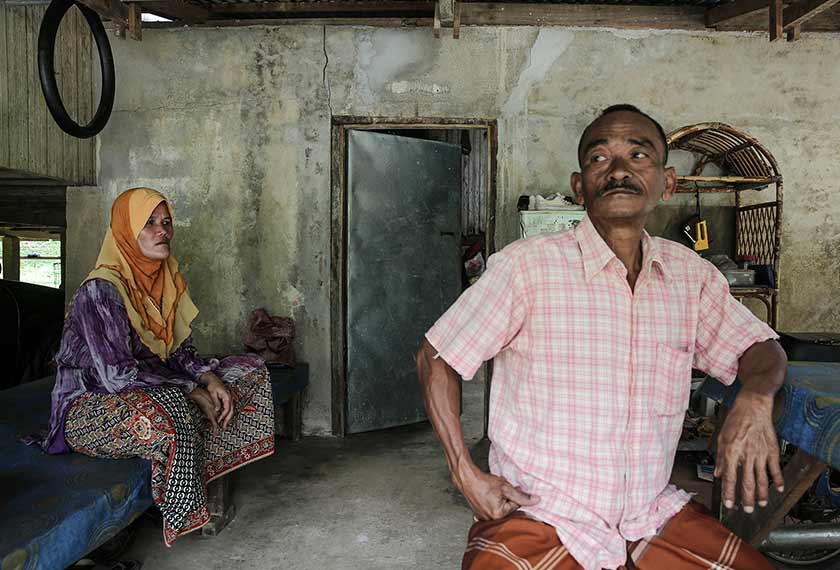
"I'm too old to go in and out of the forest... it's exhausting. Besides, the company was offering a Voluntary Separation Scheme with RM60000 compensation, so I decided to take the offer and quit."
Rosli grows bananas on the 1.8 acres of land in front of his house. There's not much profit, just enough to make ends meet, and help his two youngest through school.
Last year, he watched all his preparations washed away, as the floodwaters continued to rise, refusing to stop. Their home and all their belongings were swallowed up by the flood, except for a television set they managed to save just in time.
He tells us that according to the previous owner of the house, the last time the floods hit hard was in 1967, and even then the waters only reached the window sills. He says last year was something else altogether.
His wife pours ice tea in the glasses in front of us, and serves us homemade bean cakes. Rosli doesn't help himself though, he just watches us. And as he does so, he takes out and lights a cigarette. It was a brand I don't recall ever seeing before.
His wife joins in the conversation.
"While we were sheltering at the nearby kindergarten where I work, I suddenly remembered that we hadn't yet finished paying off the TV set. We quickly borrowed a boat and rushed back to the house. We only took out the TV, and left everything else behind," she tells us.
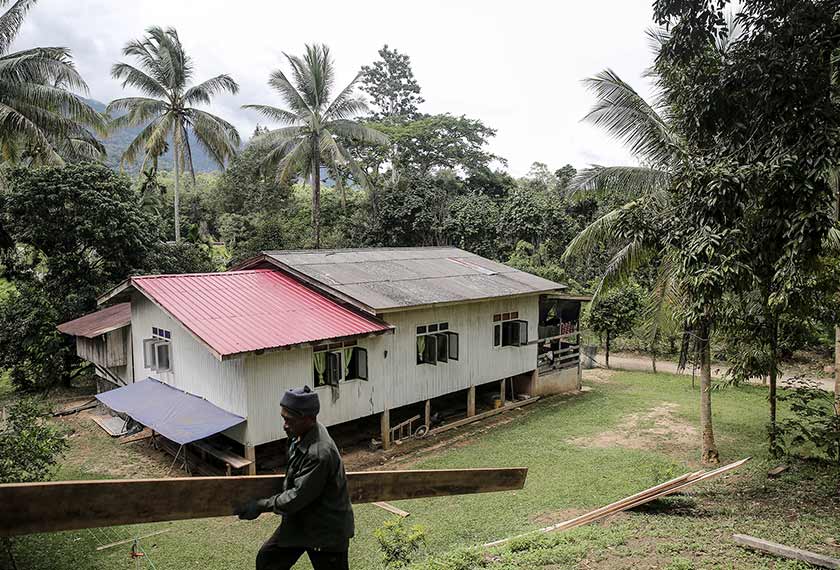
Ever willing to learn from the past, Rosli felt he should do something to prepare for any eventuality this monsoon season. And so he began to build the hut, starting with the pile of old timbers under his house.
"I thought to myself, since the hill behind my house wasn't affected by the flood last year, I might as well build a shelter there for my family, and for storage.
"Starting mid-October, I slowly began building the hut, piece by piece. From leveling the soil, to the foundation, to installing zinc roof, I did it all myself.
The hut is literally halfway done. The floor and walls have yet to be installed but the overall structure is done. And all of it has only cost him RM800 so far, partly mainly because he is using recycled timber.
He didn't start working on the hut in the morning as he normally does, on the day we come to visit. His routine usually sees him working on the hut from morning to sunset, save only for a lunch break. But that morning, his stomach wasn't feeling so good.
He tells us that he dreams of building a hut, complete with a kitchen and toilet. But since he now has no monthly income, those plans have to remain on the shelf.
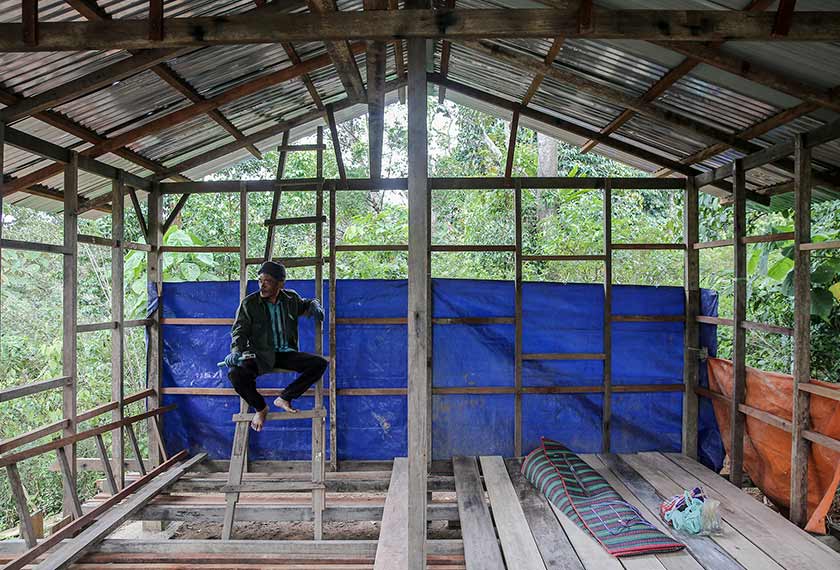
He is building a hut on the small hill behind his house, and wants to have it ready before the monsoon rains come once again.
It's early November when we visit his home in Kampung Jelawang, Dabong. The hut, which measures 16x20 feet, is half-way done.
His experience from the 2014 floods that hit the east coast of the Peninsular, which many say was the worst in living memory, has taught him to always be prepared. Even if the floods this year are just as bad, he's hopeful he is ready to face it.
"I do hope it's strong enough," Rosli says, referring to the hut.
Rosli's house, located not far from Sungai Stong, was completely submerged by flood waters last year. He tells us the water rose fast, until it swallowed the roof.
This 54 year old originally hails from Pasir Mas. He settled in Kampung Jelawang in 1990, when he came to work at a sawmill here. Three years later, he got a better job as a driver with the Forestry Department.
At first he stayed at the government quarters, and then later bought the house in which he now resides with his wife and four children since 2011, using his EPF savings upon reaching the age of 50. Rosli retired in April this year.
"I'm too old to go in and out of the forest... it's exhausting. Besides, the company was offering a Voluntary Separation Scheme with RM60000 compensation, so I decided to take the offer and quit."
Rosli grows bananas on the 1.8 acres of land in front of his house. There's not much profit, just enough to make ends meet, and help his two youngest through school.
Last year, he watched all his preparations washed away, as the floodwaters continued to rise, refusing to stop. Their home and all their belongings were swallowed up by the flood, except for a television set they managed to save just in time.
He tells us that according to the previous owner of the house, the last time the floods hit hard was in 1967, and even then the waters only reached the window sills. He says last year was something else altogether.
His wife pours ice tea in the glasses in front of us, and serves us homemade bean cakes. Rosli doesn't help himself though, he just watches us. And as he does so, he takes out and lights a cigarette. It was a brand I don't recall ever seeing before.
His wife joins in the conversation.
"While we were sheltering at the nearby kindergarten where I work, I suddenly remembered that we hadn't yet finished paying off the TV set. We quickly borrowed a boat and rushed back to the house. We only took out the TV, and left everything else behind," she tells us.
Ever willing to learn from the past, Rosli felt he should do something to prepare for any eventuality this monsoon season. And so he began to build the hut, starting with the pile of old timbers under his house.
"I thought to myself, since the hill behind my house wasn't affected by the flood last year, I might as well build a shelter there for my family, and for storage.
"Starting mid-October, I slowly began building the hut, piece by piece. From leveling the soil, to the foundation, to installing zinc roof, I did it all myself.
The hut is literally halfway done. The floor and walls have yet to be installed but the overall structure is done. And all of it has only cost him RM800 so far, partly mainly because he is using recycled timber.
He didn't start working on the hut in the morning as he normally does, on the day we come to visit. His routine usually sees him working on the hut from morning to sunset, save only for a lunch break. But that morning, his stomach wasn't feeling so good.
He tells us that he dreams of building a hut, complete with a kitchen and toilet. But since he now has no monthly income, those plans have to remain on the shelf.
"Hosting visiting relatives should be easier as we can let them sleep in the hut. God willing, if I have money, I'll add on to it later," Rosli says.
We watch him get to work on the floor. He lays down the planks neatly, one by one, but because he is using old wood, the floor doesn't look very level, or neat. The colours and tones are random and mismatched.
Not long after that, his son appears, bringing more planks. They look rather new. Rosli says these will be used to build the walls.
"I'm actually not that good at carpentry. I learnt by observing the structure of my own house, and also talking to my friends who are used to building stuff. I think I'm in over my head on this one," he confesses.
Still, the hut seems sturdy enough, even in its current state. His carpentry skills are actually quite good. At a glance, everything looks upright and in its proper place.
"Actually, I've never done anything like this before. Even the chicken coop I built was a disaster!" Rosli admits, howling in laughter.
We watch him get to work on the floor. He lays down the planks neatly, one by one, but because he is using old wood, the floor doesn't look very level, or neat. The colours and tones are random and mismatched.
Not long after that, his son appears, bringing more planks. They look rather new. Rosli says these will be used to build the walls.
"I'm actually not that good at carpentry. I learnt by observing the structure of my own house, and also talking to my friends who are used to building stuff. I think I'm in over my head on this one," he confesses.
Still, the hut seems sturdy enough, even in its current state. His carpentry skills are actually quite good. At a glance, everything looks upright and in its proper place.
"Actually, I've never done anything like this before. Even the chicken coop I built was a disaster!" Rosli admits, howling in laughter.